|
Delhi Police De-notifies Jantar Mantar as Protest Site
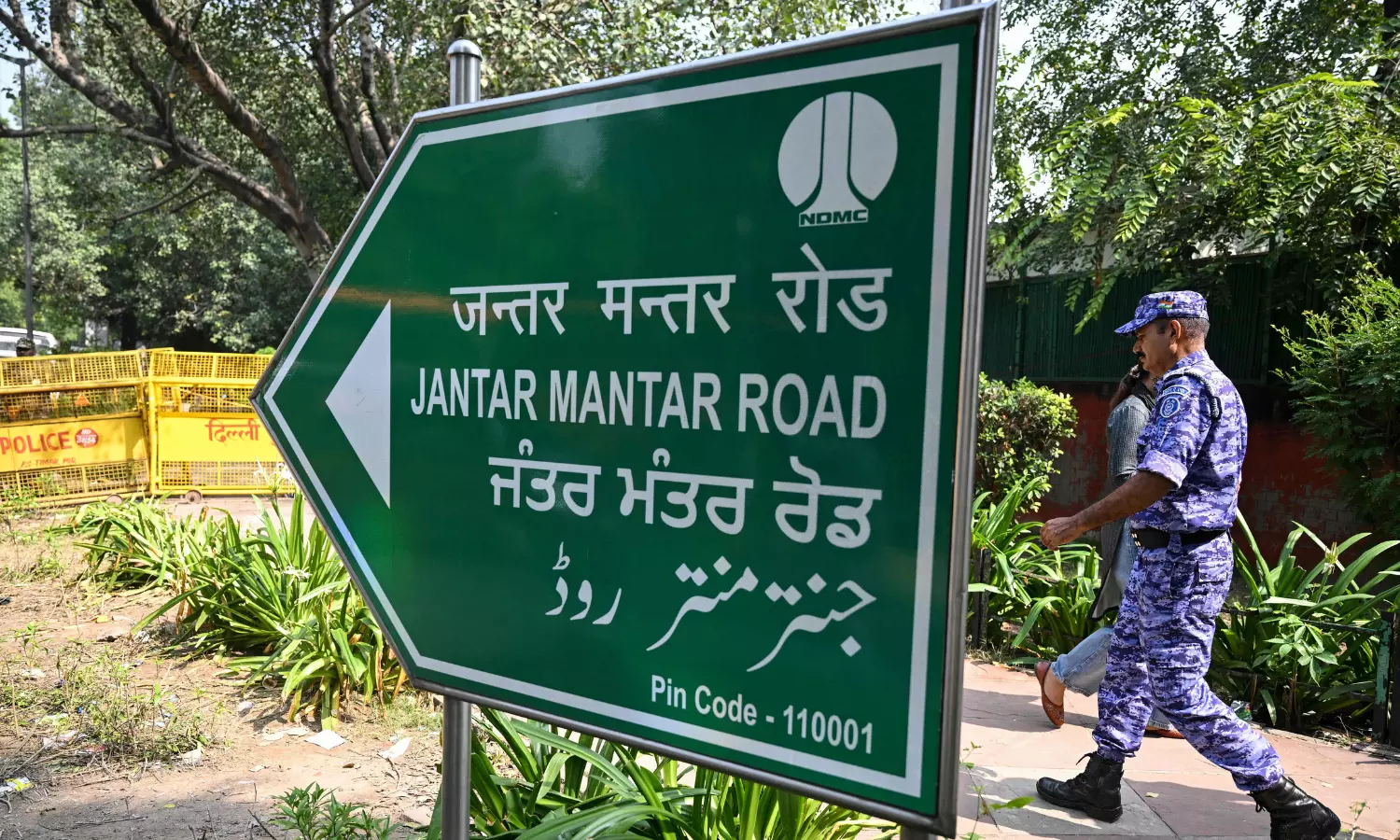
The Delhi Police has de-notified Jantar Mantar as a designated protest site and has named Ramlila Maidan, Burari Ground (north Delhi), and CBD Ground (east Delhi) as alternative venues. The move follows a recommendation by a committee constituted by the Ministry of Home Affairs (MHA), and a revised SOP for the new venues is to be issued separately.
Jantar Mantar Protest Site De-notification:
| Dimension | Key Details |
|---|---|
| Earlier Permission Framework (Jantar Mantar) | Organisers are regulated to apply 10 days in advance, and gatherings are capped at 1,000 people. |
| Venue Capacity (Ramlila Maidan) | Ramlila Maidan accommodates about 50,000 people. |
| SOP for New Venues | A revised SOP for the new venues is to be issued separately. |
| Recent Policing Context in Central Delhi | Central Delhi has been regulated through heavy barricading and crackdowns since October 10, with demonstrators gathering near areas under prohibitory orders under Section 163 of the BNSS. |
| Delhi Legislative Powers (Article 239AA(3)(a)) | Article 239AA(3)(a) authorises the Delhi Legislative Assembly to legislate on NCT matters except those under Entries 1, 2, and 18 of the State List. |
| Excluded State List Entries for Delhi | Entries excluded from the Delhi Assembly’s legislative powers comprise Entry 1 (public order), Entry 2 (police), and Entry 18 (land) of the State List. |
| Control of Delhi Police | Delhi Police is governed by the MHA, not the Delhi government. |
| Constitutional Basis for Restricting Rights | Article 19 authorises restrictions on fundamental rights on grounds of “public order”. |
| SC Case: Ram Manohar Lohia v. State of Bihar (1966) | The concentric-circles framework comprises three circles: law and order (largest), public order (narrower), and security of the State (smallest). |
| SC Case: In Re: Ramlila Maidan Incident (2012) | The ruling regulates restrictions by stating that law and order restrictions should be least intruding on fundamental freedoms, while public order restrictions may justify greater restriction. |
| Meaning of Law and Order vs Public Order | Law and order comprises localised disturbances, while public order comprises disruptions affecting the wider community. |
| Police Powers and “Public Order” | Police action on “public order” is authorised only when a law grants that power and the police identifies the specific law under which it acts. |
| SC Case: Himat Lal K. Shah v. Commissioner of Police, Ahmedabad (1972) | The ruling authorises police to require prior permission for public meetings on streets, while regulating that the State cannot prohibit assembly on every public street or place. |
| SC Case: Mazdoor Kisan Shakti Sangathan (MKSS) v. Union of India (2018) | The ruling regulates demonstrations by allowing particular areas to be earmarked in public interest, and it allows a limited portion of Jantar Mantar Road to remain open for regulated demonstrations by smaller groups. |