|
BARC Develops Seawater Lithium Extraction Technique
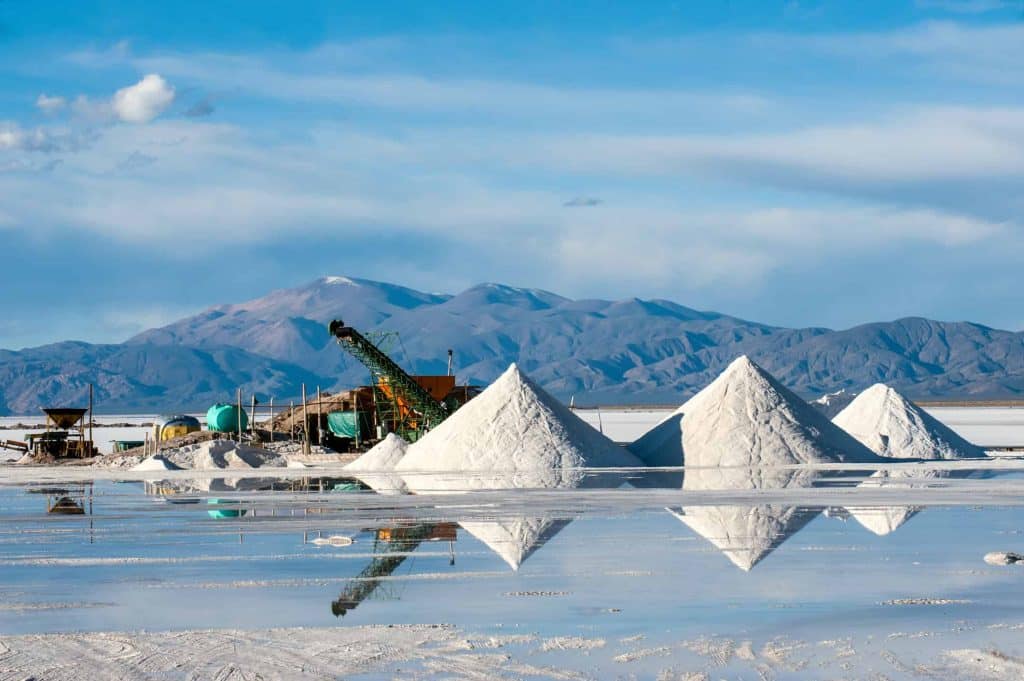
Scientists at the Bhabha Atomic Research Centre (BARC) develop a chemical technique to extract nearly 90% of lithium dissolved in natural seawater. The technique uses specific chemical reagents and an organic-solvent system to remove impurities and recover lithium, with reported high recovery and reuse of solvent.
Seawater Lithium Extraction Technique:
| Dimension | Key Details |
|---|---|
| Seawater lithium reservoir estimate | Seawater is the world’s largest reservoir of lithium, containing an estimated 230 billion tonnes. |
| Lithium concentration in seawater | Lithium occurs in seawater at about 0.17 mg per litre. |
| Magnesium-to-lithium ratio in seawater | The ratio of magnesium to lithium in seawater exceeds 6,000. |
| Impurity removal step | Treating seawater with sodium hydroxide and sodium carbonate removes unwanted elements such as magnesium and calcium. |
| Impurity removal performance | The process removes more than 99% of magnesium and calcium while retaining most of the lithium in the water. |
| Lithium extraction chemistry | Dibenzoyl methane, dissolved in methyl isobutyl ketone (MIBK), is used to extract dissolved lithium. |
| Lithium recovery step | Dilute nitric acid separates lithium from the solvent, transferring lithium into a separate solution and leaving the organic solvent available for reuse. |
| Solvent consumption | The process uses about 100 ml of organic solvent for every litre of treated water. |
| Advantages | The technique provides for high recovery rate, fewer chemicals and additives, and reuse of solvent, with MIBK also stabilising lithium chemical complexes. |
| Limitations of existing methods | Existing methods can suffer from slow extraction rates, structural degradation, complicated regeneration processes, and use of expensive chemicals, large volumes of solvents, and complex processing. |
| India’s import dependence | India relies entirely on imports for raw lithium and battery-grade lithium-ion cells. |
| Challenges before commercial deployment | Researchers need to assess long-term performance, energy requirements, chemical costs, environmental effects on marine ecosystems, feasibility at industrial scale, and foam formation due to prolonged mixing. |