|
Uttarakhand Forest Department Launches 2026
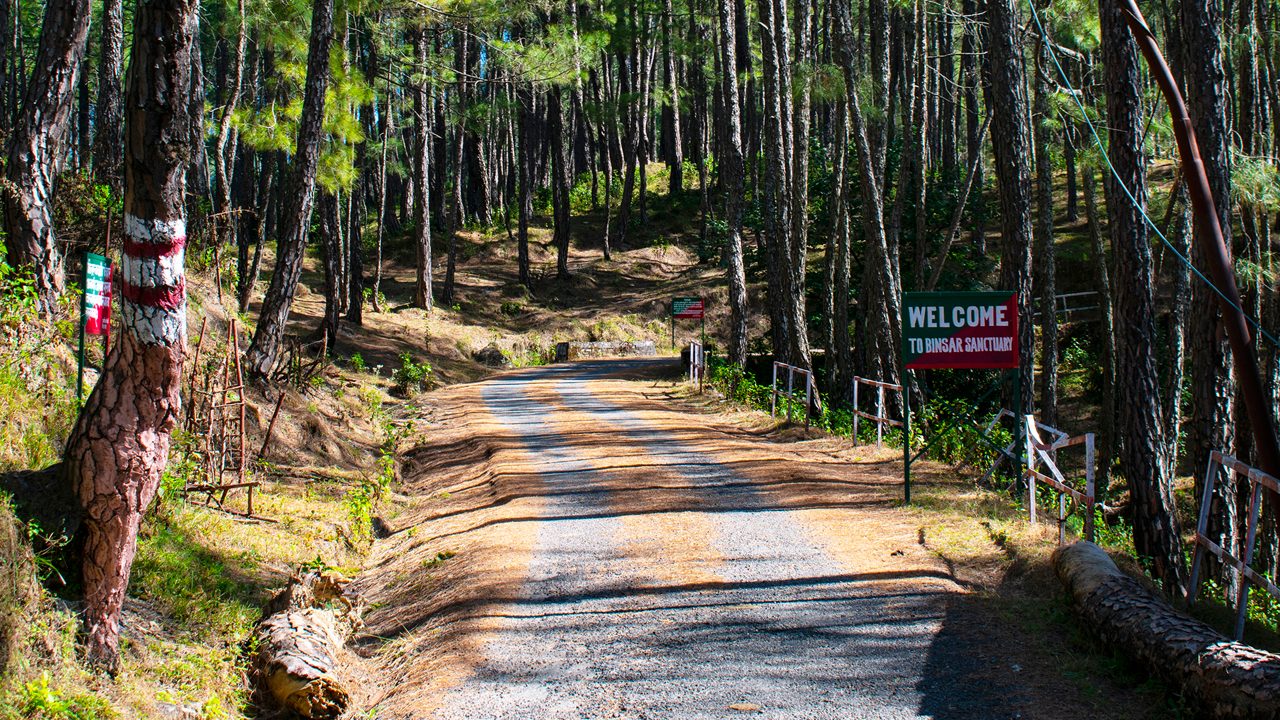
The Forest Department launches a comprehensive scientific wildlife census in Binsar Wildlife Sanctuary in 2026. The census is for assessing species population dynamics and mapping wildlife movement corridors.
Binsar Wildlife Sanctuary:
| Dimension | Key Details |
|---|---|
| Location | Binsar Wildlife Sanctuary is situated in Almora district in the Kumaon region of Uttarakhand. |
| Regional Setting | The sanctuary lies atop a mountain in the Central Himalayan region. |
| Establishment | The sanctuary has been established in 1988. |
| Objective | The sanctuary provides for conservation of shrinking broad-leaf oak forests of the Himalayas. |
| Historical Significance | The area served as the summer capital of the Chand rulers of Kumaon and hosted British-era administrative centres including Khali Estate. |
| Topography | The sanctuary has rugged terrain with deep gorges and ridges, and altitude ranging from 900 m to 2,500 m. |
| Zero Point | Zero Point or Jhandi Dhaar is the highest elevation point offering views of Nanda Devi, Kedarnath, Trisul, Panchachuli, and Shivling. |
| Flora | The sanctuary is dominated by oak and deodar forests, along with rhododendrons, and hosts approximately 25 tree species and 24 bush species. |
| Mammals | Mammals include leopard, Himalayan goral, musk deer, Sumatran serow, and red fox. |
| Avifauna | The sanctuary is an Important Bird Area with over 200 species, including Himalayan monal, Kalij pheasant, Koklass pheasant, and Eurasian jay. |
| State Species | Musk deer is the State animal of Uttarakhand, and Himalayan monal is the State bird of Uttarakhand. |
| 2026 Census Focus | The census provides for assessment of population dynamics and documentation of movement corridors for key species. |
| Data Gap | The census aims to document under-recorded species such as red foxes and wild boars. |
| Corridor Mapping | Corridor mapping provides for identification of movement corridors for large carnivores such as leopards. |
| Climate Indicator | Monitoring high-altitude species helps assess climate change impacts on the Himalayan ecosystem. |