|
Rare Caracal Sighting Confirmed in Shahgarh
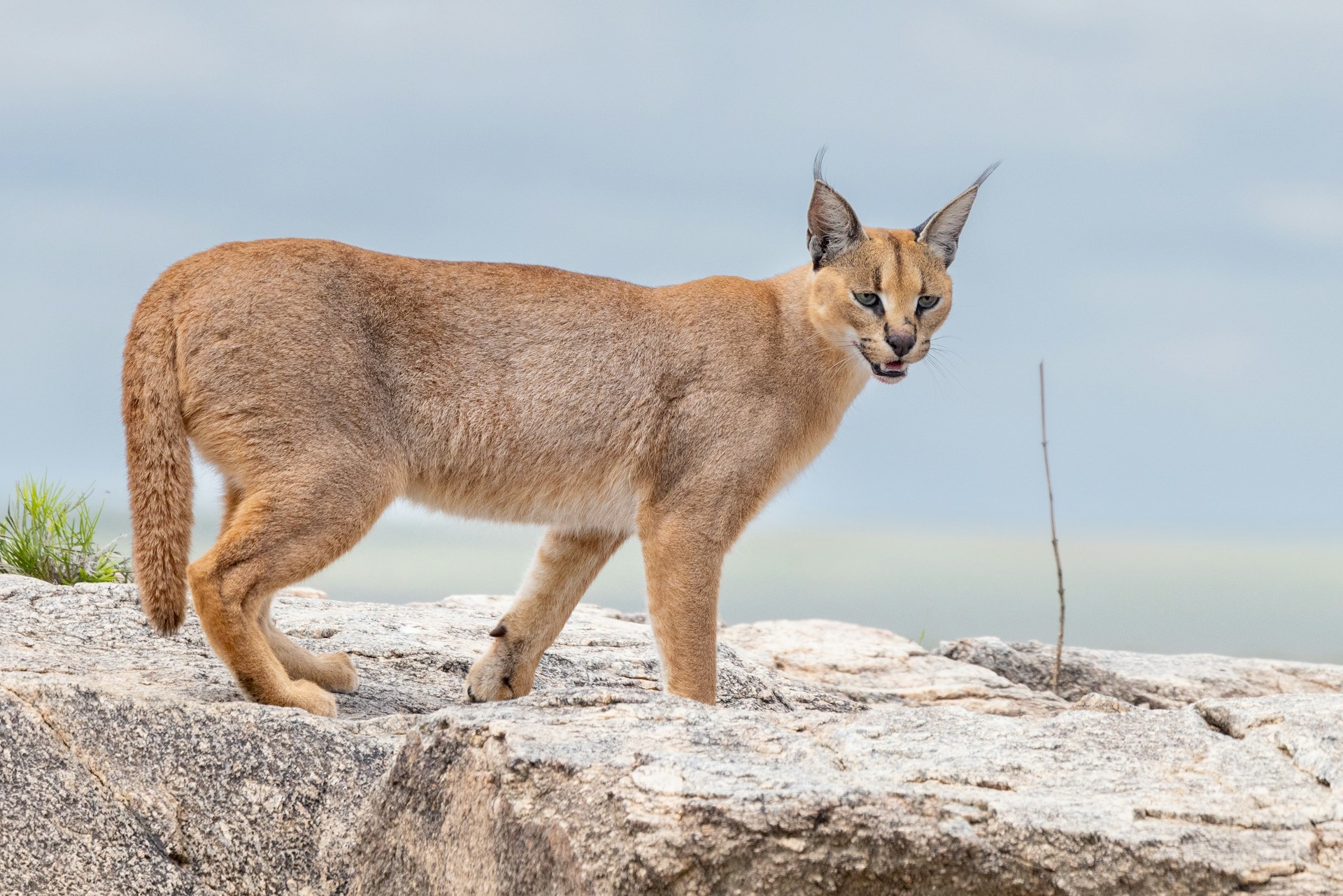
Officials confirm the sighting of rare caracals in the Shahgarh region of Rajasthan’s Jaisalmer near the India-Pakistan border. The sighting is monitoring a sharply declining wild cat population in northwestern India.
Caracal:
| Dimension | Key Details |
|---|---|
| Common Name | The species is commonly known as caracal and locally known as Padang. |
| Scientific Name | The scientific name of caracal is Caracal caracal. |
| Taxonomy | The caracal belongs to Kingdom Animalia and family Felidae. |
| Habitat | Caracals inhabit savannas, semi-deserts, scrublands, and arid woodlands. |
| Global Distribution | Caracals are found in the plains of Africa, the Middle East, and central and southern Asia. |
| India Distribution | In India, caracals are found in northwestern India, especially Rajasthan and Gujarat. |
| Population Status in India | The caracal population in India has reduced to around 50 individuals, with more than 95% loss due to habitat loss and retaliatory killings. |
| Morphology | The caracal has a reddish-tan or sandy-brown coat, black ear tufts, short tail, and body length of 62–82 cm. |
| Physical Features | The species weighs 8–14 kg, has shoulder height of 40–50 cm, tail length of 23–32 cm, and ear tufts of 4.5–5 cm. |
| Reproduction | The litter size ranges from 1 to 6 kittens. |
| Behaviour | The caracal is generally solitary, highly secretive, and primarily nocturnal. |
| Diet | The caracal is carnivorous. |
| Scientific Monitoring | Scientific monitoring uses camera traps and radio-collaring to track caracal presence, movement, and behaviour. |
| Community Conservation | The Goat Bank model compensates livestock loss with replacement goats to reduce retaliatory killing of caracals. |
| Habitat Protection | Habitat protection includes identification of critical refuge zones in the Thar Desert. |
| Legal Protection | The caracal is listed under Schedule I of the Wildlife Protection Act, 1972. |
| IUCN Status | The caracal is listed as Least Concern on the IUCN Red List. |
| CITES Status | The Asian population including India is listed under CITES Appendix I, while African populations are listed under Appendix II. |