|
Geocells Explained
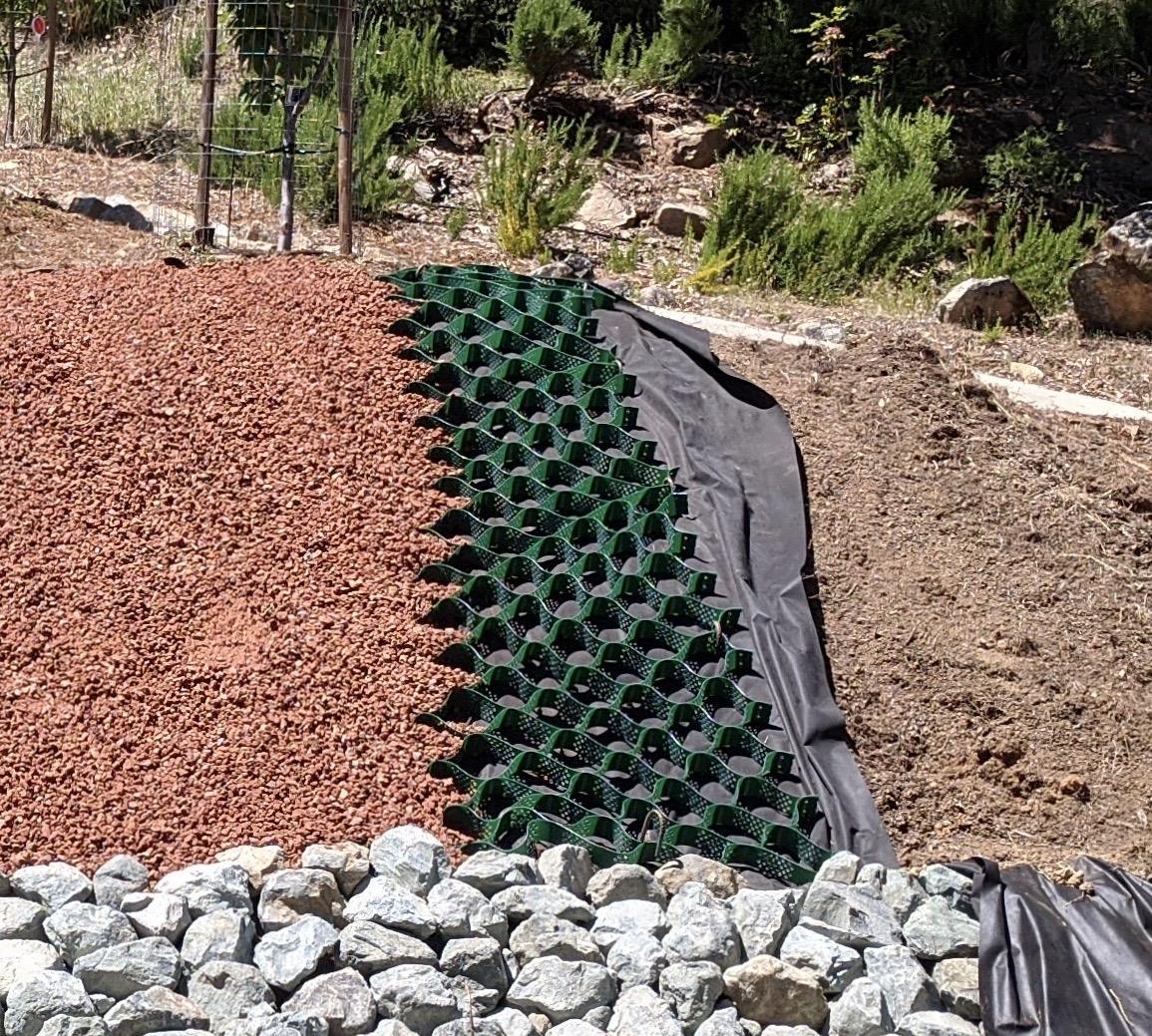
CSIR-CRRI and BPCL are recognised by the India Book of Records and Asia Book of Records for using geocells made from end-of-life plastic in road construction. The development is for circular economy and sustainable infrastructure.
Geocells from End-of-Life Plastic:
| Dimension | Key Details |
|---|---|
| Recognised Institutions | CSIR-Central Road Research Institute and Bharat Petroleum Corporation Limited are recognised for using technical textile geocells made from end-of-life plastic. |
| Demonstration Site | The demonstration has been conducted near Delhi on the DND–Faridabad–KMP Expressway. |
| Supporting Agency | The project is supported by the National Highways Authority of India. |
| Circular Economy Linkage | The project aligns with India’s circular economy goals by converting plastic waste into high-value infrastructure material. |
| Geocells | Geocells are 3-dimensional honeycomb-like cellular confinement systems used to improve load-bearing capacity and soil stability. |
| Materials | Geocells are generally made from high-density polyethylene or polyester, while recent innovations use recycled plastic or jute. |
| Function | Expanded geocells filled with soil, sand, or aggregate provide lateral confinement and create a rigid mattress effect for load distribution. |
| CSIR-CRRI | CSIR-Central Road Research Institute has been established in 1952 as a national laboratory under the Ministry of Science and Technology. |
| Research Areas | CSIR-CRRI conducts research and consultancy in road transportation, highway engineering, bridge design, and traffic safety. |