|
UN Special Report flags record 5.9 mm/year sea-level rise in 2024
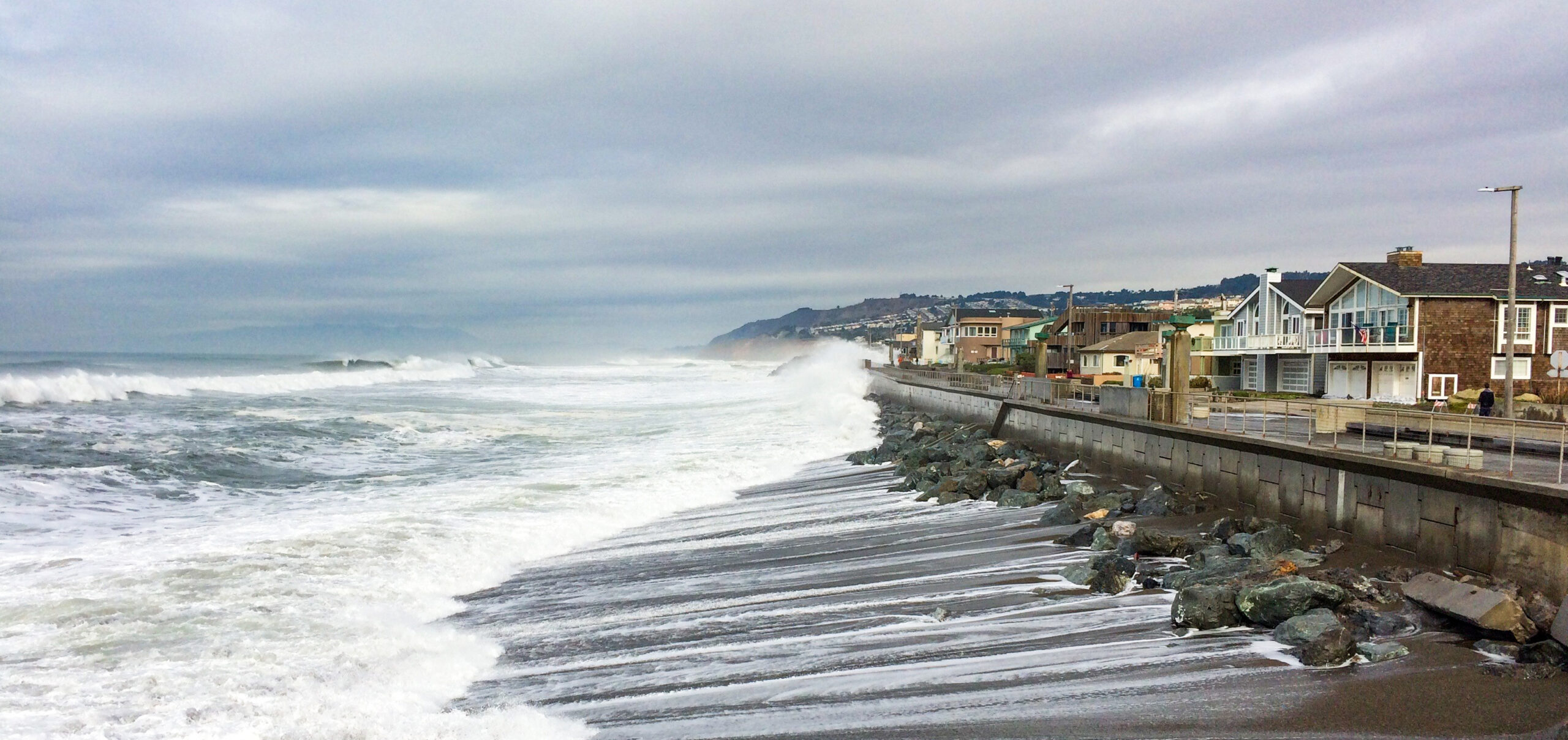
A UN Secretary-General’s Special Report flags accelerating sea-level rise and records a global sea-level rise of 5.9 mm/year in 2024, the highest annual increase on record. The report, titled “Challenges related to sea-level rise and ways and approaches to address it”, is presented at the 55th Pacific Islands Forum Leaders Meeting in Palau.
UN SG Special Report on Sea-Level Rise and 55th PIF:
| Dimension | Key Details |
|---|---|
| Record sea-level rise | In 2024, the global sea level rises by 5.9 mm per year, representing the highest annual increase on record. |
| Coastal population exposure | Approximately 770 million individuals, about 10% of the global population, reside in coastal regions less than 5 meters above the high-tide line. |
| Displacement projection | Without urgent adaptation measures, as many as 1.2 billion people may be displaced by 2050. |
| Current infrastructure damage estimate | Current damage to coastal infrastructure exceeds $1.8 trillion. |
| Projected global losses | By 2100, potential annual global losses range from $1.2 trillion to $4 trillion in the absence of adequate adaptation. |
| Causes of sea-level rise | Sea-level rise is driven by global warming, thermal expansion of seawater due to increased temperatures, and melting of glaciers and polar ice sheets. |
| GMSL linkage | Thermal expansion and melting of glaciers and polar ice sheets collectively contribute to the rise in Global Mean Sea Level (GMSL). |
| High-risk regions | Low-lying coastal and deltaic regions are especially susceptible, and major at-risk urban centers include Mumbai, Kolkata, and Dhaka. |
| South Asia displacement risk figure | Over 14 million individuals in these South Asian regions face imminent risk of displacement due to permanent inundation. |
| Land subsidence | Land subsidence refers to the downward movement of land relative to sea level. |
| Relative sea-level rise factor | The combination of sea-level rise and land subsidence results in an increased relative sea-level rise. |
| Impacts intensified by land subsidence | Land subsidence can intensify impacts such as coastal flooding, permanent inundation, displacement of populations, and saltwater intrusion. |
| Saltwater intrusion | Saltwater intrusion refers to the encroachment of seawater into freshwater systems. |
| Saltwater intrusion impacts | Saltwater intrusion can adversely impact drinking water supplies, agricultural production and irrigation systems, groundwater-dependent ecosystems, and soil quality and fertility. |
| Human rights threatened | Sea-level rise poses threats to rights including adequate housing, safe drinking water and sanitation, food and health, education, livelihood, and culture and community identity. |
| Groups highlighted as particularly vulnerable | Small Island Developing States (SIDS), Indigenous Peoples, and low-lying coastal communities are particularly vulnerable. |
| PIF theme | The 55th Pacific Islands Forum theme is ‘Building Economies: Life. Action. Unity’. |
| PIF meeting frequency and function | The Pacific Islands Forum meets annually to develop collective responses to regional issues and deliver on a vision for a resilient Pacific Region of peace, harmony, security, social inclusion, and prosperity. |
| PIF membership | The Pacific Islands Forum comprises 18 members: Australia, the Cook Islands, the Federated States of Micronesia (FSM), Fiji, French Polynesia, Kiribati, Nauru, New Caledonia, New Zealand, Niue, Palau, Papua New Guinea (PNG), the Marshall Islands, Samoa, Solomon Islands, Tonga, Tuvalu, and Vanuatu. |