|
BirdLife International Releases State of the World’s Birds 2026
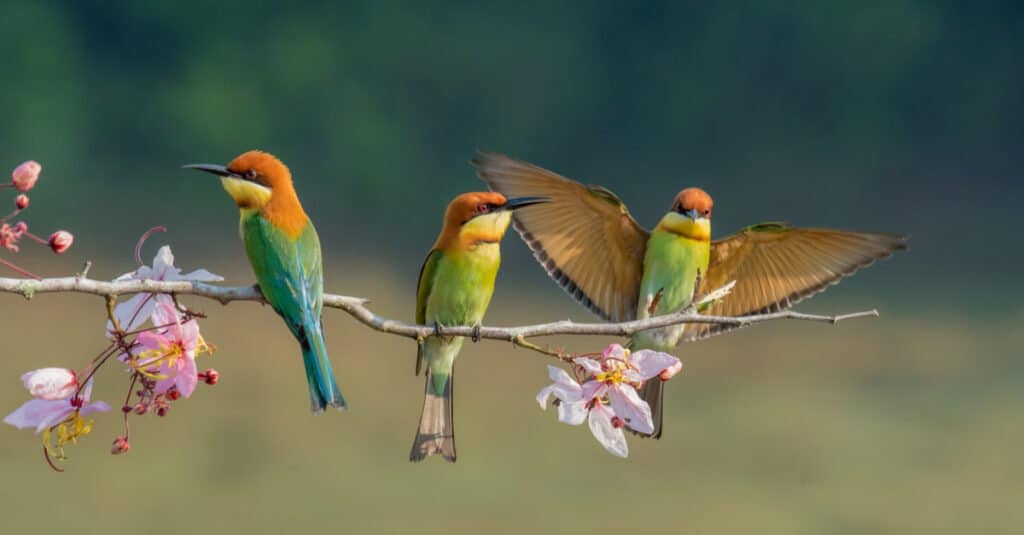
BirdLife International publishes its flagship quadrennial report, State of the World’s Birds (Flyways Edition) 2026, at the Global Flyways Summit in Nairobi, Kenya. The report presents quantified findings on migratory bird declines and habitat condition, alongside the Nairobi Flyways Declaration signed by over 100 organizations.
State of the World’s Birds 2026 and Nairobi Flyways Declaration:
| Dimension | Key Details |
|---|---|
| Key finding: migratory bird population trend | Nearly 45% of global migratory bird species are undergoing population declines. |
| Key finding: extinction risk | 1 in 9 (11%) migratory bird species are currently threatened with global extinction. |
| Key finding: condition of Key Biodiversity Areas | Scientific monitoring reveals that 58% of 1,099 KBAs critical for migratory birds are in poor or very poor ecological condition. |
| Most vulnerable avian groups | Seabirds and shorebirds are faring the worst among avian groups. |
| Habitats relied upon by the most vulnerable groups | Seabirds and shorebirds rely heavily on coastal intertidal wetlands and marine ecosystems. |
| Primary drivers of decline | Drivers comprise agricultural expansion and intensification; loss and fragmentation of critical staging and stopover habitats along migration routes; illegal killing, hunting, and trapping; climate change; invasive alien species; and energy infrastructure collision risks. |
| Illegal killing estimate | Illegal killing, hunting, and trapping comprise an estimated 13 million to 42 million birds taken annually in Europe, the Mediterranean, and the Middle East. |
| Nairobi Flyways Declaration: core premise | The declaration formally recognizes that isolated national conservation efforts are insufficient for migratory birds. |
| Nairobi Flyways Declaration: action requirement | Survival requires synchronized, transboundary action across entire flyways, the continental corridors connecting breeding, stopover, and wintering grounds. |
| Nairobi Flyways Declaration: signatories | Over 100 organizations sign the declaration, including national governments, international research bodies, conservation NGOs, and financial institutions. |
| Integration of development finance | Multilateral development banks are explicitly integrating flyway conservation into large-scale infrastructure and regional development lending frameworks. |
| ADB commitment | Asian Development Bank plans to mobilize $3 billion over the next decade under its Regional Flyway Initiative to protect at least 50 priority wetland ecosystems along the East Asian-Australasian Flyway (EAAF). |
| CAF commitment | Development Bank of Latin America and the Caribbean commits $3 billion to $5 billion by 2050 to safeguard over 30 key terrestrial and marine landscapes along the Americas flyways. |
| World Bank and BirdLife partnership pledge | World Bank and BirdLife partnership pledges multi-billion-dollar frameworks targeted at protecting flyway networks spanning Africa, Europe, and Asia supporting over 2 billion migratory birds. |