|
Scientists Discover Three New Sarasaeschna Boghawker Dragonflies in Northeast India
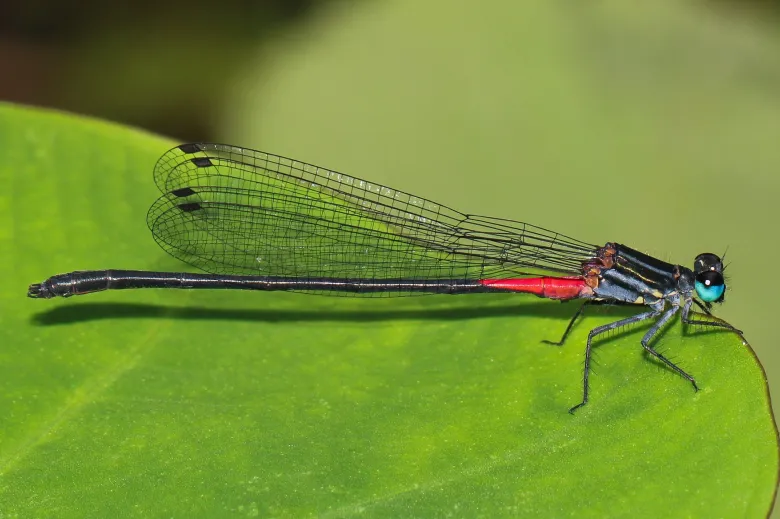
Scientists have recently discovered 3 new species of dragonflies in Northeast India. The discovery is currently relevant for biodiversity documentation and freshwater ecosystem conservation.
New Dragonfly Species in Northeast India:
| Dimension | Key Details |
|---|---|
| New Species | The 3 newly identified species are Clouded Boghawker, Siang Boghawker, and Long-tailed Boghawker. |
| Scientific Names | The scientific names are Sarasaeschna nuboides, Sarasaeschna sigotaayo, and Sarasaeschna dosdewaensis. |
| Order | The species belong to the order Odonata. |
| Family | The species belong to the family Aeshnidae. |
| Common Morphology | Dragonflies have large multifaceted eyes, two pairs of wings, and elongated bodies. |
| Vision | Their eyes have up to 30,000 facets and provide nearly 360° vision. |
| Behaviour | Dragonflies are fast flyers and voracious predators of mosquitoes and flies. |
| Evolutionary Note | Dragonflies predate dinosaurs by over 100 million years. |
| Habitat and Distribution | Dragonflies are found near freshwater habitats worldwide, and Northeast India is recognised as an odonate biodiversity hotspot. |
| Clouded Boghawker | Clouded Boghawker is endemic to Siang Valley in Arunachal Pradesh and occurs in shallow shaded forest ponds in humid valleys. |
| Siang Boghawker | Siang Boghawker is endemic to Siang Valley in Arunachal Pradesh and occurs near ponds where it perches close to water. |
| Long-Tailed Boghawker | Long-tailed Boghawker is endemic to Karimganj district in Assam and occurs near forest trail ponds and streams. |
| Ecological Importance | Dragonflies act as natural predators of mosquitoes and indicate freshwater ecosystem health. |
| Dragonflies and Damselflies | Dragonflies belong to suborder Anisoptera, while damselflies belong to suborder Zygoptera. |
| Key Difference | Dragonflies are larger, robust, strong fliers with wings held horizontal at rest and eyes often touching, while damselflies are smaller, delicate, slower fliers with wings held vertical together at rest and separated eyes. |