|
Scientists Confirm India’s First Pufferfish Poisoning Case Linked to Tetrodotoxin
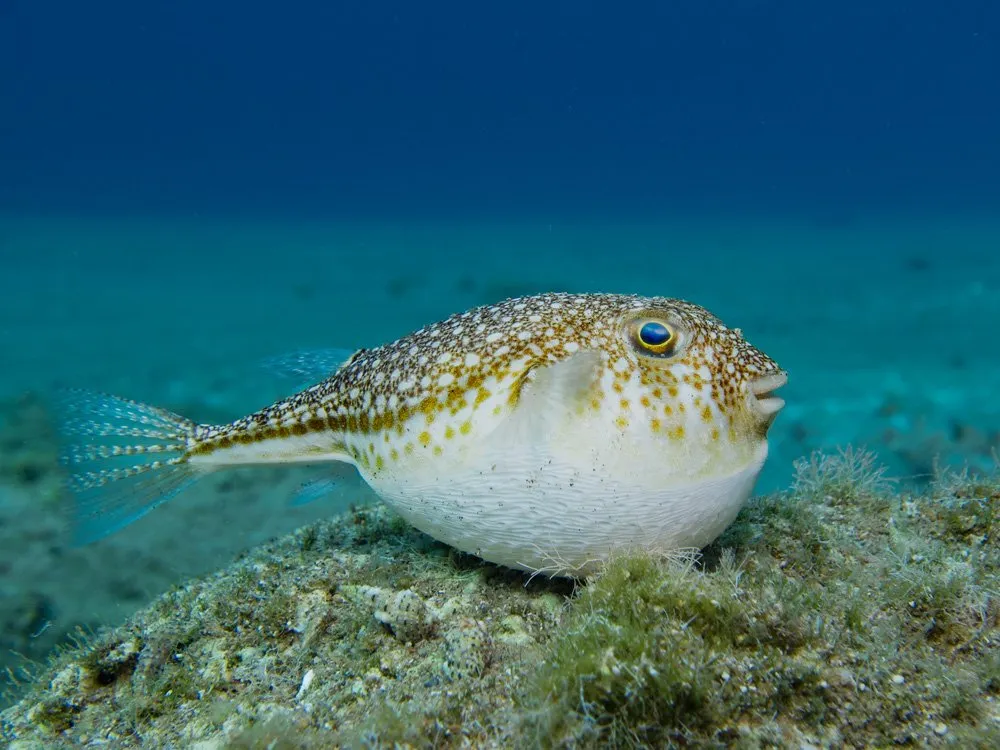
Scientists confirm India’s first reported case of pufferfish poisoning linked to tetrodotoxin (TTX). The trigger is the confirmation of poisoning and the identification of TTX as the causal toxin in India.
Pufferfish & Tetrodotoxin (TTX) :
| Dimension | Key Details |
|---|---|
| Taxonomy | Pufferfish belong to the order Tetraodontiformes. |
| Other Names | Locally known as toadfish, patkafish, balloonfish and fugu. |
| Habitat & Feeding | Pufferfish are omnivorous and benthic in habitat. |
| Distribution | Primarily found in the Western Ghats and major basins such as the Ganga, Brahmaputra and Mahanadi. |
| Freshwater Pufferfish | India are often endemic to specific geographical areas and serve as indicators of healthy river ecosystems. |
| Key Defence Trait | They can inflate into a ball shape to evade predators. |
| Status in India | Indian waters support eight genera and 32 species of pufferfish. |
| Conservation Status (IUCN) | Vulnerable. |
| Toxin Present | Some puffer fish carry tetrodotoxin (TTX), described as one of the most potent neurotoxins known in nature. |
| Mechanism of Toxicity | Tetrodotoxin blocks nerve sodium channels. |
| Health Effects | Can cause paralysis, respiratory failure and death. |
| Chemical Structure | Consists of an oxygenated 2,4-dioxaadamantane core and a guanidinium group. |
| Chemical Properties | Heat-stable, water-soluble, and a non-protein quinazoline derivative. |
| Origin of TTX | Evidence suggests pufferfish do not synthesise the toxin themselves. |
| Probable Source | Originate from symbiotic or ingested bacteria such as Vibrio, Pseudomonas, Aeromonas and Bacillus. |