|
Right to Protest in India
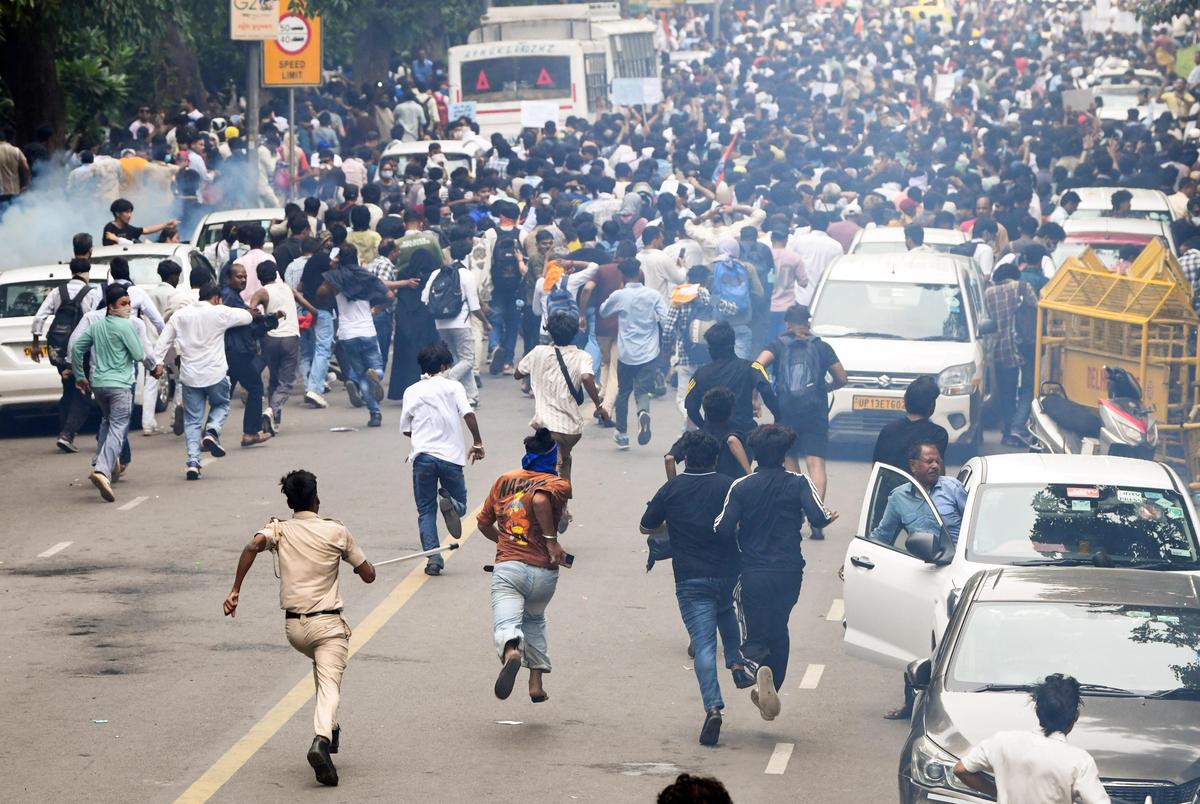
The right to protest gains renewed attention after clashes between protesters and police during the “Sansad Chalo” march. The news focuses on constitutional provisions, statutory regulation, and Supreme Court judgments governing protests in India.
Right to Protest in India: Legal Provisions and Key Judgments
| Dimension | Key Details |
|---|---|
| Constitutional Provisions | Article 19(1)(a) provides for freedom of speech and expression, Article 19(1)(b) provides for the right to assemble peacefully and without arms, and Article 19(1)(c) provides for the right to form associations or unions. |
| Regulation of Protest | Articles 19(2) and 19(3) regulate these rights by providing for reasonable restrictions on grounds of public order, sovereignty, security, decency, or morality. |
| Statutory Provision on Permission | Section 163 of the Bharatiya Nagarik Suraksha Sanhita mandates police permission for protests, and it earlier corresponds to Section 144 of the CrPC. |
| Supreme Court Judgment: Himat Lal K. Shah v. Commissioner of Police (1973) | The judgment authorises State regulation of public assembly for public order while upholding the right to public assembly. |
| Supreme Court Judgment: Mazdoor Kisan Shakti Sangathan v. Union of India (2018) | The judgment provides for guidelines balancing protest rights with residents’ right to peace and free movement. |
| Supreme Court Judgment: Amit Sahni v. Commissioner of Police (2020) (Shaheen Bagh) | The judgment mandates that public spaces cannot be occupied indefinitely for protests. |