|
NASA’s Nancy Grace Roman Space Telescope
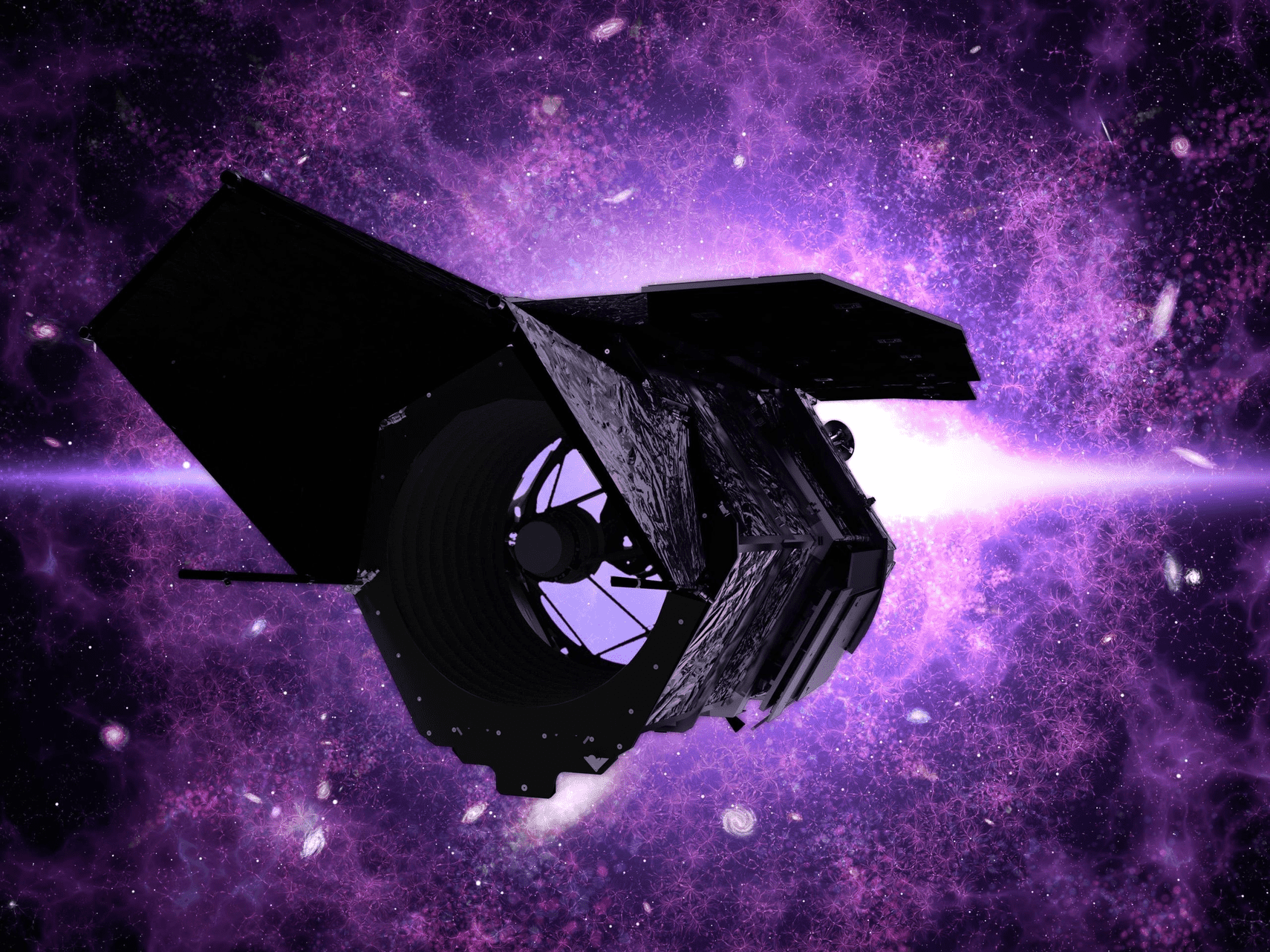
NASA’s Nancy Grace Roman Space Telescope is set to begin its journey to a new home in deep space on August 30. The telescope is described as NASA’s next flagship orbital observatory and is associated with research on dark energy, exoplanets, and infrared astrophysics.
Nancy Grace Roman Space Telescope (NASA):
| Dimension | Key Details |
|---|---|
| Agency and status | It is NASA’s next flagship orbital observatory. |
| Designed focus areas | It is designed to settle essential questions in the areas of dark energy, exoplanets, and infrared astrophysics. |
| Main topic areas | Scientists by using this telescope focus on three main topic areas: dark energy, exoplanets, and dark matter. |
| Milky Way observation | It provides one of the deepest-ever views into the heart of the Milky Way galaxy. |
| Orbit location | It orbits around the second Sun-Earth Lagrange point, or L2. |
| Objectives | It monitors hundreds of millions of stars in search of tell-tale flickers that betray the presence of planets, distant stars, small icy objects that haunt the outskirts of the solar system, and isolated black holes. |
| Instrument: Wide Field Instrument | It comprises a 300–megapixel infrared camera. |
| Wide Field Instrument: field of view | It has a field of view that is 100 times greater than the Hubble infrared instrument, capturing more of the sky with less observing time. |
| Wide Field Instrument: measurement scope | It measures light from a billion galaxies over the course of the mission lifetime. |
| Wide Field Instrument: microlensing survey | It performs a microlensing survey of the inner Milky Way to find ~2,600 exoplanets. |
| Instrument: Coronagraph Instrument | It comprises a technology demonstration which performs high contrast imaging and spectroscopy of individual nearby exoplanets. |
| Survey: Galactic Bulge Time-Domain Survey | Its Galactic Bulge Time-Domain Survey focuses on the Milky Way. |