|
3D MHD Model to Forecast Coronal Mass Ejections
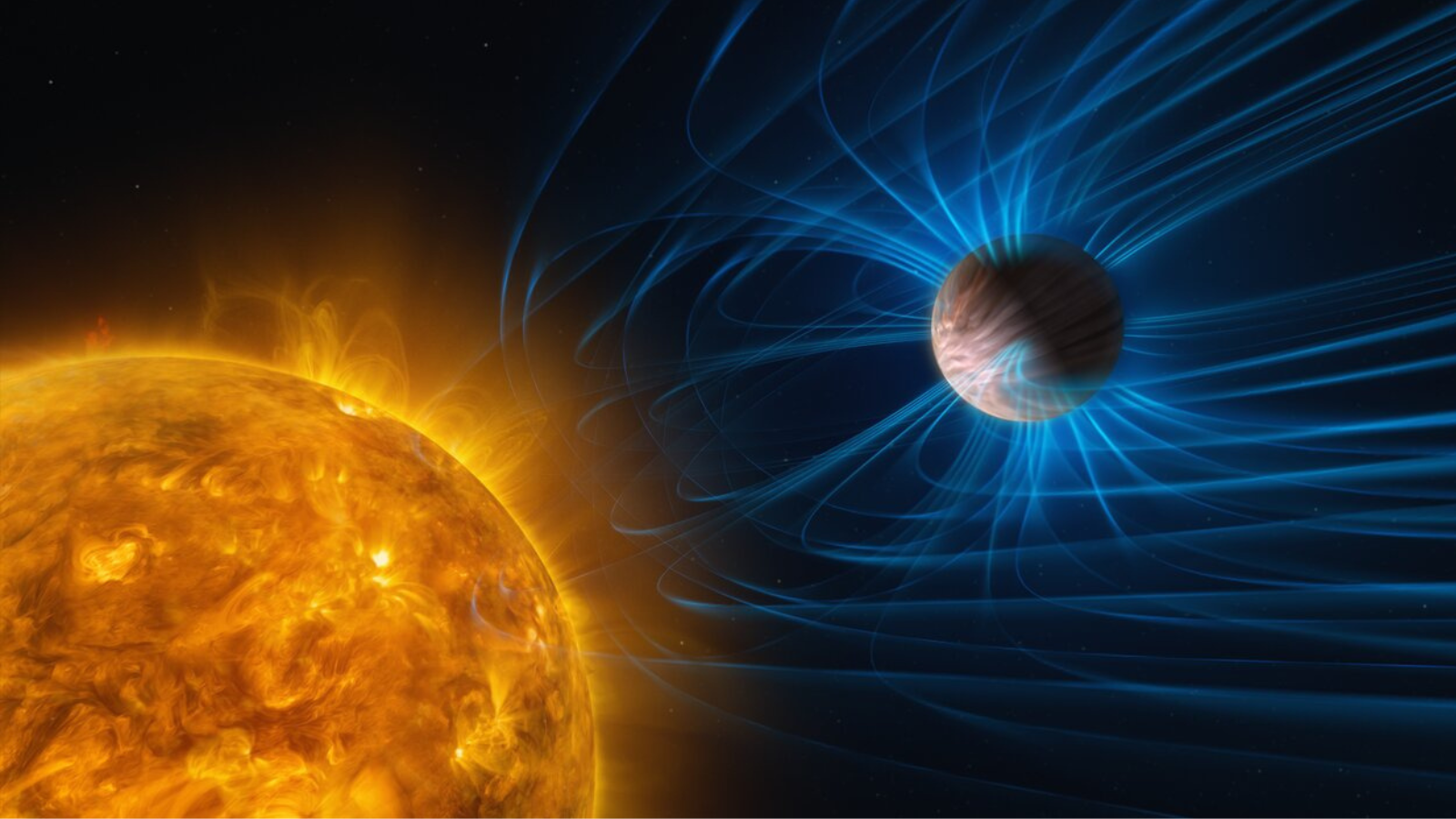
Scientists develop a 3-D computer simulation model to improve forecasting of Coronal Mass Ejections (CMEs) and predict their characteristics. The study is led by the Indian Institute of Astrophysics (IIA) under the Department of Science and Technology (DST), with collaboration from researchers in the United States, Hungary, and Finland.
3D MHD Model to Forecast Coronal Mass Ejections:
| Dimension | Key Details |
|---|---|
| Model type | The model comprises a 3-D magnetohydrodynamic (MHD) computer simulation model for CMEs. |
| Objective | The model provides for tracing how magnetic energy accumulates in the Sun’s outer atmosphere and is released during powerful solar eruptions. |
| Core trigger structure for CMEs | Magnetic flux ropes (MFRs) comprise twisted structures made up of magnetic field lines embedded in solar plasma, and are considered key triggers of CMEs. |
| Model scope on MFRs | The 3D MHD model traces the complete evolution of a magnetic flux rope. |
| Magnetic reconnection process | Magnetic reconnection occurs when opposing magnetic field lines rearrange, releasing stored magnetic energy and accelerating solar plasma; it intensifies through a thin current sheet and causes rapid eruption of the magnetic flux rope. |
| Key finding: reconnection and acceleration | The study finds a clear relationship between the rate of magnetic reconnection and CME acceleration, with higher reconnection rate providing for greater CME acceleration. |
| Predictive indicator | Reconnection flux provides for predicting the speed and energy of a CME, and their potential impact on Earth. |
| Validation dataset and instruments | The model’s results have been validated using real-world data from NASA’s Solar Dynamics Observatory, specifically the HMI and AIA instruments. |
| CME definition and speed | Coronal Mass Ejections (CMEs) comprise massive eruptions of magnetised plasma from the Sun that travels at millions of kilometres per hour. |
| Earth impacts | Earth-directed CMEs can cause geomagnetic storms and disrupt satellites, communication systems, power grids, and navigation systems. |