|
MEA on Passport Seva Divas
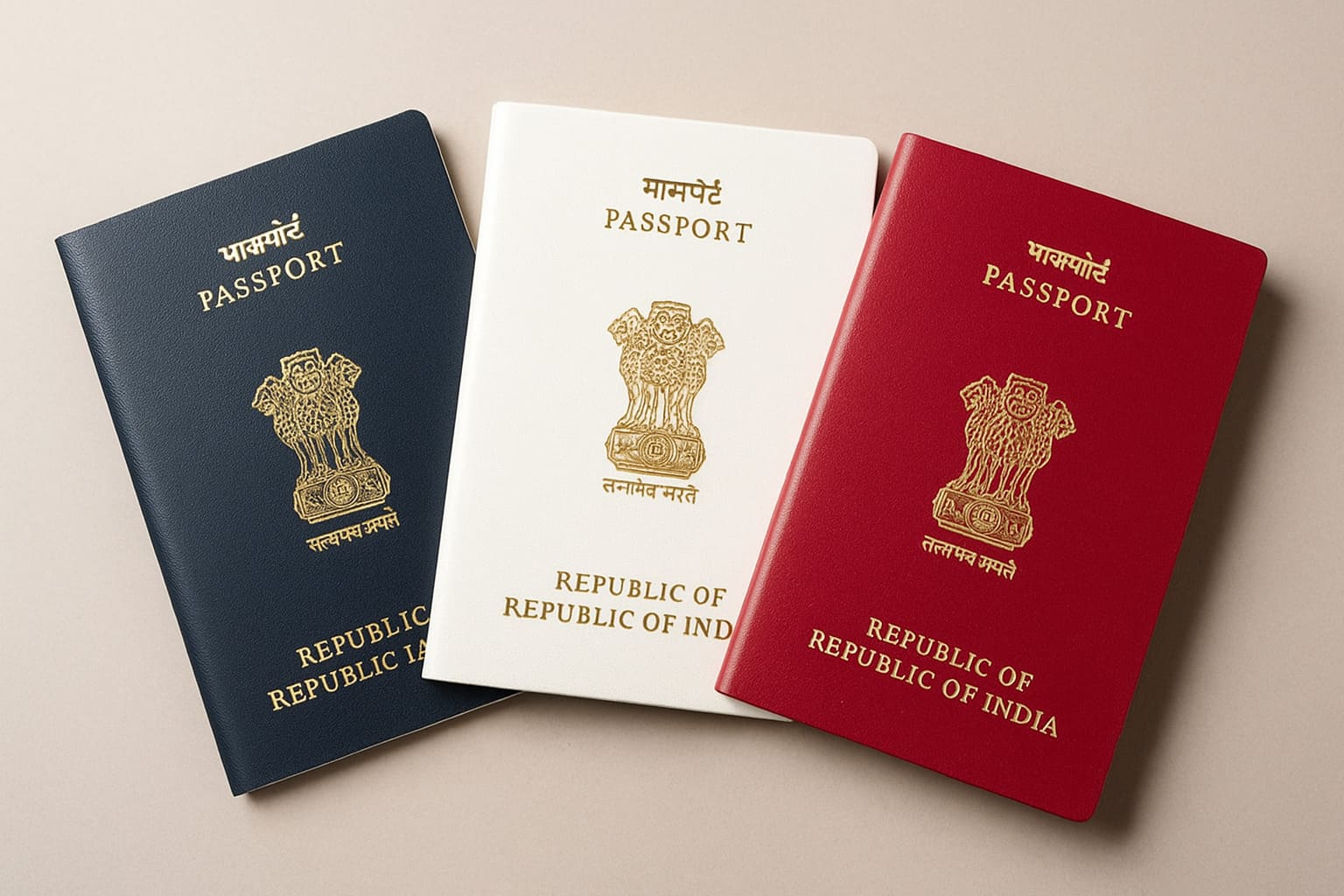
The Ministry of External Affairs (MEA) provides for a clarification on Passport Seva Divas (June 24) that an Indian passport is primarily a travel document and not conclusive proof of citizenship. Indian citizenship is governed by Articles 5–11 (Part II) of the Constitution and the Citizenship Act, 1955. The public debate comprises questions on which government documents constitute legal proof of Indian citizenship.
Passport, Citizenship, and Proof (as per MEA clarification):
| Dimension | Key Details |
|---|---|
| Constitutional Basis | Acquisition and determination of Indian citizenship is governed by Articles 5–11 (Part II) of the Constitution. |
| Statutory Basis | Acquisition and determination of Indian citizenship is governed by the Citizenship Act, 1955. |
| Modes of Citizenship | Indian citizenship is based on birth, descent, registration, naturalisation, or incorporation of territory. |
| Legal Position on Citizenship Proof | No law identifies a single universal document as definitive proof of Indian citizenship, and government-issued documents only serve as evidence supporting a legal claim of citizenship. |
| Passport and Citizenship (Legal Distinction) | A passport is issued only after the government is satisfied that the applicant is an Indian citizen, but it does not create citizenship and cannot conclusively establish citizenship if challenged before a court. |
| Passports Act Provision | Section 20 of the Passports Act authorises the Central Government to issue a passport or travel document even to a non-citizen in exceptional cases where public interest so requires, and this provision has been used for stateless persons, certain Tibetan refugees, and Sri Lankan Tamil refugees requiring international travel. |
| MHA Parliamentary Clarification (2020) | The Ministry of Home Affairs (MHA) provides for a clarification (2020) that Aadhaar, Passport, Voter ID, PAN Card, and Birth Certificate are not legally designated as proof of citizenship, and citizenship is determined strictly according to the Citizenship Act, 1955 and related rules. |
| Supreme Court Observation (Bihar SIR hearings) | During hearings on Bihar’s Special Intensive Revision (SIR) of electoral rolls, the Supreme Court observes that passports and birth certificates possess stronger evidentiary value but does not declare them conclusive proof of citizenship. |
| Judicial Precedent: Sarbananda Sonowal v. Union of India (2005) | The Supreme Court holds that the burden of proving citizenship rests on the individual claiming it. |
| Judicial Precedent: State of Andhra Pradesh v. Abdul Khader (1962) | The Court treats a passport as relevant evidence but examines constitutional criteria such as birth, domicile, and migration history before determining citizenship. |
| Bombay High Court (2013) | The Court holds that documentary possession alone is insufficient without establishing parental citizenship. |
| Citizenship Certificates (Citizenship Act) | Citizens by registration or naturalisation receive formal citizenship certificates under Sections 5 and 6 of the Citizenship Act, while citizens by birth receive no equivalent document. |
| Common Documentary Evidence Used | Citizenship is generally established through a combination of documents: birth certificates, electoral rolls, school records, land records, passports, etc. |
| Citizenship Rules, 2003 (NRC framework) | The Citizenship Rules, 2003, provides for: a National Register of Indian Citizens (NRIC), National, State, and Local Citizenship Registers, and issuance of citizenship identity cards. |
| Aadhaar and Citizenship | The Home Ministry provides for a position that Aadhaar should not be treated as proof of citizenship, since it verifies identity and residence rather than citizenship. |
| Assam NRC Experience (2015–2019) | The Assam NRC exercise (2015–2019) has required applicants to establish links with legacy records predating 24 March 1971, and nearly 19 lakh applicants have been excluded due to missing or inconsistent documents, spelling discrepancies, and difficulties in proving family lineage. |