|
Mahananda Wildlife Sanctuary, Darjeeling
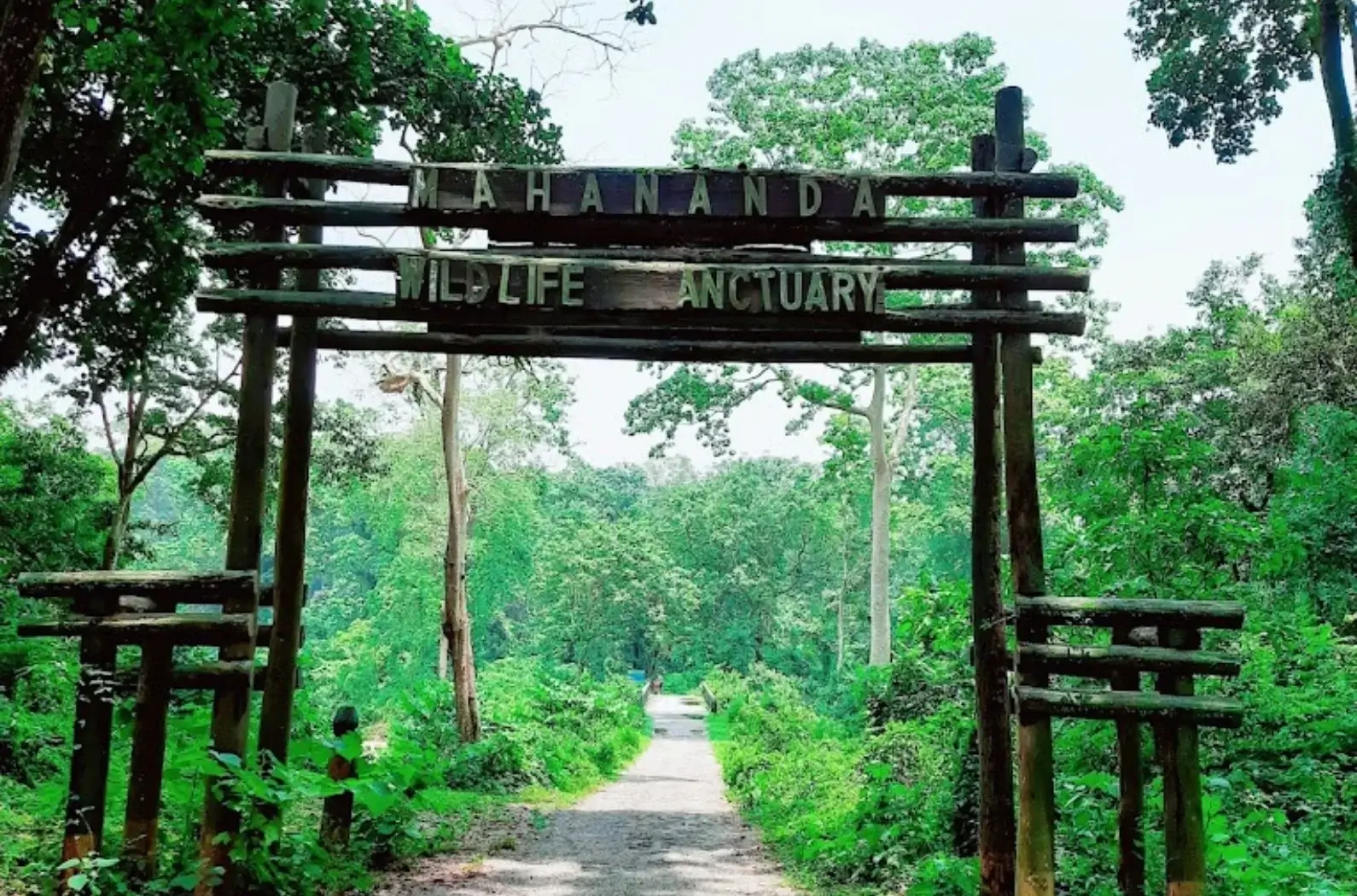
The Bengal government regulates the eco-sensitive zone (ESZ) around the Mahananda Wildlife Sanctuary by shrinking it from 5 km to 1 km. The update keeps the sanctuary in news due to the revised ESZ extent around a protected area in Darjeeling district, West Bengal.
Mahananda Wildlife Sanctuary (Darjeeling):
| Dimension | Key Details |
|---|---|
| Geographical setting | The sanctuary’s location comprises the Darjeeling district of West Bengal, on the foothills of the Himalayas, between the Teesta and the Mahananda rivers. |
| Origin and status timeline | The sanctuary’s origin has been started as a game sanctuary for children in 1955, and sanctuary status has been accorded in 1959. |
| Protection focus (as per 1959 status) | The sanctuary status mandates protection mainly of the Indian bison and Royal Bengal Tiger. |
| Altitude range | The topography comprises an altitude variation from 500 ft near Sukna (southern area) to 4,300 ft near Latpanchar (northern area). |
| Vegetation types | The vegetation comprises riverine forests and dense mixed-wet forests due to altitude differences. |
| Flora | The flora comprises 300 different kinds of plantations, with prominent ones: Sal, Simul, Sisco, and Khair. |
| Flora | Other trees comprise Lali, Jamur, Gamar, bamboos, fern, orchids, teak, and Udal. |
| Fauna | The mammalian fauna comprises Royal Bengal Tiger, Indian elephants, Indian bison, spotted deer, barking deer, lesser cat species, Himalayan black bear, leopard including clouded leopard, serow, porcupines, snakes, and other smaller animals. |
| Elephant movement | The fauna in the plain areas of the lower region comprises elephants that migrate from Nepal, Assam, or other forests of West Bengal. |
| Avifauna | The avifauna comprises about 243 species, including Himalayan pied hornbill, peacock, peafowl, fouls, king fisher, drongo, robin, fly catchers, and woodpeckers. |
| Migratory birds | The avifauna comprises migratory birds that arrive from Central Asia. |