|
Scientists Identify Likweli Monkey Species
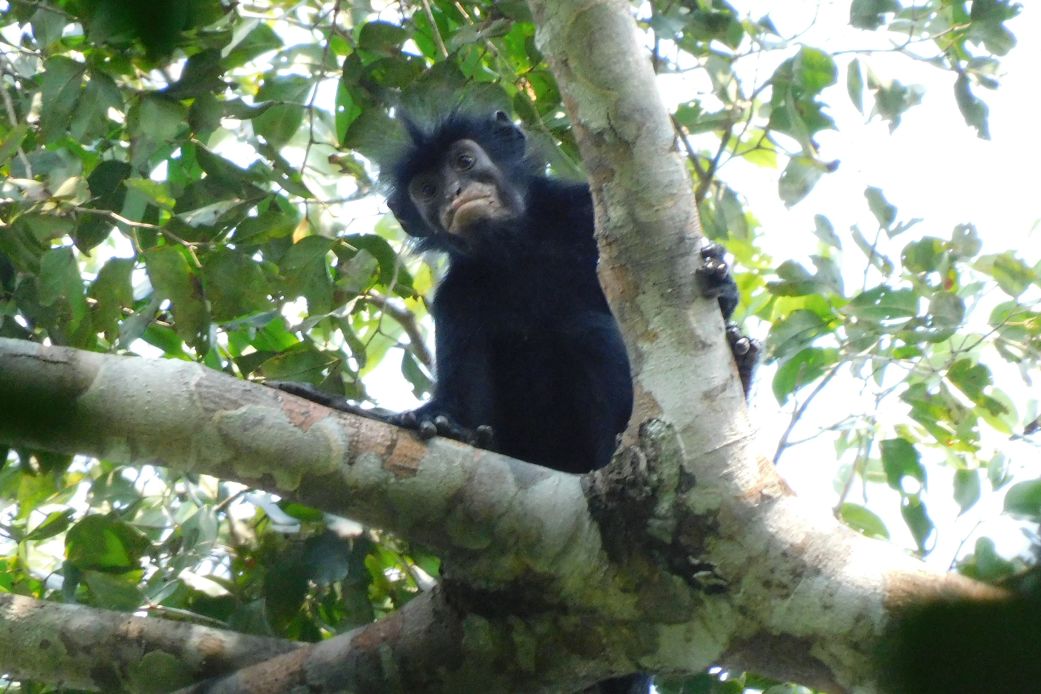
Scientists currently identify the Likweli, a previously unknown monkey species, in the rainforests of the Democratic Republic of the Congo. The discovery marks Africa’s 5th new monkey species discovery in 75 years.
Likweli Monkey (Colobus congoensis):
| Dimension | Key Details |
|---|---|
| Common name | The species is commonly known as the Likweli. |
| Scientific name | The species is scientifically named Colobus congoensis. |
| Naming note | The scientific name Colobus congoensis provides for honouring Congo’s biodiversity. |
| Family | The species belongs to the Colobus family. |
| Location of identification | The species is identified in the rainforests of the Democratic Republic of the Congo. |
| Appearance | The species comprises glossy black fur, orange‑pink lips, and a distinctive roaring call. |
| Diet and digestive adaptation | The species comprises herbivores that rely on specialised, ruminant-like digestive systems to process plant matter. |
| Foregut fermentation mechanism | The ruminant-like digestive system uses foregut fermentation to break down plant-based cellulose using symbiotic gut microbes. |
| Unique trait | Colobus monkeys lack a functional thumb. |
| Ecological role | The species comprises herbivores of the canopy that eat canopy plants and spread seeds through waste, growing new trees, opening sunlight, and fertilizing the rainforest floor. |
| Conservation status note | The species has a small estimated population and is already at risk due to hunting and deforestation. |
| Evolutionary insight note | The discovery reshapes understanding of primate evolution in Central Africa. |
| Discovery count reference | The identification marks Africa’s 5th new monkey species discovery in 75 years. |