|
Low-Temperature Process Converts Polyethylene into Gasoline - and Diesel - Range Fuels
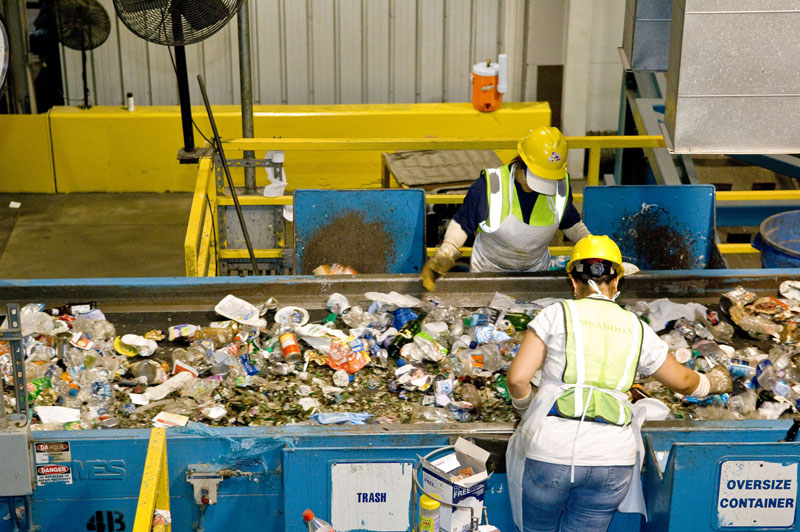
Researchers are currently demonstrating a low-temperature process that converts polyethylene into gasoline - and diesel - like liquid hydrocarbon fuels with yields reaching about 60%. The process uses commercially available inorganic molten salts containing aluminum chloride and operates below 200°C without external hydrogen gas, noble-metal catalysts, or organic solvents.
Low-Temperature Polyethylene-to-Fuel Process:
| Dimension | Key Details |
|---|---|
| Target material | The process focuses on polyethylene, a thermoplastic polymer composed of long hydrocarbon chains, used in shopping bags, food packaging, and cutting boards. |
| Consumables and additives | The process requires no external hydrogen gas, noble-metal catalysts, or organic solvents. |
| Molecular mechanism | Soft X-ray spectroscopy and Nuclear Magnetic Resonance (NMR) reveal that charged aluminum atoms bind with 3 neighboring atoms, forming hyper-acidic catalytic centers within the molten salt matrix. |
| Bond cleavage and intermediates | The acidic sites attack the saturated carbon backbone of long-chain polyethylene, cleaving it and generating reactive, positively charged carbon intermediates (carbocations). |
| Polymer architecture and fuel type | Linear polymer chains break down into lighter, highly branched short-chain hydrocarbons (gasoline-like fuels), while complex, cross-linked, or longer polymer structures yield heavier long-chain hydrocarbons (diesel-like fuels). |
| Comparison with conventional thermal pyrolysis | Conventional thermal pyrolysis operates at 450°C to 500°C in a thermal gas phase or vacuum and requires noble metals (Pt, Pd) or external H2 gas, while the molten salt process operates at below 200°C in an inorganic molten salt matrix, requires no noble metals or external H2, and provides about 60% yield of gasoline- and diesel-range liquid fuels. |
| Industrial scaling requirement | Industrial scaling depends on developing material confinement systems to prevent reactor corrosion from molten salts and simplify salt recovery and reuse. |