|
DARE Cells Trigger Apoptosis via Dronc but Stall Death to Regenerate Tissue
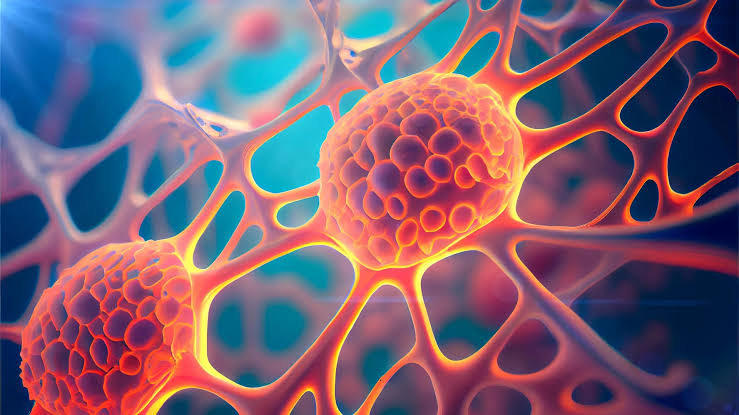
Researchers identify DARE cells that initiate the apoptosis cascade after severe damage but halt it before dying and then multiply to rebuild damaged tissue. The findings describe Dronc activation, a Myo1D-mediated survival mechanism, and feedback signalling between DARE and NARE cells during tissue regeneration.
DARE Cells and NARE Cells:
| Dimension | Key Details |
|---|---|
| DARE cells | DARE cells comprise epithelial cells in which initiator caspases, specifically Dronc, switch on to trigger cell death but the cascade stalls at the initiator stage. |
| NARE cells | NARE cells comprise a complementary population of death-resistant epithelial cells in which the initiator caspase is never activated. |
| Dronc | Dronc is the fruit fly ortholog of mammalian Caspase-9. |
| Regeneration output | DARE cells survive, proliferate rapidly, and replenish nearly 50% of damaged tissue within 48 hours. |
| Functional dependence | Removing DARE cells causes compensatory tissue repair to cease completely, and NARE cells cannot drive regeneration independently. |
| Normal apoptosis | In normal apoptosis, active initiator caspases activate downstream executioner caspases, such as Caspase-3/7, which dismantle cellular structures. |
| DARE mechanism | In DARE cells, the apoptosis pathway stalls specifically at the initiator stage despite Dronc activation. |
| Myo1D | The motor protein Myosin 1D (Myo1D) tethers active Dronc to the cell membrane, preventing it from activating executioner caspases in the cytoplasm. |
| Paracrine feedback loop | Dying neighbor cells release paracrine signals that trigger DARE cell induction; active DARE cells secrete growth factors to stimulate neighboring NARE cells; NARE cells release inhibitory signals back to DARE cells, establishing a negative-feedback loop that prevents uncontrolled tissue overgrowth or hyper-proliferation. |
| Acquired radio-resistance | When regenerated tissue is exposed to subsequent rounds of ionizing radiation, descendants of DARE cells prove about 7 times more resistant to cell death than untreated control cells. |
| Significance (cancer recurrence) | The findings provide a biological explanation for why recurrent tumors that survive initial radiotherapy or chemotherapy often return with heightened multi-drug and radiation resistance. |
| Significance (regenerative medicine) | Understanding how cells stall apoptosis without undergoing malignant transformation provides pathways to engineer controlled tissue regeneration in severe burns, ischemic injury, and organ scarring. |