|
Konark Sun Temple, Odisha
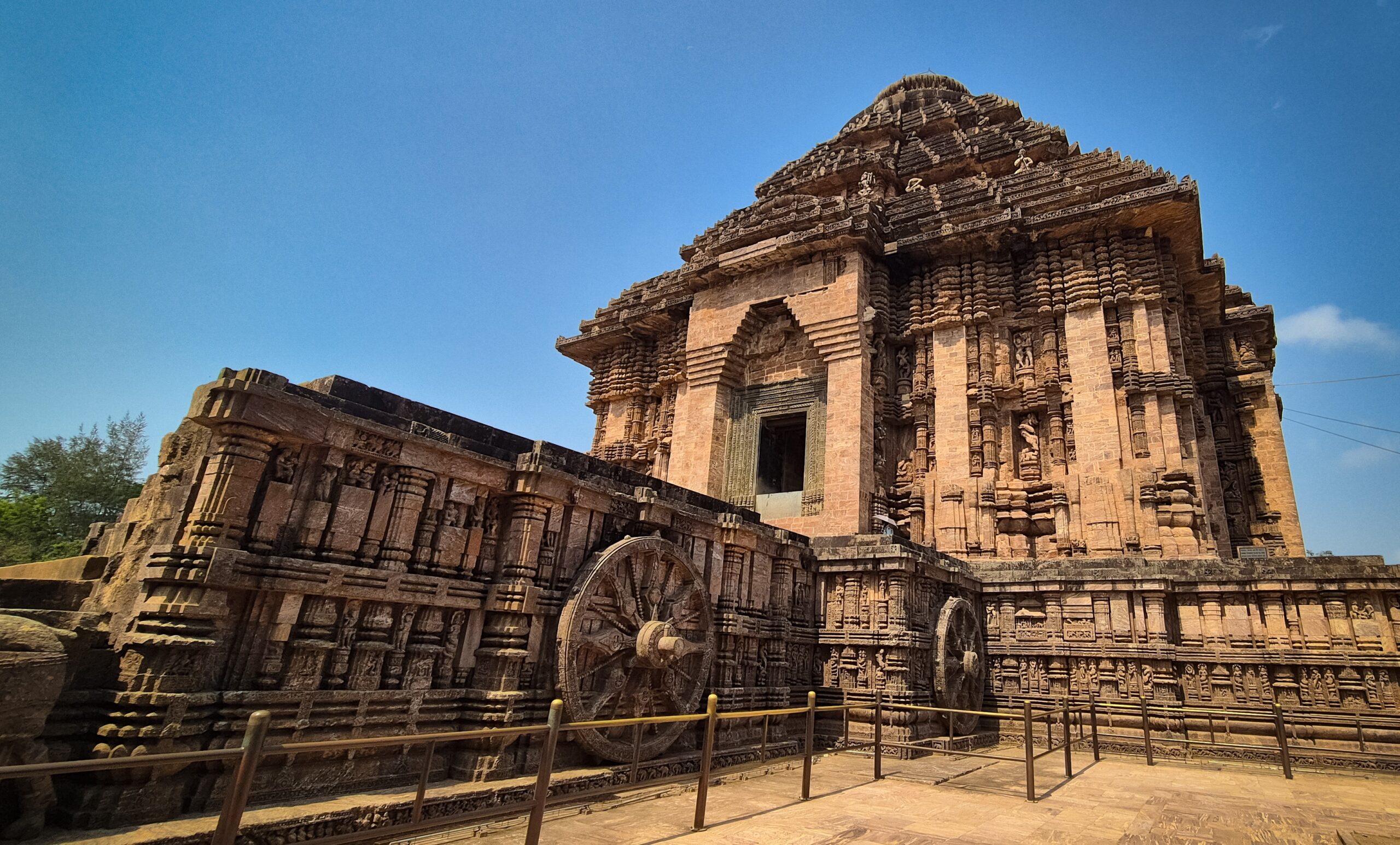
The Archaeological Survey of India begins drilling into the Jagamohan of Konark Sun Temple to remove sand packed inside during the British era. The development is structural conservation of the temple.
Konark Sun Temple:
| Dimension | Key Details |
|---|---|
| Location | Konark Sun Temple is situated in Konark, Odisha, near the Bay of Bengal. |
| Dedication | The temple is dedicated to the Hindu god Surya. |
| Golden Triangle | The temple is part of Odisha’s Golden Triangle comprising Bhubaneswar, Puri, and Konark. |
| Other Name | The temple is also referred to as the Black Pagoda due to its dark colour. |
| Construction | The temple has been built around 1250 CE by King Narasimhadeva I of the Eastern Ganga Dynasty. |
| Recognition | The temple has been recognised as a UNESCO World Heritage Site in 1984. |
| Architectural Style | The temple belongs to the Kalinga style, a sub-style of Nagara architecture. |
| Architectural Components | The architecture comprises Deula, Nata-Mandira, and Jagamohana. |
| Structural Status | The main temple tower or deul and the shikhara have collapsed, while the Jagamohan is intact. |
| Construction Material | The temple is built with Khondalite stones. |
| Khondalite Stone | Khondalite is a foliated metamorphic rock found primarily in India’s Eastern Ghats and named after the Khond tribe of Odisha and Andhra Pradesh. |
| Astronomical Alignment | The temple reflects advanced knowledge of astronomy through its alignment with sunrise, where the first rays fall on the entrance. |
| Chariot Symbolism | The temple is designed as a giant stone chariot of the Sun God with 24 intricately carved wheels and seven horses. |
| Symbolic Meaning | The 24 wheels represent the hours of the day and cycle of time, while seven horses symbolise the seven days of the week and the Sun’s energy. |
| Artistic Features | The temple reliefs depict lions, dancers, musicians, erotic sculptures, daily life, mythology, and cultural practices. |