|
Jan Vishwas Bill 2026
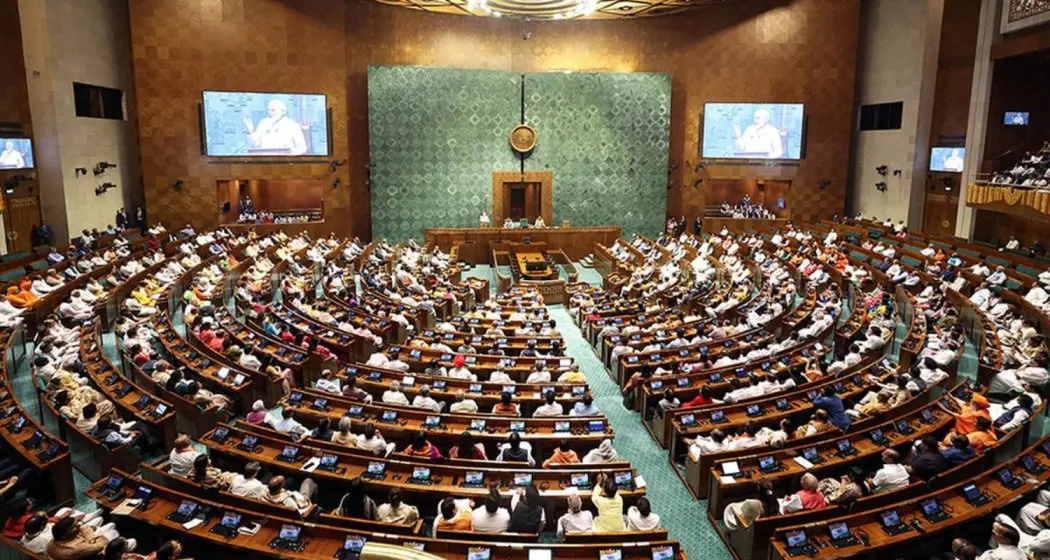
Parliament has passed the Jan Vishwas (Amendment of Provisions) Bill, 2026, expanding decriminalisation across multiple laws. The reform aims to rationalise offences and shift toward a civil enforcement framework.
Jan Vishwas Bill, 2026:
| Dimension | Key Details |
|---|---|
| Legislative Evolution | Expansion of Jan Vishwas Act 2023 which amended 183 provisions across 42 laws. |
| Scope | Amendment of 784 provisions across 79 Central laws and rationalisation of 1018 offences. |
| Decriminalisation | Decriminalisation of 805 offences by replacing imprisonment with civil penalties or warnings. |
| Omission of Offences | Removal of 125 obsolete or redundant offences. |
| Compounding | Provides for 35 offences being made compoundable allowing settlement through payment. |
| Punishment Rationalisation | Revision or reduction of penalties for 53 offences including removal of disproportionate punishments. |
| Enforcement Shift | Transition from criminal fines imposed by courts to civil penalties imposed by adjudicating authorities. |
| Types of Offences | Comprises outdated minor offences, general contraventions, procedural defaults, and obstruction-related offences. |
| Graded Enforcement | Provides for sequence of warnings, improvement notices, and penalties for repeated violations. |
| Coverage Sectors | Comprises industry laws, municipal governance, infrastructure, transport, and colonial-era laws. |
| Regulatory Context | Existence of 7305 offences across 370 Central laws with over 5333 carrying imprisonment provisions. |
| Significance | Reduction of overcriminalisation, improvement in ease of doing business, and promotion of trust-based governance. |