|
Iran Proposes Strait of Hormuz Charges for Undersea Cable Operators
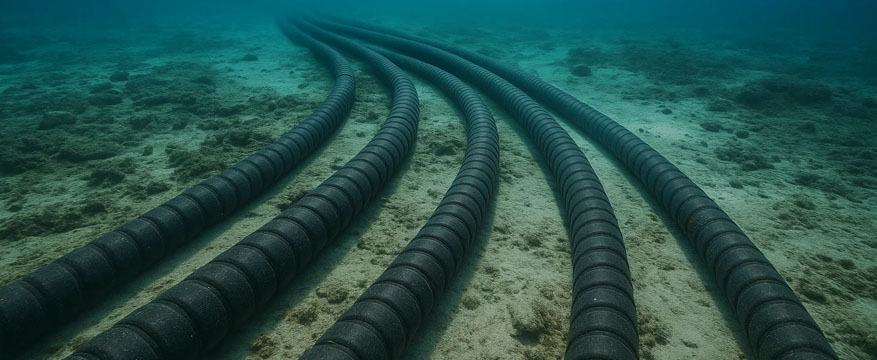
Iranian state media proposes charges on undersea cable operators in the Strait of Hormuz. The issue is for global digital connectivity and vulnerability of submarine cable networks.
Undersea Cables:
| Dimension | Key Details |
|---|---|
| Definition | Undersea cables are fibre optic lines laid on the ocean floor to carry global data. |
| Data Traffic | Undersea cables transmit between 95% and 99% of all international data traffic. |
| UNGA Recognition | The United Nations General Assembly described submarine cables as critical communication infrastructure in 2010. |
| Comparison with Satellites | Subsea cables carry larger bandwidth and are more efficient, cost-effective, and reliable than satellites. |
| Digital Chokepoints | Narrow maritime corridors such as the Red Sea and Strait of Hormuz are digital chokepoints where multiple undersea cables converge. |
| State-Sponsored Intervention | The IRGC has proposed licensing fees and annual protection payments from technology companies such as Meta, Amazon, and Microsoft. |
| Gray-Zone Warfare | Undersea cable networks are increasingly weaponised in hybrid conflict. |
| Espionage and Cyber Threats | Threats include state-sponsored wiretapping for intelligence gathering and attacks on network management systems. |
| India’s Financial Sector | Stock trading and banking systems relying on fast connectivity could face disruption within minutes. |
| India’s IT Sector | India’s IT-BPM industry depends on uninterrupted global connectivity for providing services to international clients. |
| National Security | Military communications and intelligence sharing can be affected by disruptions to undersea cable networks. |