|
Pixxel–Sarvam to Build India’s First AI Orbital Data Centre Satellite ‘Pathfinder’
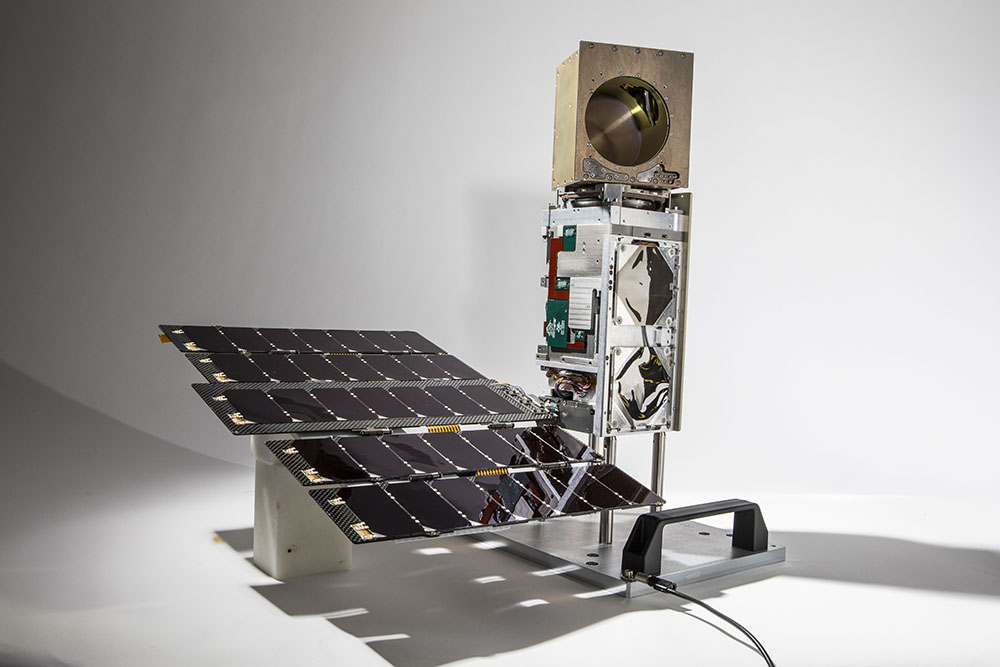
India is developing an Orbital Data Centre through a partnership between Pixxel and Sarvam. The initiative is for strengthening space-based computing and technological sovereignty.
Orbital Data Centres (ODCs):
| Dimension | Key Details |
|---|---|
| Meaning | Orbital Data Centres are scalable, cloud-enabled data processing and storage infrastructure operating directly in space. |
| Partnership | Pixxel will design, build, launch, and operate the pathfinder satellite, while Sarvam will provide the AI backbone. |
| Strategic Importance | The initiative strengthens India’s space computing capabilities and promotes technological sovereignty by reducing dependence on foreign cloud infrastructure. |
| Operational Model | ODCs can operate either independently or in conjunction with terrestrial cloud infrastructure. |
| Power Advantage | In sun-synchronous orbit, ODCs can leverage nearly continuous solar energy without interruption from night-time or weather. |
| Cooling Advantage | The vacuum of space provides natural radiative cooling, reducing the need for freshwater cooling systems used in terrestrial data centres. |
| Scalability | ODCs can be expanded through modular design and deployed faster than terrestrial data centres. |
| Terrestrial Challenges Addressed | ODCs help overcome issues such as high power consumption, land acquisition constraints, permitting delays, and environmental reviews. |
| Pathfinder Satellite | The pathfinder is a 200-kilogram-class satellite expected to reach orbit by the fourth quarter of 2026. |
| Computing Capability | The satellite will use data centre-grade GPUs, providing high-performance computing in space. |
| Imaging Capability | The satellite will carry a hyperspectral imaging camera for faster and real-time decision-making. |