|
India-US Sign Critical Minerals Framework at 11th Quad Foreign Ministers’ Meeting
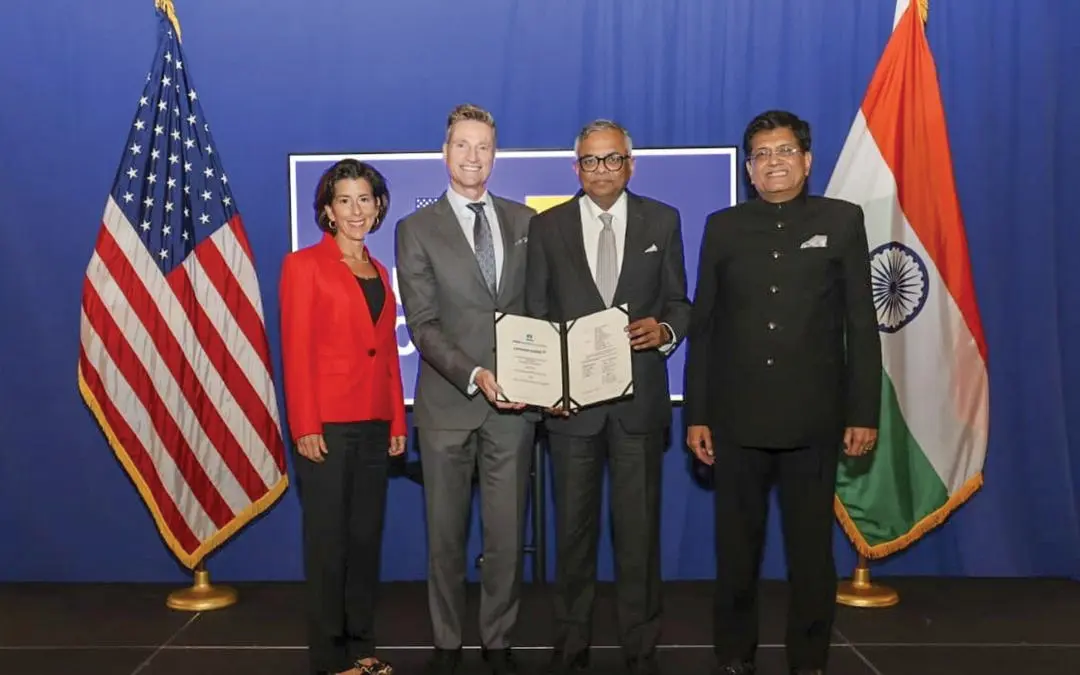
India and the United States sign the bilateral India-US Critical Minerals Framework on the sidelines of the 11th Quad Foreign Ministers’ Meeting. The framework is relevant now because China’s licensing regime on rare earth element exports impacts global supplies and Indian industry faces shortages of rare earth magnets.
India-US Critical Minerals Framework:
| Dimension | Key Details |
|---|---|
| Formal Title | The framework is formally titled “Securing of Supply in the Mining and Processing of Critical Minerals and Rare Earths”. |
| Signing Context | India and the United States sign the bilateral framework on the sidelines of the 11th Quad Foreign Ministers’ Meeting. |
| Immediate Trigger | China has imposed a licensing regime on rare earth element exports in 2025, affecting global supplies during its trade war with the United States. |
| Impact on Indian Industry | Indian industry has begun facing shortages of rare earth magnets. |
| China’s Processing Dominance | China controls 90% of global critical mineral processing. |
| India’s Import Dependence | India is 100% import-dependent for key critical minerals: cobalt, lithium, nickel, rare earth elements, and silicon. |
| Supply Chain Coverage | The framework covers cooperation across mining, processing, recycling, and related investments in critical minerals and rare earths. |
| Supply Chain Objective | The framework provides for resilient and diversified supply chains to reduce dependence on China. |
| Financing and Scrap Management | The framework provides for collaboration in financing and effective management of critical minerals and rare earths scrap. |
| Research and Investment | The framework provides for R&D collaboration and investment across the critical mineral value chain. |
| Regulatory Alignment | The framework provides for alignment of domestic laws and regulations of both countries to facilitate easier supply chain access. |
| National Security Controls | The framework provides for tighter controls to address national security requirements. |
| India-US TRUST Initiative | Secure supply routes for critical minerals are identified as a shared strategic priority under the India-US TRUST initiative in February 2025. |
| Strategic Mineral Recovery Initiative | The Strategic Mineral Recovery Initiative is a US-India programme to recover and process critical minerals, including lithium, cobalt, and rare earths, from heavy industries like aluminium, coal mining, and oil and gas. |
| Pax Silica Initiative | India has become a signatory to the US-led Pax Silica initiative in February 2026, a Washington-led grouping to counter China’s dominance in new-age sectors including AI and critical minerals. |
| Quad Critical Minerals Initiative Framework | The Quad Critical Minerals Initiative Framework has been signed in May 2026 along with the bilateral India-US Critical Minerals Framework. |
| FORGE | India and the United States are partnering under the Forum on Resource Geostrategic Engagement for resource security cooperation. |
| Mineral Security Partnership | India and the United States are members of the US-led Mineral Security Partnership, which provides for public and private investment in critical mineral supply chains globally. |
| FDI Policy Change | India has announced calibrated changes in FDI policy for Land Bordering Countries in March 2026 through Press Note 3. |
| Specified Sectors | Investment applications from Land Bordering Countries in specified sectors include capital goods, electronic components, polysilicon, ingot-wafer, and rare earth magnets. |
| FDI Processing Timeline | Investment applications from Land Bordering Countries in specified sectors shall be processed and decided within 60 days. |
| Gross FDI | India’s gross FDI has risen to a record $94.53 billion in 2025-26. |
| Net FDI | India’s net FDI is $7.65 billion in 2025-26 due to high repatriation by foreign companies. |
| Foreign Capital Outflow | Foreign capital exits India in large volumes since the West Asia war began: $13.6 billion in March, $7.56 billion in April, and $2.62 billion in May. |