|
India’s Middle Class Expands 6.3% Annually (1995–2021)
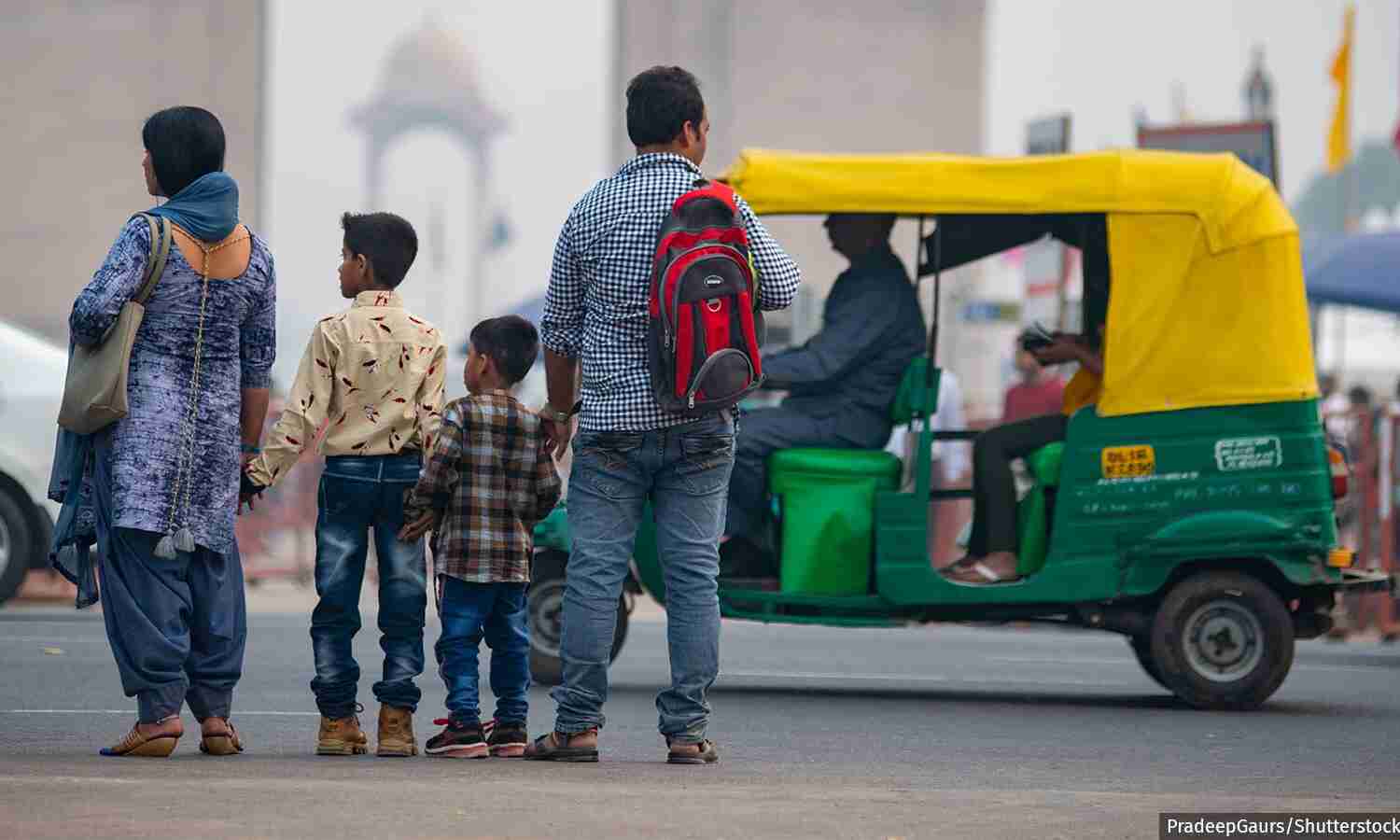
India’s middle class is growing rapidly due to rising incomes, urbanisation, and economic growth. The issue is relevant now because India’s middle class constitutes around 31% of the population and is projected to surpass China’s middle-class population by 2030–35.
India’s Middle Class:
| Dimension | Key Details |
|---|---|
| Growth Rate | India’s middle class expanded at 6.3% annually during 1995–2021. |
| Global Comparison | India is projected to surpass China in middle-class population by 2030–35. |
| Domestic Consumption | India’s middle class will account for 93% of all spending by 2036, up from 80% in 2026. |
| Human Capital | The middle class contributes to investment in education and healthcare to enhance workforce productivity. |
| Entrepreneurship | The middle class supports startups, MSMEs, and innovation. |
| Tax Contribution | The middle class supports government revenues and capital formation through income tax, GST, and investments. |
| Social Role | The middle class promotes social mobility and economic stability. |
| Income Challenge | The middle class faces weak real wage growth despite overall economic expansion. |
| Cost of Living Challenge | The middle class faces expensive housing, healthcare, education, and food. |
| Job Security Challenge | Automation, Artificial Intelligence, and gig work increase employment uncertainty. |
| Financial Stress | Lifestyle inflation and consumerism encourage debt-financed spending and reduce savings. |
| Social Security Challenge | The middle class faces lack of health insurance, pension, and unemployment protection. |
| Financial Security Initiatives | Financial security initiatives comprise zero tax on earnings up to ₹12 lakh annually and GST reforms. |
| Financial Inclusion and Entrepreneurship Initiatives | Financial inclusion and entrepreneurship initiatives comprise PM Jan Dhan Yojana and JAM Trinity. |
| Housing Initiatives | Housing initiatives comprise PM Awas Yojana–Urban and SWAMIH fund. |
| Connectivity Initiatives | Connectivity initiatives comprise Metro Rail Expansion and UDAN Scheme. |
| Healthcare Initiatives | Healthcare initiatives comprise Eat Right India and Ayushman Bharat–PMJAY. |