|
India-Austria Sign Agreements to Expand Defence, Trade and Technology Cooperation
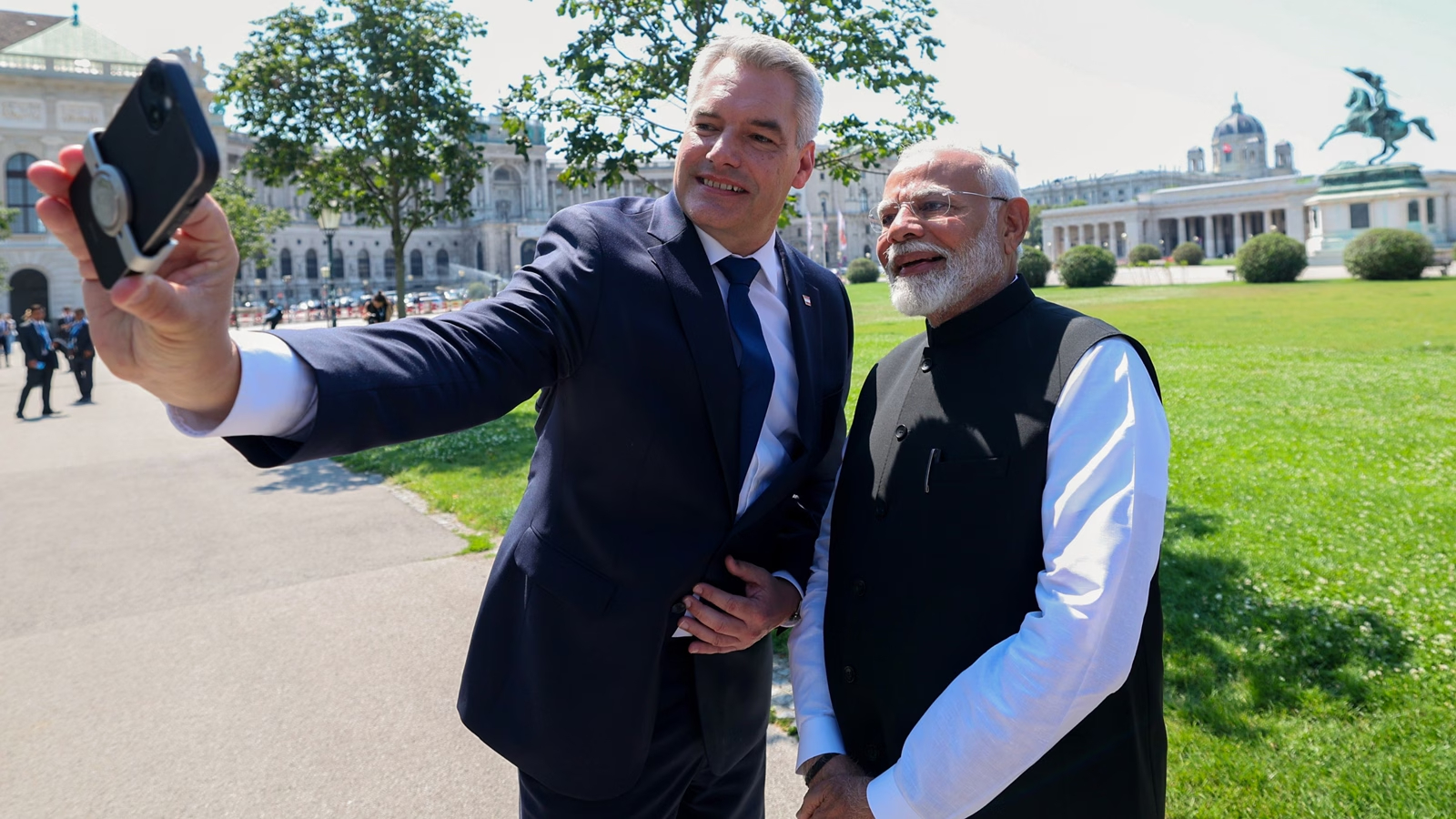
India and Austria have recently signed multiple agreements to enhance bilateral cooperation across defence, trade, technology, education, and culture. The development is currently relevant due to strengthened diplomatic and strategic engagement between the two countries.
Austria – Key Facts for Prelims
| Dimension | Key Details |
|---|---|
| Location | Austria is a landlocked country located in south-central Europe. |
| Capital | The capital city of Austria is Vienna. |
| Neighbouring Countries | Austria shares borders with eight countries: Czech Republic, Slovakia, Hungary, Slovenia, Italy, Switzerland, Liechtenstein, and Germany. |
| Physical Geography | About 70% of Austria is covered by the Alpine region extending from Switzerland. |
| Climate | Austria has a temperate and alpine climate. |
| Major River | The Danube River, with a length of 2,850 km, is the most significant river and is the second-longest river in Europe. |
| Ethnic Composition | Ethnic groups include Germans, Turks, Serbs, Croats, Slovenes, Bosnians, Hungarians, Czechs, Slovaks, and Roma. |
| Languages | German is the official language, while Croatian, Hungarian, and Slovene are recognised local official languages. |
| Political System | Austria is a federal parliamentary republic with a chancellor as head of government and a president as head of state. |
| Historical Milestones | Key events include: Roman province of Noricum formation; Charlemagne’s conquest in 788 AD; Habsburg rule; Austria-Hungary formation in 1867; collapse in 1918; and establishment of the First Austrian Republic in 1919. |