|
Golden Jackal Recorded in Kachchh Mangroves
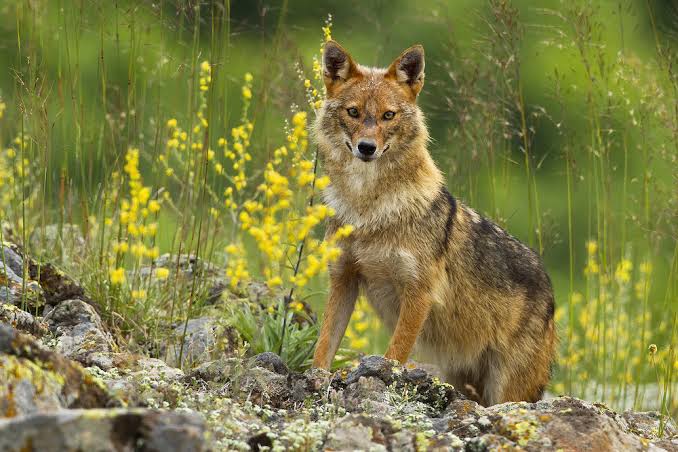
A research team currently details an unexpected habitat shift and ecological adaptation of the golden jackal (Canis aureus) in Gujarat.
Golden Jackal:
| Dimension | Key Details |
|---|---|
| Species | The golden jackal comprises the species Canis aureus. |
| Earlier associated habitat | The golden jackal is traditionally associated with the semi-arid Banni grasslands and saline mudflats of the Rann of Kachchh. |
| Current recorded habitat | Golden jackals are recorded actively navigating dense mangrove thickets and tidally inundated creeks in Kachchh mangroves. |
| Mangrove species | The mangrove thickets comprise Avicennia marina. |
| Dietary shift | Scat analysis reveals a dietary shift from terrestrial rodents, berries (Salvadora persica), and livestock offal to marine and estuarine prey. |
| Coastal diet items | The coastal diet includes mudskippers, crabs, stranded marine fish, aquatic birds, and marine turtle eggs. |
| Adaptation to tidal rhythms | Jackals synchronize movement patterns with low-tide cycles to forage across exposed mudflats and mangrove roots, and seek elevated dry hummocks during high tides. |
| Ecological role | As mesocarnivores, golden jackals act as biological conduits between terrestrial semi-arid ecosystems and marine coastal wetlands, facilitating nutrient transfer across ecotones. |
| Conservation status | The IUCN Red List status of the golden jackal is Least Concern. |
| Legal protection in India | The golden jackal is protected under Schedule I of the Wild Life (Protection) Act, 1972, as amended in 2022. |
| Key threats | Key threats comprise coastal industrial development, port expansions, destruction of mangrove buffers, hyper-salinization, and potential exposure to domestic dog-borne pathogens such as Canine Distemper Virus and Rabies along coastal settlements. |
| Implication for mangrove management | Coastal mangrove restoration programs must account for terrestrial and semi-aquatic mammalian carnivores, rather than viewing mangroves solely as marine or fisheries nurseries or avian habitats. |