|
Madhya Pradesh to relocate cheetahs from Kuno to VDTR
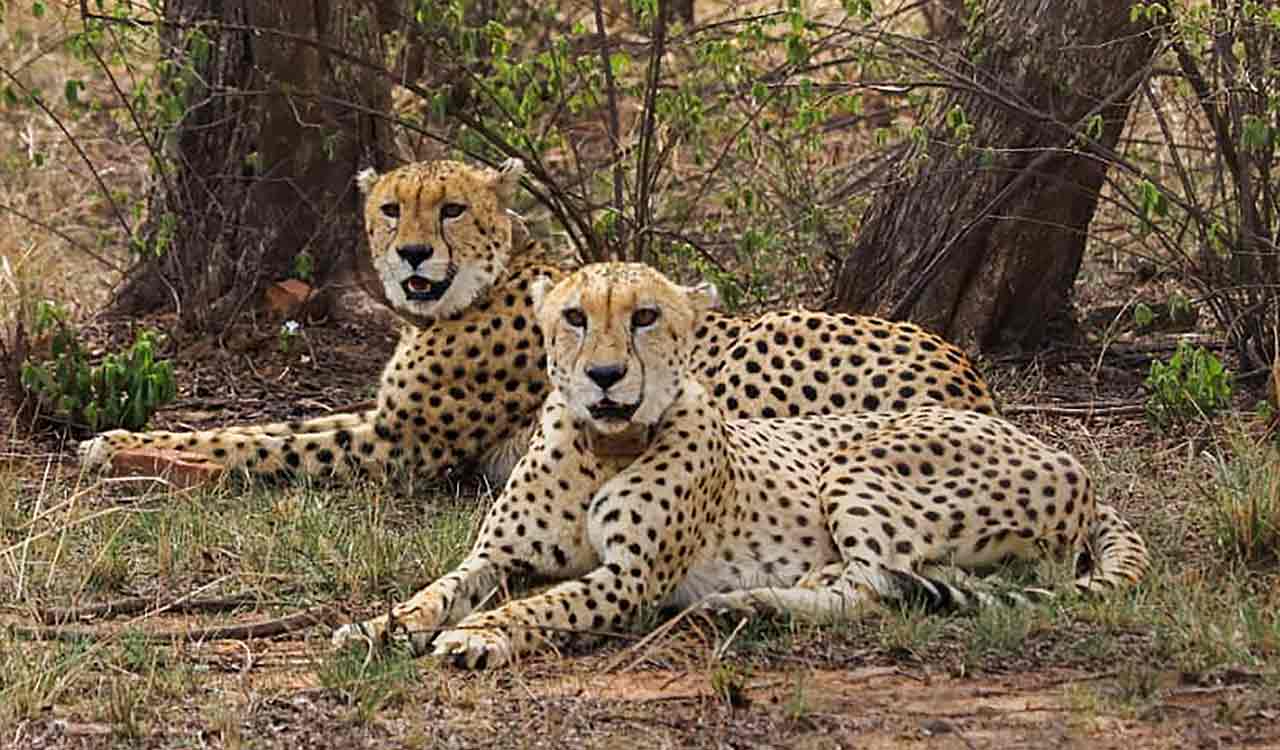
Madhya Pradesh releases two cheetahs, Tholo and CCB-3, from Kuno National Park into Veerangana Durgavati Tiger Reserve (VDTR). VDTR becomes the 3rd cheetah habitat in Madhya Pradesh, after Kuno National Park and Gandhi Sagar Wildlife Sanctuary, and it represents a planned attempt to enable free-ranging cheetahs to coexist with an established tiger population.
Cheetah Relocation to VDTR and Project Cheetah:
| Dimension | Key Details |
|---|---|
| Approximate Area | VDTR comprises approximately 2,339 square kilometers. |
| Faunal Assemblage | The region supports prey species and carnivores including chital, sambar, nilgai, leopards, tigers, bears, and cheetahs. |
| Habitat | Cheetahs typically inhabit open grasslands, whereas tigers primarily utilize denser forested areas. |
| Ecological Consideration | The tiger is a dominant apex predator and is capable of killing or displacing cheetahs, while the cheetah relies primarily on speed and typically avoids direct confrontation. |
| Coexistence Preconditions | Successful coexistence is contingent upon factors including: availability of an adequate prey base; presence of sufficiently large habitats; implementation of habitat restoration initiatives; provision of spatial separation to facilitate avoidance behaviors; ongoing monitoring of interspecific predator interactions. |
| Project Cheetah: Launch | Project Cheetah is launched at Kuno National Park on 17 September 2022. |
| Project Cheetah: Translocation | African cheetahs are translocated from Namibia, South Africa, and Botswana. |
| Current Cheetah Population | The cheetah population in India has reached 60 individuals, and 41 cheetahs were born in India. |
| Species Note | Project Cheetah involves the African cheetah, whereas the Asiatic cheetah was historically present in India. |