|
First Supercomputer-Based Ice Formation Model Explains Faster Freezing of Hotter Water
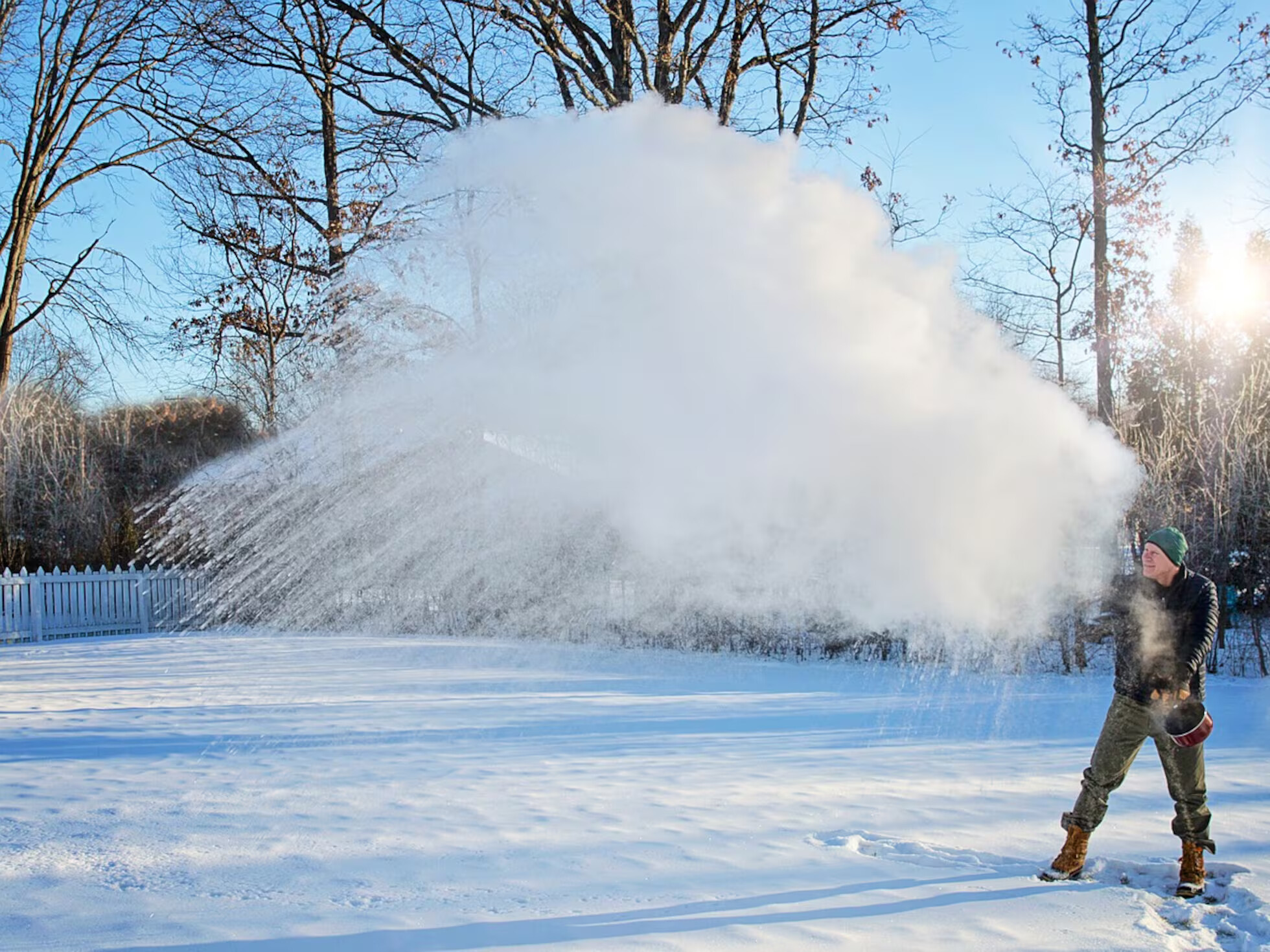
A recent supercomputer simulation of ice formation provides evidence for the Mpemba Effect, where hotter water may freeze faster than colder water under certain conditions. The research is done by the Jawaharlal Nehru Centre for Advanced Scientific Research (JNCASR), which uses supercomputers to develop the first simulation of ice formation proving the effect.
Mpemba Effect and JNCASR Supercomputer Simulation :
| Dimension | Key Details |
|---|---|
| Phenomenon | Phenomenon in which a hotter sample of water may freeze faster than a colder one, under certain conditions. |
| Nomenclature | Named after Erasto Mpemba, who rediscovered the phenomenon. |
| Early reference | Aristotle in the Meteorological. |
| Research institution | Jawaharlal Nehru Centre for Advanced Scientific Research (JNCASR). |
| Administrative status of JNCASR | JNCASR is an autonomous institute of the Department of Science and Technology (DST). |
| Recent simulation | First simulation of ice formation proving the Mpemba effect of water. |
| Generalisability | Demonstrates that the Mpemba effect can appear during fluid-to-solid transitions in systems other than water. |
| Intermediate states | Provides for water cooling getting stuck in intermediate states of short-lived molecular arrangements before true ice begins to grow. |
| Temperature dependence | Different starting temperatures get stuck for varied lengths of time. |
| Nucleation pathway | Authorises the statement that hotter water can sometimes choose a quicker path to nucleation (birth of ice), bypassing delays that colder water suffers. |
| New insights | Out-of-equilibrium phenomena, like material relaxation due to sudden temperature changes, can inspire new approaches in thermal management for next-generation electronics and improved cooling strategies. |
| Significance | First-ever supercomputer-based simulation of ice formation. |