|
First Detailed Images of Interstellar Comet 3I/ATLAS
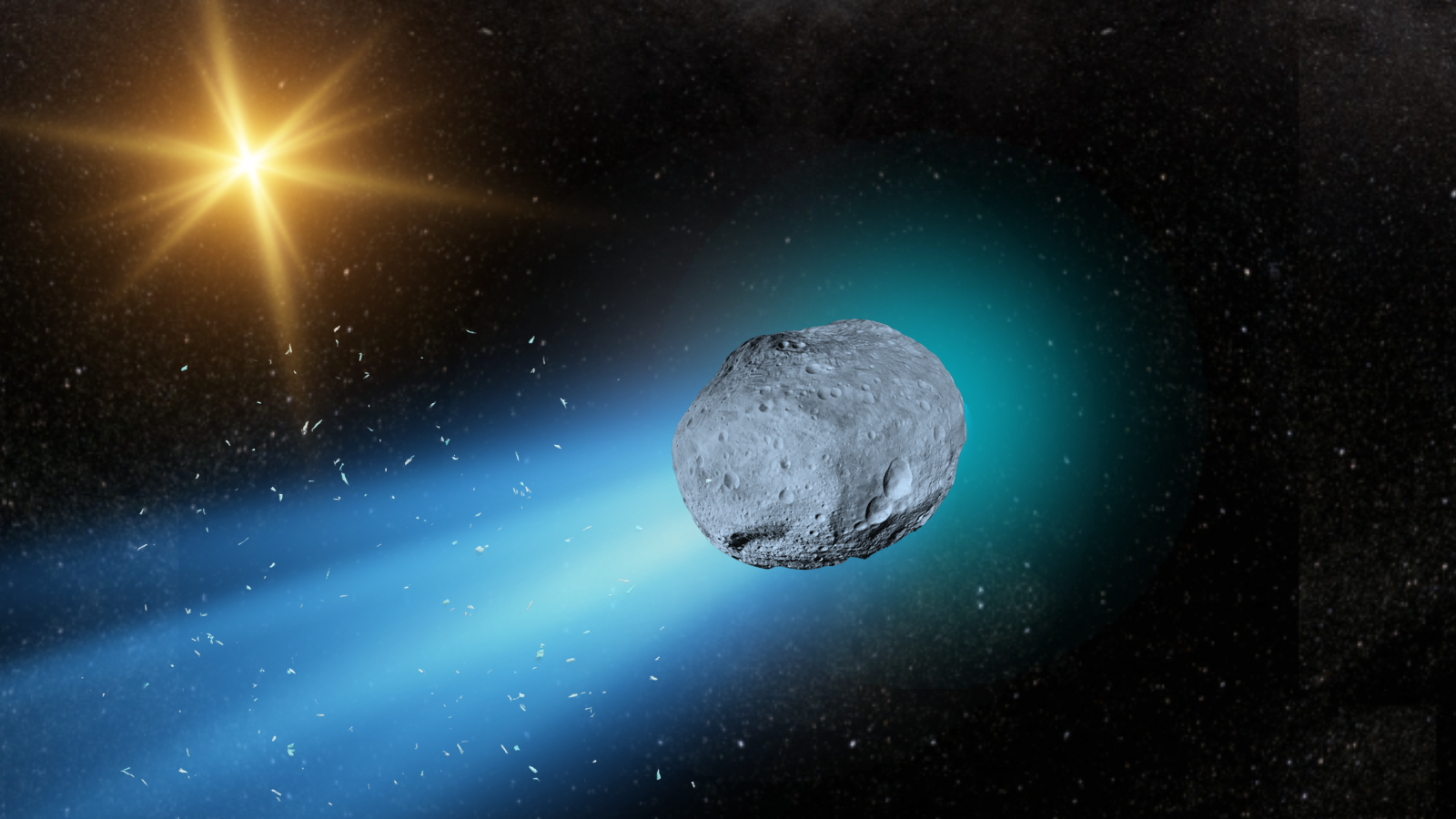
NASA’s Hubble Space Telescope captures the first detailed images of interstellar comet 3I/ATLAS as it passes through the solar system. The observation provides scientists a rare glimpse of a visitor from another star system.
Comets and Their Features:
| Dimension | Key Details |
|---|---|
| What a comet is | Comets are large objects made of dust and ice that orbit the Sun. |
| Association with solar system formation | Comets are leftovers from the formation of the solar system 4.6 billion years ago. |
| Where comets are mostly found | Comets are mostly found way out in the solar system. |
| Short-period comets | Short-period comets exist in a wide disk beyond the orbit of Neptune called the Kuiper Belt, and take less than 200 years to orbit the Sun. |
| Long-period comets | Long-period comets live in the Oort Cloud, a sphere-shaped outer edge of the solar system that is about 50 times farther away from the Sun than the Kuiper Belt, and take much longer to orbit the Sun. |
| Longest known comet orbit | The comet with the longest known orbit takes more than 250,000 years to make one trip around the Sun. |
| Visible parts of a comet | A comet comprises four visible parts: the nucleus, the coma, the ion tail, and the dust tail. |
| Nucleus | The nucleus is a solid body typically a few kilometres in diameter and made up of volatile ices, predominantly water ice, and silicate and organic dust particles. |
| Coma | The coma is the freely escaping atmosphere around the nucleus that forms when the comet comes close to the Sun and volatile ices sublimate, carrying dust particles mixed with the frozen ices in the nucleus. |
| Dust tail | The dust tail forms from dust particles and is blown back by solar radiation pressure to form a long curving tail that is typically white or yellow in colour. |
| Ion tail | The ion tail forms from volatile gases in the coma when they are ionized by ultraviolet photons from the Sun and blown away by the solar wind; ion tails point almost exactly away from the Sun and glow bluish in colour because of CO+ ions. |