|
Delhi Police Denies Jantar Mantar Protest Permission
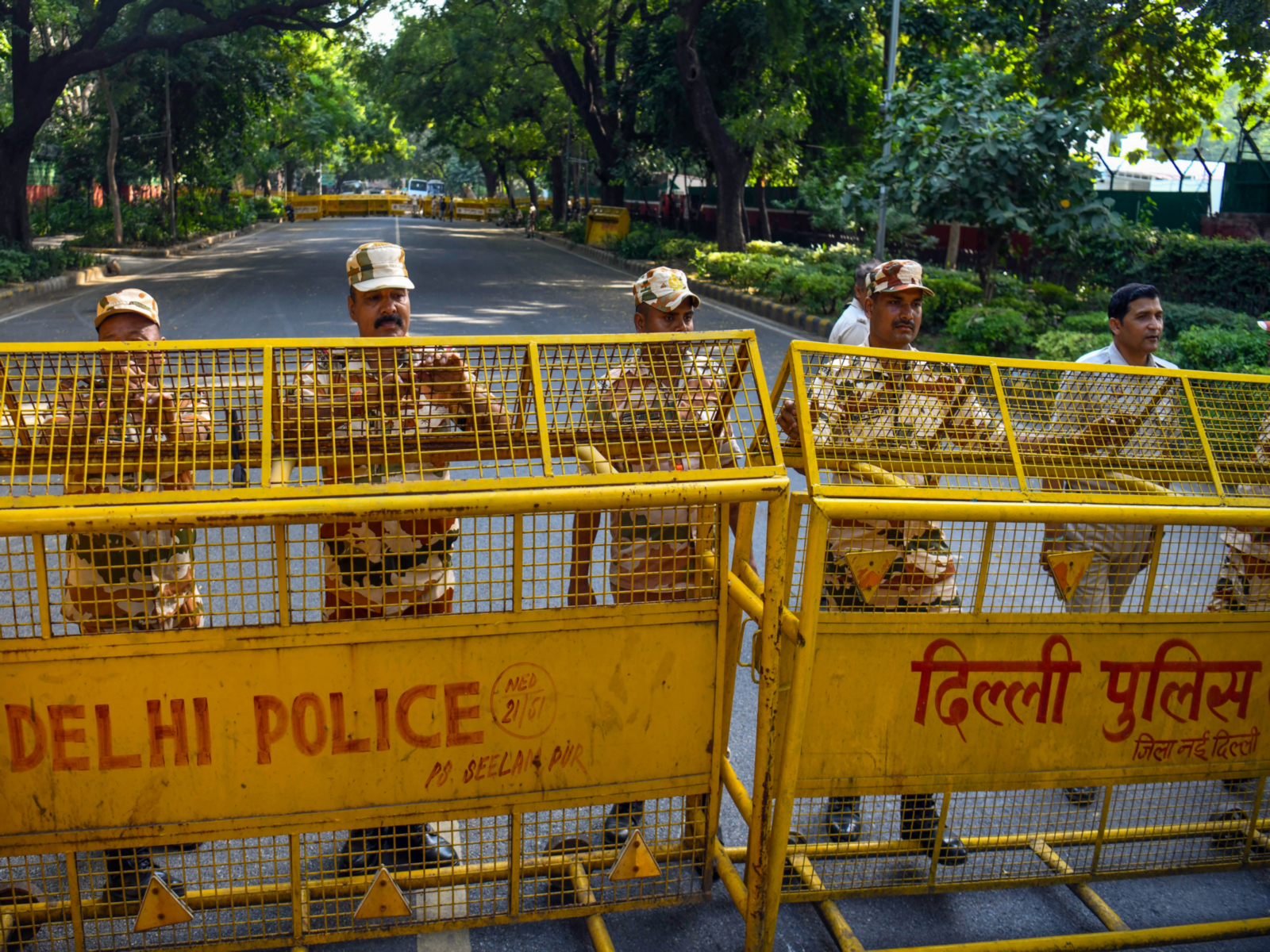
The Delhi Police does not authorise a Cockroach Janta Party (CJP) protest at Jantar Mantar, and applies a guideline that applications ordinarily reach the Deputy Commissioner of Police (DCP) at least 10 days before the event; the group applies 3 days before the proposed march. The proposed protest relates to a demand for the resignation of Chief Election Commissioner Gyanesh Kumar over alleged irregularities in the Special Intensive Revision (SIR) exercise.
Right to Protest and Delhi Police Permission System:
| Dimension | Key Details |
|---|---|
| Constitutional basis | Article 19(1)(a) provides for freedom of speech and expression, and Article 19(1)(b) provides for the right to assemble peacefully and without arms. |
| Constitutional restrictions | Article 19(2) authorises restrictions on speech, including on grounds of public order, and Article 19(3) authorises reasonable restrictions on peaceful assembly in the interest of public order. |
| Supreme Court: Mazdoor Kisan Shakti Sangathan (2018) | The judgment provides for holding peaceful demonstrations as a fundamental right essential for citizens to air grievances, and provides for a system of prior permission to be sought from the Police Commissioner or a delegated authority. |
| Application authority and timeline (Delhi Police guidelines) | Applications are submitted to the DCP, ordinarily at least 10 days before the event, and late applications may also be considered depending on space availability and time for arrangements. |
| Assessment process | Applications are assessed on a first-come, first-serve basis, and the review comprises the Special Branch, traffic police, and New Delhi district police. |
| DCP decision factors | The DCP weighs whether the protest could obstruct traffic, endanger safety, or disturb public tranquillity. |
| Revocation of permission | Permission may be revoked for unforeseen reasons, including VIP security and intelligence inputs, and reasons must be recorded and conveyed to organisers. |
| Venue cap and alternative venue | Protests at Jantar Mantar are capped at 1,000 people, and larger gatherings must shift to Ramlila Ground (capacity: 50,000). |
| Recourse when permission is denied: Police reconsideration | Organisers can seek reconsideration, respond to stated reasons, or propose a smaller gathering, shorter duration, or an alternative venue. |
| Recourse when permission is denied: appeal within standing order | The standing order provides that the DCP’s decision is final and binding, and provides for no built-in appeal against refusal. |
| Recourse when permission is denied: judicial remedy | Organisers can approach the Delhi High Court under Article 226 if refusal appears arbitrary, unsupported by guidelines, or inconsistent with the right to peaceful assembly. |
| Defying denial: penal provision | Section 223 of the Bharatiya Nyaya Sanhita (BNS) applies to disobeying a lawful order by a public servant, and provides for imprisonment or fine; it is described as formerly Section 188 IPC. |
| Prohibitory orders: legal provision | Section 163 of the Bharatiya Nagarik Suraksha Sanhita (BNSS) provides for a magistrate’s prohibitory order barring specified activities, including assembly of 5 or more persons; it is described as earlier Section 144 CrPC. |
| Remedy against prohibitory orders: Section 163(5), BNSS | Section 163(5) provides for an aggrieved person to apply to the issuing magistrate to rescind or alter the order. |
| Remedy against prohibitory orders: Section 163(7), BNSS | Section 163(7) mandates that the magistrate give the applicant an early opportunity to be heard, and mandates that if rejected, reasons are recorded in writing. |
| Supreme Court: Babulal Parate v. State of Maharashtra (1961) | The Constitution Bench provides for affected persons to challenge such orders, even if the order is passed without a hearing. |
| Supreme Court: Ramlila Maidan Incident (2012) | The judgment mandates that preventive orders are based on an “actual and prominent threat” to public order, and mandates that the power is exercised with “great caution and free from arbitrariness.” |
| Supreme Court: Mazdoor Kisan Shakti Sangathan (2018) on balancing | The judgment mandates that permission requirements cannot become a tool to reject every protest, and provides the phrase, “Total extinction is not balancing.” |