|
Caerostris darwini in Madagascar: river-spanning orb webs up to 25 metres wide
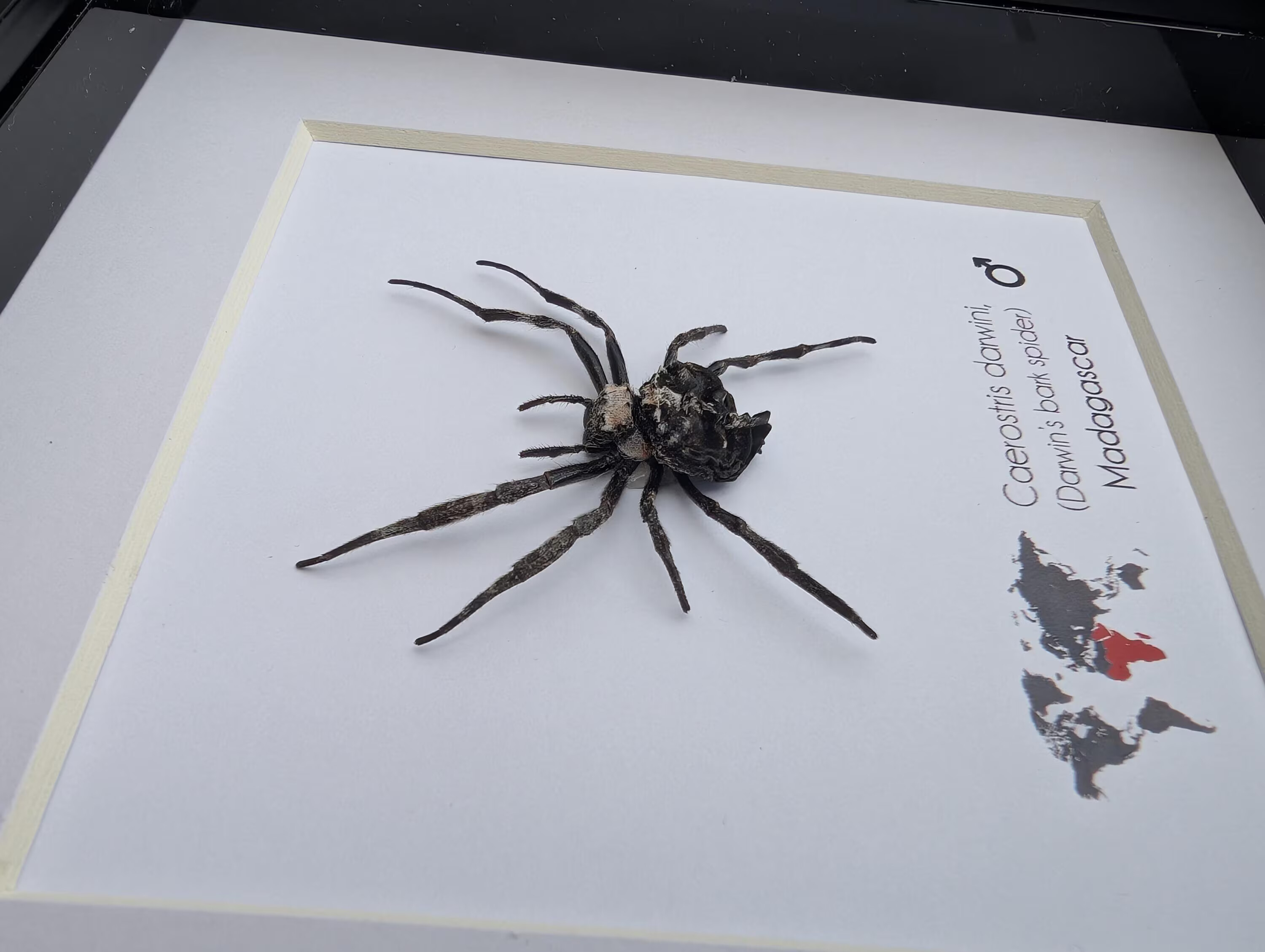
Darwin’s bark spider has drawn scientific attention as studies explain why only adult females produce the toughest spider silk ever recorded. The species, found in Madagascar, is noted for building river-spanning orb webs reaching up to 25 metres in width.
Darwin’s Bark Spider (Caerostris darwini):
| Dimension | Key Details |
|---|---|
| Common name | Darwin’s bark spider |
| Scientific name | Caerostris darwini |
| Family | Araneidae (orb-weaver spiders) |
| Type | Large orb-weaving spider |
| Related species | Caerostris kuntneri |
| Habitat | Forests and wetlands in Madagascar |
| Distribution | Endemic to Madagascar |
| Web location | Builds orb webs directly above rivers or lakes |
| Web size | Largest orb webs ever recorded, reaching up to 25 metres in width |
| Adult female characteristics | Females are largely black in colour, with white hairs |
| Male characteristics | Males are redder and lighter brown in colour |
| Sexual dimorphism | Adult females are significantly larger than males |
| Silk production | Only large adult females produce exceptionally tough silk |
| Silk properties | Silk outperforms steel and most human-made fibres in both strength and toughness |
| Silk uses by the spider | Used as safety lines, anchor threads, and escape ropes |
| Threats | Habitat disturbance from river/wetland degradation and infrastructure projects (e.g., hydroelectric dams); water pollution reduces prey availability and impacts silk quality |
| Ecological significance | Large river-spanning webs help control insect populations, especially flying insects |