|
Rabindranath Tagore First Sang ‘Vande Mataram’ at 1896 INC Session in Kolkata
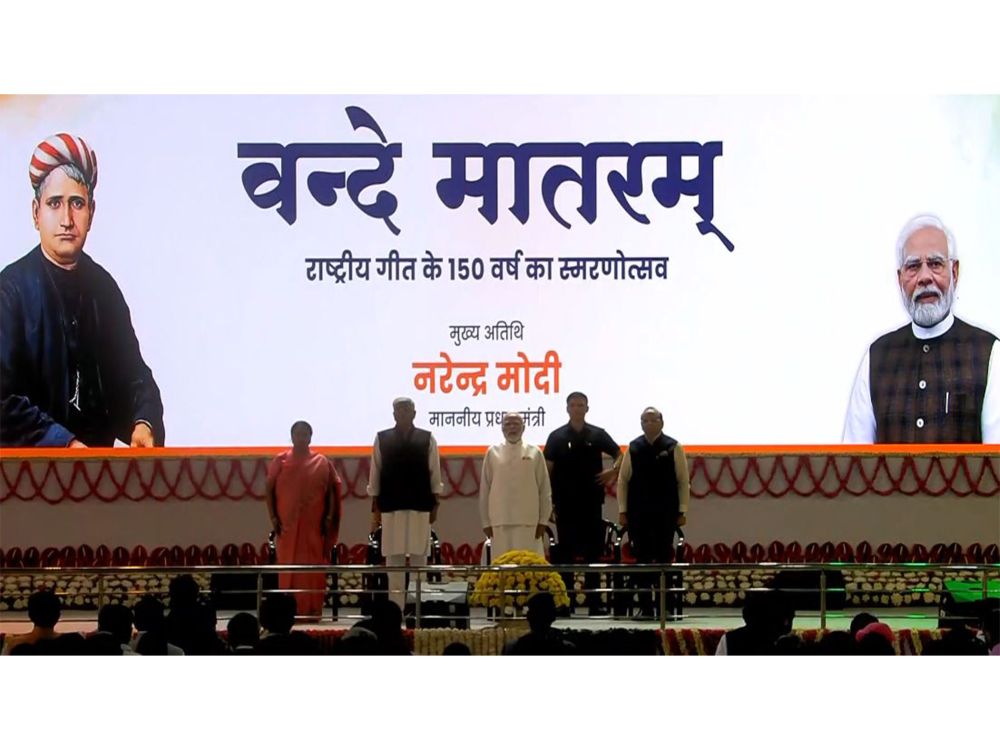
The Ministry of Environment, Forest and Climate Change (MoEFCC) organises a mass singing of ‘Vande Mataram’ to mark the 150 years anniversary of the national song. The event brings focus on the song’s authorship, first public rendition, and its adoption by the Constituent Assembly.
‘Vande Mataram’ (India’s National Song):
| Dimension | Key Details |
|---|---|
| Status in India | ‘Vande Mataram’ is India’s national song; it is granted equal status with the national anthem, “Jana Gana Mana”. |
| Composer and language | Written by Bankim Chandra Chatterjee in Sanskritised Bengali in 1875. |
| Literary origin | Included in the Bengali novel Anandamath, published in 1882. |
| Anandamath: setting | Anandamath is a historical novel written against the backdrop of the Bengal famine of 1770 and the Sannyasi Rebellion against British rule. |
| First public singing | First publicly sung by Rabindranath Tagore at the 1896 session of the Indian National Congress in Kolkata. |
| Constitutional status | On January 24, 1950, the Constituent Assembly of India adopted the first 2 stanzas as the National Song of India. |
| Role in freedom struggle | Used as a patriotic slogan by freedom fighters; widely chanted in protests and political gatherings, especially during the Swadeshi and anti-partition movements in early 20th-century India. |
| Partition of Bengal | Played a central role in the anti-partition movement (1905–06), including mass protests and the Calcutta Town Hall rally; its singing later led to arrests after Lord Curzon ordered police action against it. |
| Philosophers associated | Aurobindo Ghose believed that “Vande Mataram’s” blessings carried divine strength for India’s freedom fighters. |
| Vande Mataram Movement in Gulbarga | Marks a key episode in the Hyderabad-Karnataka Freedom Struggle, where “Vande Mataram” served as a symbol of resistance against Nizam’s rule, involving figures like Dr. Sharanabasappa, Dargah Qadeer, and Gulbarga University students. |