|
Asteroid Bennu: Carbon-Rich Near-Earth Apollo Asteroid Passing Earth Every Six Years
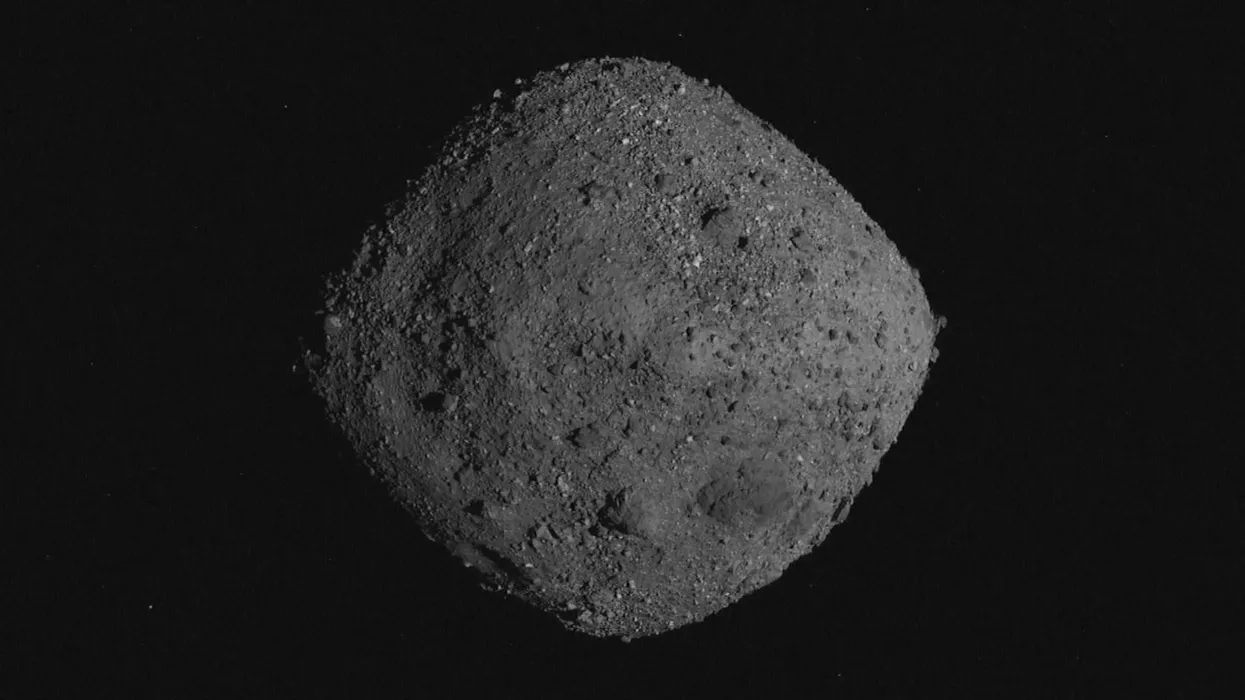
NASA research on near-Earth asteroid Bennu reports the presence of life’s basic components, based on samples collected under the OSIRIS-REx mission. The findings highlight sugars, amino acids, and nucleobases detected in Bennu samples, keeping Bennu.
Asteroid Bennu (1999 RQ36) :
| Dimension | Key Details |
|---|---|
| Type / classification | Provides for identification as a small, carbon-rich, near-Earth asteroid; belongs to the Apollo group of asteroids (over 21,000 members). |
| Earth approach periodicity | Orbit that passes relatively close to Earth about every 6 years. |
| Original designation and renaming | The original name 1999 RQ36; renamed Bennu in 2013 by contest winner Michael Puzio (age nine), inspired by an ancient Egyptian god. |
| Size | Equatorial width of about 0.5 km (one-third of a mile). |
| Average distance from the Sun | Average distance of 105 million miles (168 million km) from the Sun. |
| Orbit location | Orbit between Earth and Mars. |
| Formation and origin | Comprises a likely break-off from a much larger carbon-rich asteroid about 700 million to 2 billion years ago; likely formed in the Main Asteroid Belt between Mars and Jupiter and drifted closer to Earth. |
| Atmosphere | Provides for the fact that Bennu does not have enough gravity to have an atmosphere. |
| Habitability | Extreme temperatures and lack of atmosphere that make it inhospitable to life or liquid water; mandates that because there is no atmospheric pressure, liquid water cannot exist on or under its surface. |
| Temperature range | Temperatures from 240°F (116°C) to -100°F (-73°C). |
| NASA mission linkage | Targeting by NASA's OSIRIS-REx mission to collect an asteroid sample and bring it to Earth. |
| Sugars | Detection of ribose (RNA sugar) and glucose (metabolism sugar); provides for the first-time detection of large sugars on an asteroid. |
| Biomolecule inventory | Amino acids and all 5 nucleobases (DNA and RNA components). |
| Nitrogen-rich polymers | Long chains of carbamate molecules, previously unseen in extraterrestrial samples; suggests a source of nitrogen crucial for RNA. |
| Pre-solar grains | Dust from ancient supernovae, reported as 6 times more concentrated than in other asteroid samples; indicates Bennu’s parent body formed in a star-rich environment. |