|
World Inequality Lab Report Maps Land Inequality
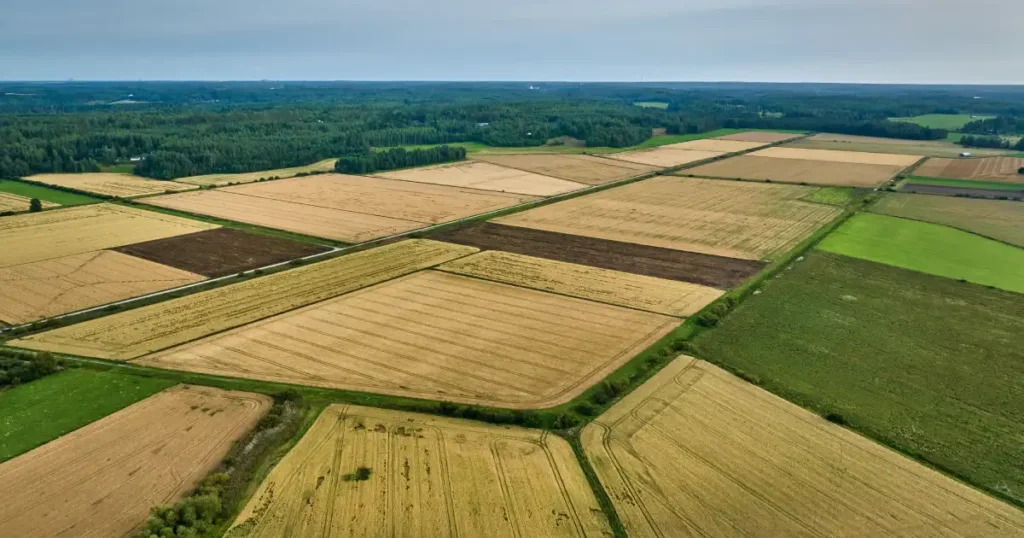
A report titled “Land inequality in India: Nature, history, and markets” presents findings on rural land distribution across ten major states. The report highlights high land inequality and key structural drivers.
Land Inequality in India Report:
| Dimension | Key Details |
|---|---|
| Coverage | Provides for data from ten major Indian states covering about 75% of rural population. |
| Land Ownership Concentration | Provides for top 10% of rural households owning 44% of total land area. |
| Landlessness | Provides for about 46% of rural households being entirely landless. |
| Gini Coefficient | Provides for village-level land Gini coefficient of about 71.1. |
| Dominant Landholder | Provides for largest landholder in a village controlling about 12.4% of land. |
| Regional Inequality | Comprises Kerala with highest inequality at Gini 90 and Karnataka and Rajasthan with lowest below 65. |
| Landlessness Variation | Provides for Punjab having highest landlessness at 73%. |
| Nature Factor | Provides for high agricultural productivity facilitating large landholdings and increasing landlessness. |
| Historical Factor | Provides for higher inequality in regions under zamindari system compared to princely states. |
| Social Factor | Provides for higher inequality in villages with larger Scheduled Caste population due to historical landlessness. |
| Market Factor | Provides for proximity to towns, highways, railways, banks, and mandis increasing land inequality through land consolidation. |
| Land Reforms | Comprises abolition of intermediaries, land ceiling laws, and tenancy reforms. |
| Voluntary Redistribution | Provides for Bhoodan and Gramdan movements led by Vinoba Bhave in 1951. |
| Land Record Modernisation | Provides for Digital India Land Records Modernization Programme including initiatives such as Bhoomi project. |
| Legal Measures | Comprises Forest Rights Act 2006 and Right to Fair Compensation and Transparency in Land Acquisition Act 2013. |