|
WMO’s State of Global Water Resources 2025 report
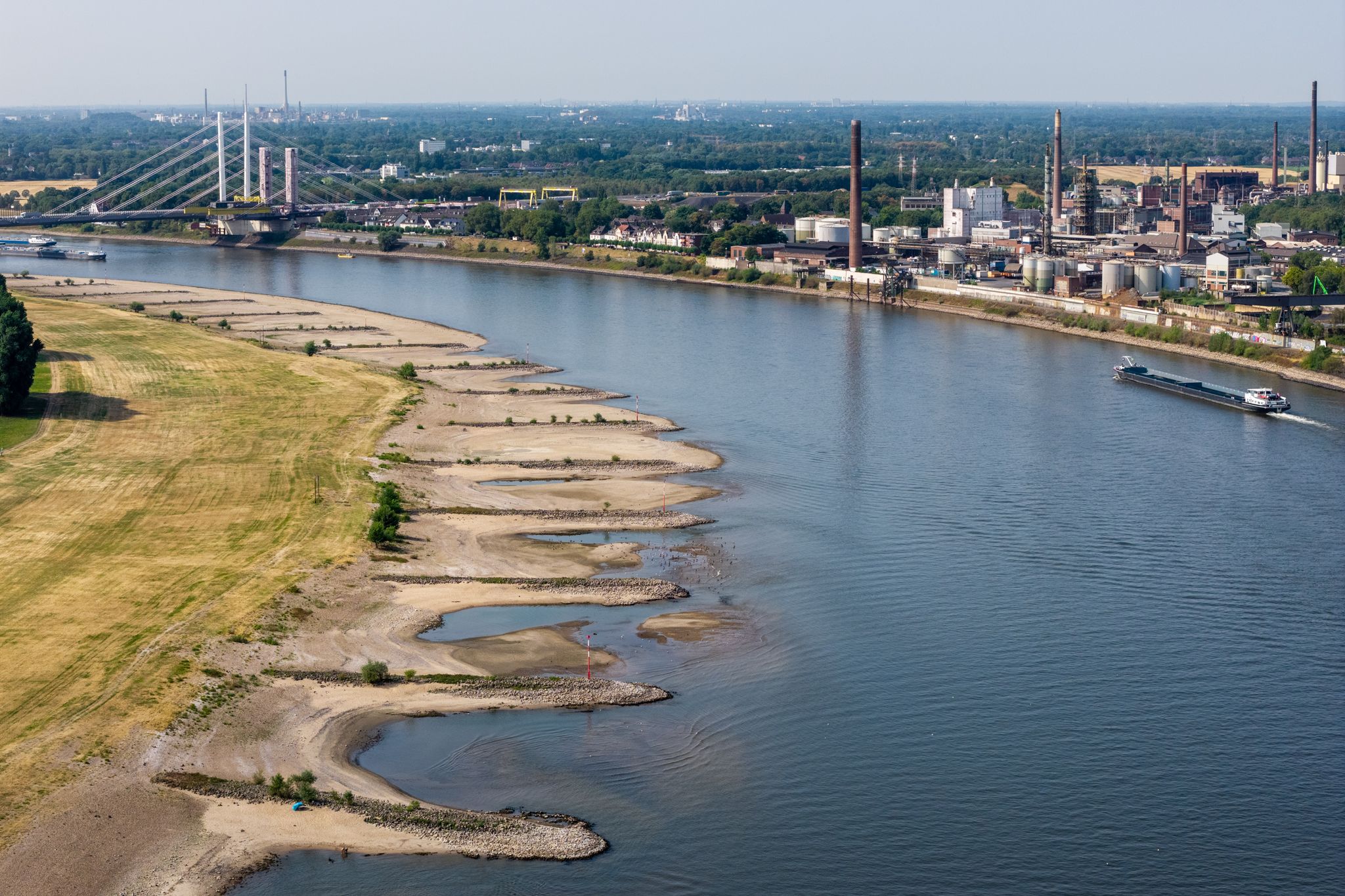
The WMO’s State of Global Water Resources 2025 report provides a quantitative overview of global water resources with a focus on hydrological variability and trends. The report provides for findings on persistent groundwater deficits globally and in India, and the article lists government initiatives that provide for strengthening groundwater management.
WMO’s State of Global Water Resources 2025 report:
| Dimension | Key Details |
|---|---|
| Issuing body | The report is issued by the World Meteorological Organization (WMO). |
| Report focus | The report provides for a comprehensive quantitative overview of global water resources, with a focus on hydrological variability and trends. |
| Global finding (2025) | The report provides for the finding that 34% of global groundwater observation stations are below-normal or much-below-normal in 2025. |
| Multi-year groundwater deficits (2022–2025) | The report provides for multi-year persistent groundwater deficits during 2022–2025 across parts of the Americas, Europe, the Middle East, India, southern Africa, and Australia. |
| India-specific finding | The report provides for persistent groundwater depletion across northern and north-western regions of India. |
| Primary driver identified | The report provides for over-abstraction as the primary factor driving groundwater decline in India. |
| Challenges in groundwater management | The article provides for key challenges: uncontrolled extraction using low-cost drilling tools and pumping equipment; aquifer contamination from industrial effluents, mining activities, and naturally occurring toxic substances like arsenic and fluoride; climate variability through unpredictable rainfall patterns and rising temperatures; regulatory gaps in managing decentralized extraction across diverse hydrogeological zones. |
| Model Groundwater Bill | The Bill provides for a regulatory framework for the control and management of groundwater resources by States. |
| National Aquifer Mapping and Management Programme (NAQUIM) and NAQUIM 2.0 | NAQUIM and NAQUIM 2.0 provide for support for effective groundwater management in the country. |
| Atal Bhujal Yojana (Atal Jal) | Atal Bhujal Yojana provides for promoting community-led sustainable groundwater management in water-stressed areas of 7 States. |
| Mission Amrit Sarovar | Mission Amrit Sarovar provides for the creation of Amrit Sarovars (ponds) across all districts in the country. |