|
WHO Confirms New Marburg Virus Disease Case in Uganda
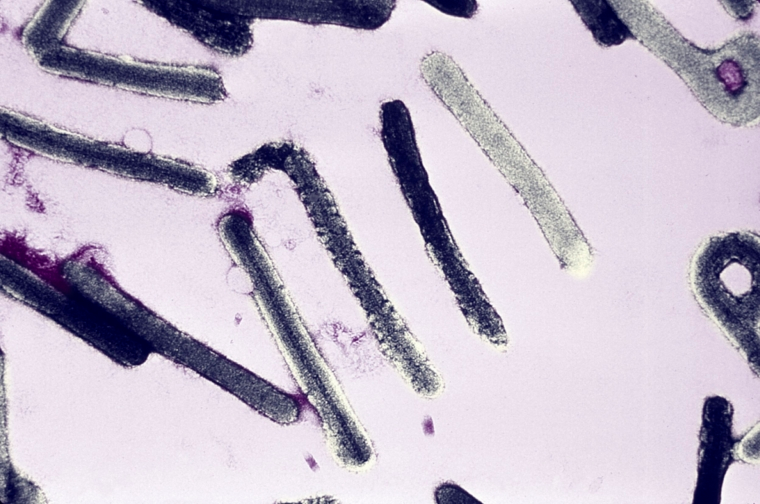
The World Health Organization (WHO) confirms a new case of Marburg Virus Disease (MVD) in Uganda. The development places focus on Marburg virus disease as a severe, often fatal illness in humans.
Marburg Virus Disease (MVD):
| Dimension | Key Details |
|---|---|
| Nature of disease | Marburg virus disease (MVD), formerly known as Marburg haemorrhagic fever, is a severe, often fatal illness in humans. |
| First detection | It is initially detected in 1967 after two simultaneous outbreaks in Marburg and Frankfurt in Germany, and in Belgrade, Serbia. |
| Causative agents | Marburg virus (MARV) and Ravn virus (RAVV) of the species Orthomarburgvirus marburgense are the causative agents of MVD. |
| Virus family and related genus | MARV and RAVV are part of the Filoviridae family (filovirus) to which Orthoebolavirus genus belongs. |
| Clinical similarity | Though caused by different viruses, Ebola and Marburg diseases are clinically similar. |
| Natural host | Rousettus aegyptiacus, a fruit bat of the Pteropodidae family, is considered the natural host of Marburg virus. |
| Transmission (animal-to-human) | Primarily transmitted to humans via prolonged exposure to mines or caves inhabited by colonies of Rousettus fruit bats. |
| Transmission (human-to-human) | Occurs through direct contact with the blood, secretions, organs, or other bodily fluids of infected people, or via surfaces and materials contaminated with these fluids. |
| Incubation period | Varies from 2 to 21 days. |
| Symptoms timeline | Begins with high fever, debilitating headache, extreme malaise, and muscle aches; by day 3, patients typically experience severe watery diarrhea, abdominal pain, and cramping. |
| Hemorrhagic phase | Severe hemorrhagic manifestations develop between days 5 and 7. |
| Diagnostic challenge | It can be difficult to clinically distinguish MVD from malaria, typhoid fever, shigellosis, meningitis, and other viral haemorrhagic fevers. |
| Case fatality rate (CFR) | The average CFR hovers around 50%, and has historically reached up to 88%, depending on the viral strain and case management. |
| Treatment and vaccines | There are currently no officially approved antiviral treatments or vaccines for Marburg virus. |
| Clinical trials | Investigational candidates, such as Sabin’s cAd3-Marburg vaccine, are undergoing active clinical trials. |