|
US Suspends Indian IT Firms from PERM Labour Certification Pathway
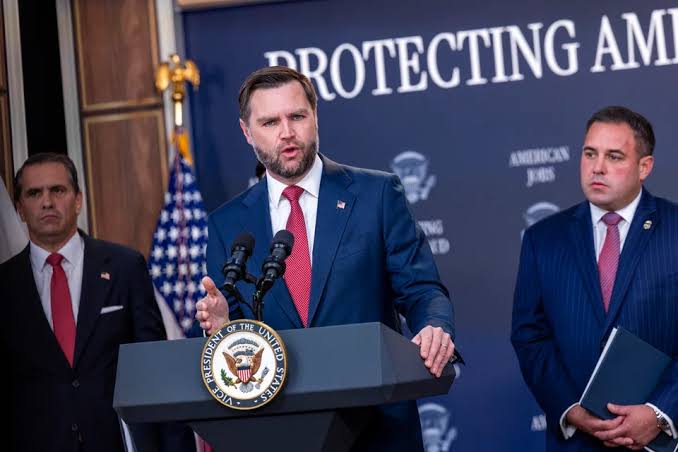
The US government has suspended several large Indian IT firms from the PERM labour certification pathway, citing alleged fraud and claims that foreign workers take jobs at the cost of American workers. The action expands a crackdown on foreign workers under President Donald Trump, with US authorities stepping up investigations into alleged misuse of the H-1B and PERM programmes.
PERM Labour Certification Pathway:
| Dimension | Key Details |
|---|---|
| Impacted firms | The suspended firms comprise Cognizant, Infosys, Tata, Wipro, HCL, and Capgemini. |
| Prior event | The US has already announced Cognizant’s suspension last month, without specifying the allegations, the number of applications affected, or the duration. |
| PERM | PERM (Program Electronic Review Management) is the system through which employers generally obtain labour certification before sponsoring a foreign employee for an employment-based Green Card. |
| Who files PERM | PERM filing is done by the employer on behalf of the worker. |
| Pre-filing requirements | Before filing, the employer must obtain a prevailing wage determination for the position and carry out prescribed recruitment. |
| Process intent | The process is meant to establish that permanently hiring a foreign worker will not adversely affect job opportunities, wages, or working conditions of US workers. |
| Post-certification step | Once the Labour Department certifies the application, the employer can proceed to the next stage of the Green Card process. |
| H-1B definition | H-1B is a temporary, non-immigrant work visa allowing US employers to employ foreign professionals in specialty occupations. |
| PERM vs H-1B distinction | PERM is part of the process for obtaining permanent residency, while H-1B is a temporary non-immigrant work visa. |
| Enforcement focus | US authorities have stepped up investigations into alleged misuse of both the H-1B and PERM programmes, including claims of wage undercutting, fraudulent filings, and displacement of American workers. |
| Immediate effect on workers | Employees whose Green Card process has not yet reached the PERM filing stage face delay because they cannot make fresh PERM filings while the suspension is in place. |
| Priority date implication | Being unable to file PERM means affected employees cannot secure a priority date or begin moving through the employer-sponsored Green Card process. |
| US State Department Visa Bulletin | In the September 2026 Visa Bulletin, the EB-2 category for India is listed as “unavailable” for final action, and the EB-3 final-action date is January 1, 2014. |
| Green Card system constraint | The system imposes per-country limits on employment-based Green Cards, disproportionately affecting high-demand countries like India. |
| H-1B extension rule linked to labour certification | US rules allow certain H-1B holders to extend their stay beyond the normal 6-year limit if a labour certification is filed sufficiently early. |
| H-1B extensions for workers waiting due to unavailability | Workers who already have approved petitions and are waiting because a Green Card number is unavailable can, subject to rules, still qualify for H-1B extensions of up to 3 years at a time. |
| Quantitative figures | As per a report, since 2009, the impacted companies have requested permanent residency for almost 3 million foreign workers, receiving over 230,000 H-1B visa approvals and over 100,000 permanent labour certifications. |
| Administration characterisation | The US administration characterises the cited volume as hundreds of thousands of jobs that were taken from American workers. |