|
Two-phase Census 2027
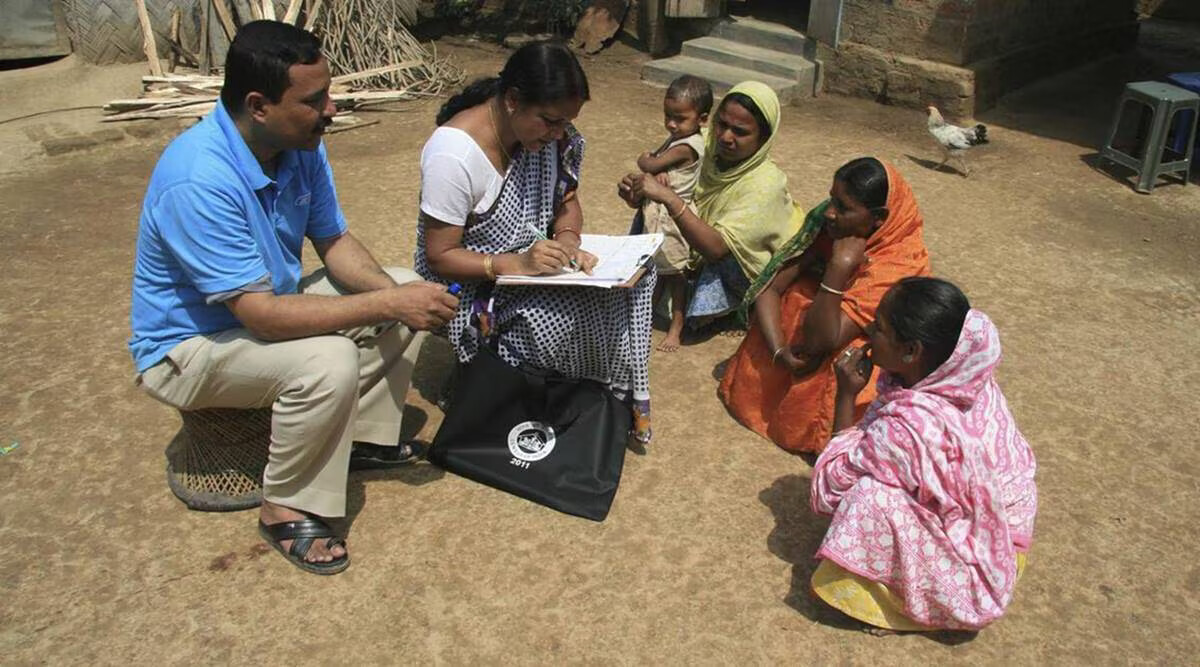
The Registrar General and Census Commissioner of India announces that Census 2027 begins on April 1, 2026 with self-enumeration followed by house-to-house listing. The exercise introduces digital data collection and phased enumeration across the country.
Census 2027:
| Dimension | Key Details |
|---|---|
| Census Definition | Is the process of collecting, compiling, and publishing demographic, social, and economic data of a country’s population. |
| Conducting Authority | Is conducted by the Office of the Registrar General and Census Commissioner of India. |
| Nodal Ministry | Is administered by the Ministry of Home Affairs. |
| Constitutional Status | Is a Union subject listed in the Seventh Schedule. |
| Legal Basis | Is governed by the Census Act, 1948. |
| Frequency | Provides for conduct of census every 10 years. |
| Historical Milestones | Provides for first non-synchronous census in 1872 and first synchronous census in 1881 under W.C. Plowden. |
| Delay Status | Provides for Census 2027 as the first delayed census by six years. |
| Phases | Comprises house listing and housing census followed by population enumeration. |
| Digital Census | Provides for data collection through mobile applications and self-enumeration portals. |
| Coverage | Applies to 28 States, 8 Union Territories, 784 districts, 5127 statutory towns, 4580 census towns, and 639902 villages. |
| Administrative Units | Provides for enumeration within defined territorial limits such as states, districts, towns, wards, and villages. |
| Monitoring Mechanism | Provides for supervision through Census Management and Monitoring System. |
| Data Coverage | Comprises 33 items including housing, assets, migration, fertility, religion, SC and ST, language, literacy, education, and economic activity. |
| Registrar General of India | Is established in 1949 and provides for census, civil registration system, national population register, mother tongue survey, and sample registration system. |
| Caste Census | Provides for collection of caste distribution data and differs from SECC 2011 which focuses on socio-economic data. |
| National Population Register | Is prepared under Citizenship Rules, 2003 and provides for records of all usual residents of India. |
| NPR vs NRC | Provides for NPR as a database of residents and NRC as a register of citizens without automatic linkage. |