|
RBI Issues Cybersecurity and Technology-Resilience Framework
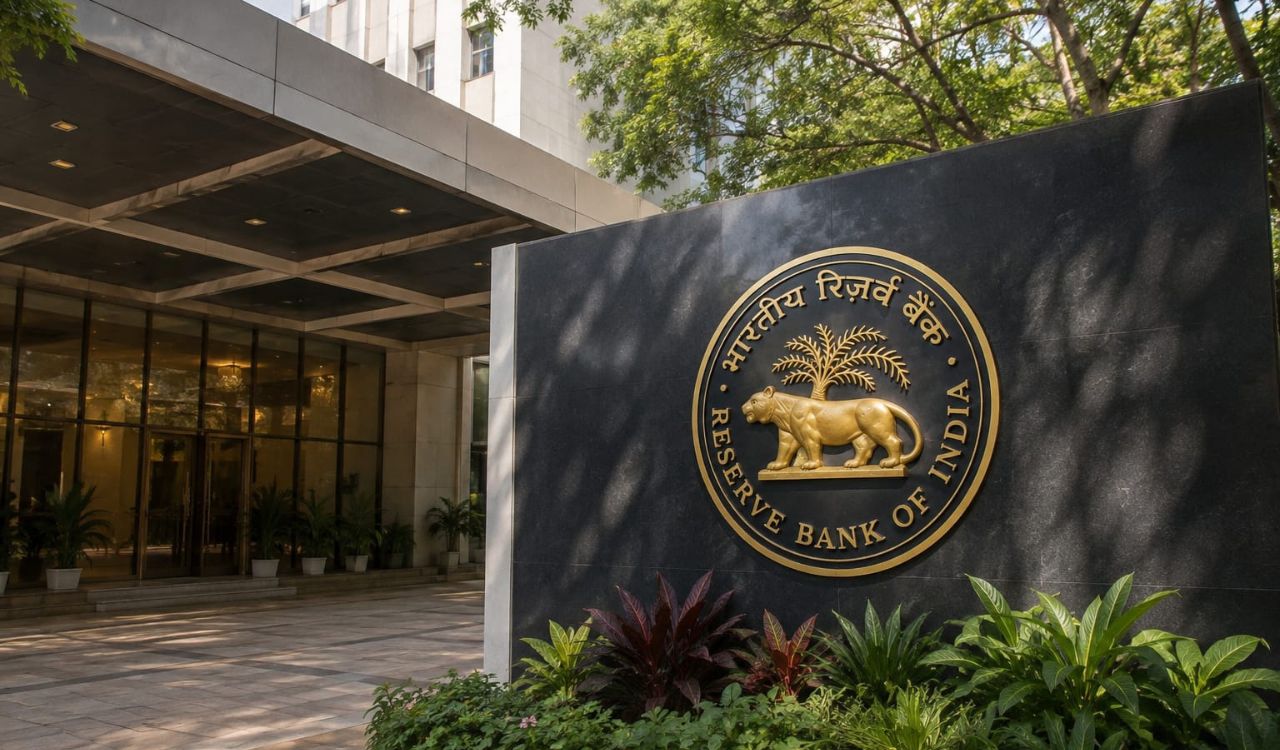
The Reserve Bank of India (RBI) issues a new cybersecurity and technology-resilience framework for commercial banks in July 2026. The Securities and Exchange Board of India (SEBI) introduces an IT Resilience Index in August 2026 for market infrastructure institutions to measure robustness of critical IT systems and spot weaknesses early.
Cybersecurity, IT Resilience, and Quantum-Safe Measures for Finance:
| Dimension | Key Details |
|---|---|
| RBI framework coverage | The RBI framework comprises IT governance, cyber-risk management, and incident response. |
| Quantum computing | Traditional computers store data as a bit with value 0 or 1, and quantum computers use a qubit. |
| Qubit properties | A qubit comprises a quantum bit that can exist as a combination of 0 and 1 (superposition), and also exhibits entanglement where states of different qubits become closely correlated. |
| Quantum algorithms | Quantum algorithms comprise methods that exploit superposition and entanglement to amplify correct answers and suppress wrong ones, enabling some problems to be solved in minutes or hours that classical computers take millennia to complete. |
| Banking encryption dependence | Modern cryptography comprises reliance on mathematical problems that are extremely hard for classical computers to solve. |
| Public-key systems | Widely used public-key systems comprise RSA (Rivest-Shamir-Adleman), which relies on difficulty of factoring large numbers, and elliptic-curve cryptography, which relies on difficulty of discrete-logarithm problems. |
| India’s digitised financial ecosystem | India’s financial ecosystem comprises UPI, Aadhaar, RTGS, and NEFT, and is underpinned by cryptography. |
| Quantum risk to digital infrastructure | The quantum threat comprises undermining cryptographic building blocks used for authentication, secure communication, key exchange, and digital signatures across digital infrastructure. |
| Quantum deadline | Expert assessments provide for a “quantum deadline” of 2029-2030 when quantum computers could become powerful enough to decrypt historical encrypted data. |
| HNDL threat | “Harvest Now, Decrypt Later” (HNDL) comprises interception and storage of encrypted data today for later decryption once powerful quantum computers exist. |
| CERT-In report | The Digital Threat Report 2025-26 (CERT-In) provides for an assessment where full-scale quantum threats have not arrived, and HNDL strategies are already active. |
| Post-Quantum Cryptography | Post-Quantum Cryptography (PQC) comprises encryption algorithms resistant to quantum attacks. |
| PQC preparation steps | PQC preparation comprises creating an inventory of cryptographic systems in use, identifying the most sensitive or critical data, testing quantum-resistant algorithms, working with technology vendors, and building crypto-agility. |
| Crypto-agility | Crypto-agility comprises the ability to switch cryptographic standards without a complete system rebuild. |
| India’s quantum computer status | India currently comprises only a handful of quantum computers, mostly under 10 qubits, developed by institutions like IISc Bengaluru and startups like QpiAI. |
| National Quantum Mission | India’s National Quantum Mission, launched in 2023, provides for scaling from 20-50 physical qubits initially to larger systems over time. |
| Global PQC-related actions | NIST (US) provides for PQC standards that have been finalised, the G7 provides for a roadmap for financial-sector transition, and the EU provides for member states to begin transition by end-2026 with high-risk systems to be migrated by end-2030. |
| DST roadmap for banking, financial services, and insurance | The Department of Science and Technology’s roadmap provides for foundational work by 2027, migration of high-priority systems by 2028, and full PQC adoption by 2029. |
| RBI Q-SAFE expert committee | RBI’s Quantum Secure and Adaptive Financial Ecosystem (Q-SAFE) expert committee provides for examining quantum’s implications for finance and recommending a roadmap. |
| NITI Aayog roadmap | NITI Aayog’s 2025 roadmap for a quantum-powered economy comprises key application areas in financial modelling, fraud detection, and encryption. |