|
Patna Bird Sanctuary, Etah and Chhari-Dhand, Kutch Declared New Ramsar Sites
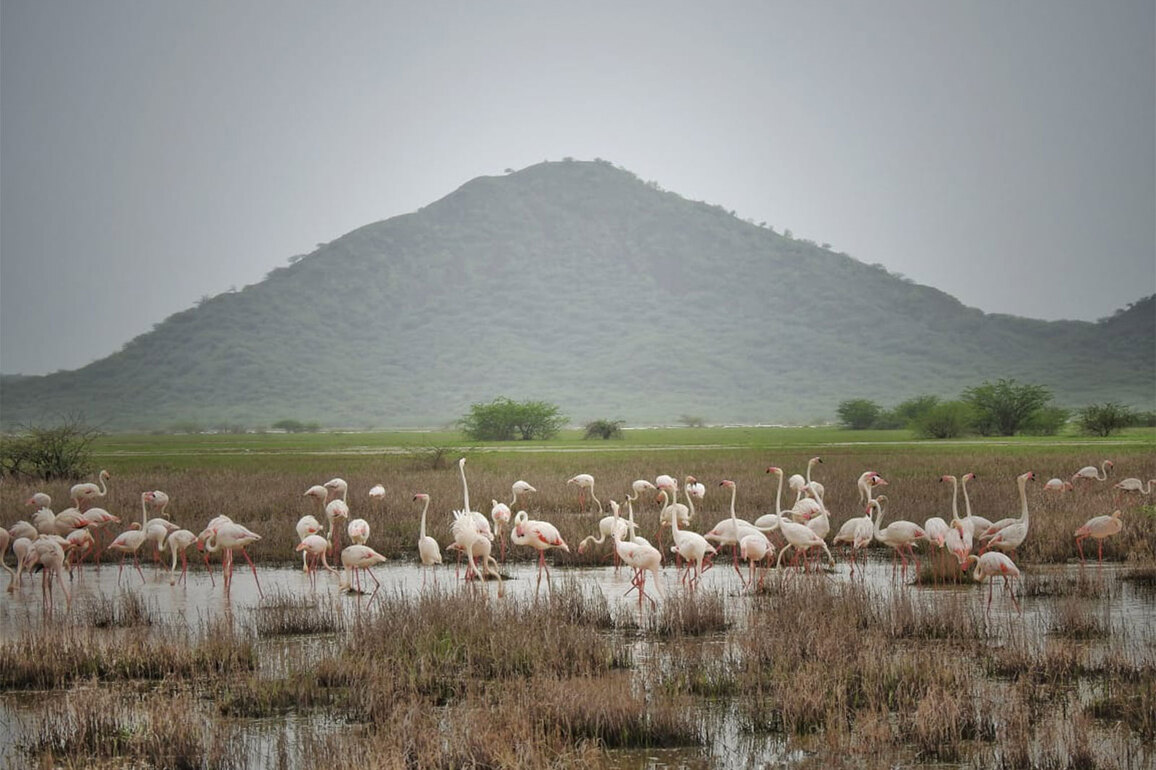
The Prime Minister welcomes the declaration of Patna Bird Sanctuary (Etah, Uttar Pradesh) and Chhari-Dhand (Kutch, Gujarat) as new Ramsar sites. The update expands India’s Ramsar network and brings focus to these wetlands as habitats for migratory and native species.
New Ramsar Sites: Patna Bird Sanctuary & Chhari-Dhand
| Dimension | Key Details |
|---|---|
| Location | Patna Bird Sanctuary: Etah district, Uttar Pradesh; Chhari-Dhand: Kutch district, Gujarat. |
| India’s Ramsar network | Expands from 26 (2014) to 98 (2026), an increase of over 276%. |
| India’s position in Asia | India has the highest number of Ramsar sites among Asian countries. |
| Patna Bird Sanctuary: habitat | A wetland bird sanctuary with a lake ecosystem; during summers, the lake is covered with macrophytic vegetation such as water hyacinth and Potamogeton species. |
| Avifauna (examples) | Supports migratory and resident birds including Pied mynas, herons, cormorants, ducks and geese; aquatic birds include Lesser Whistling Duck, Graylag Goose, Comb Duck, Ruddy Shelduck, Gadwall, Eurasian Wigeon, Indian Spot-billed Duck, Northern Shoveler, Northern Pintail. |
| Significance | Smallest bird sanctuary in Uttar Pradesh. |
| Chhari-Dhand: habitat | Seasonal desert wetland located between the arid Banni grasslands and marshy salt flats of the Rann of Kutch; becomes swampy during monsoon; fed by north-flowing rivers and surrounding hills. |
| Migratory seasonality | Attracts numerous migratory birds every year during the monsoon and winter seasons. |
| Biodiversity (examples) | Endangered species include Dalmatian Pelican, Oriental Darter, Black-necked Stork, Indian Skimmer; also supports chinkara, wolves, caracal, desert cats, desert foxes. |
| Significance | Located at the interface of grasslands and salt flats; rich biodiversity provides for a major bird-watching destination. |
| Ramsar site | Ramsar site is a wetland of International Importance mentioned under the Ramsar Convention. |
| Nature | Intergovernmental treaty that provides the framework for national action and international cooperation for the conservation and wise use of wetlands and their resources. |
| Adoption and enforcement | Adopted in 1971 (Ramsar, Iran) and enforced in 1975. |
| Uniqueness | Only global environmental treaty that deals with a particular ecosystem. |
| Wetlands | Areas of marsh, fen, peatland or water, whether natural or artificial, permanent or temporary, with water that is static or flowing, fresh, brackish or salt; includes areas of marine water where depth at low tide does not exceed 6 meters. |
| India and Ramsar Convention | India became a contracting party in 1981. |
| Wetlands Rules, 2017 | Excludes river channels, paddy fields and other areas where commercial activity takes place. |
| UN system | Not affiliated with the United Nations system of Multilateral Environmental Agreements. |
| World Wetlands Day | Celebrated every year on 2nd February. |