|
Parliament to Table Judges (Inquiry) Act Report on Justice Yashwant Varma
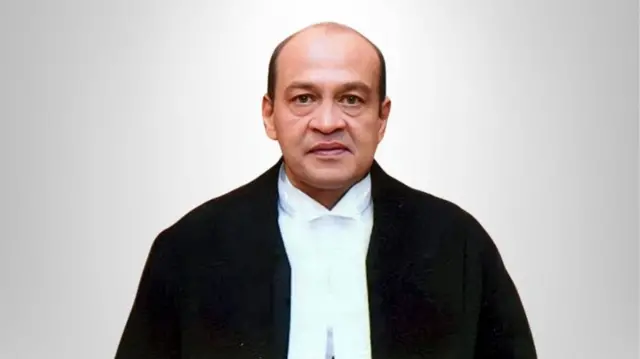
Parliament’s ongoing Monsoon Session comprises tabling of the Inquiry Committee report under the Judges (Inquiry) Act, 1968, concerning former Allahabad and Delhi High Court judge Yashwant Varma. The case comprises discovery of partially burnt currency notes in March 2025 and Justice Varma’s written resignation dated April 9, 2026, before inquiry proceedings conclude.
Judges (Inquiry) Act, 1968: Justice Yashwant Varma Inquiry
| Dimension | Key Details |
|---|---|
| Case origin | The case comprises discovery of partially burnt currency notes in March 2025 in an outhouse at Justice Varma’s official residence. |
| Inquiry mechanism | A committee is established under the Judges (Inquiry) Act, 1968 by the Speaker of the Lok Sabha to investigate charges of misbehaviour against Justice Yashwant Varma. |
| Resignation timing | Justice Yashwant Varma’s written resignation is dated April 9, 2026, before the inquiry proceedings conclude. |
| Constitutional provision: resignation at will | The Constitution provides for 13 constitutional functionaries to resign at will, without resignation being subject to acceptance by any authority, by writing under their hand addressed to a specified authority. |
| Offices covered under “resign at will” (as listed) | The offices comprise the President, the Vice-President, the Deputy Chairman of the Rajya Sabha, the Speaker and Deputy Speaker of the Lok Sabha, a judge of the Supreme Court, a judge of the High Courts, the Governor, the Speaker and Deputy Speaker of a State Assembly, the Chairman and Deputy Chairman of a State Legislative Council, and a member of the Public Service Commissions. |
| Legislators: Parliament | Article 101(3)(b) applies to resignation of Members of Parliament, subject to acceptance by the Speaker of the Lok Sabha or the Chairman of the Rajya Sabha. |
| Legislators: States | Article 190(3)(b) applies to resignation of Members of State Legislatures, subject to acceptance by the Speaker or the Chairman. |
| Supreme Court ruling on judicial resignation | Union of India vs Gopal Chandra Misra (1978), by a five-judge Constitution Bench, authorises that the effectiveness of resignation of Supreme Court and High Court judges does not depend upon acceptance by the President, and resignation acts ex proprio vigore. |
| Status of resignation in this case | The “resign at will” framework provides for Justice Yashwant Varma’s resignation to take effect automatically on April 9, 2026 upon submission of written resignation, without acceptance by the President. |
| Administrative listings mentioned | The lists of sitting judges of the Allahabad High Court and the Department of Justice of the Union government comprise Justice Yashwant Varma three months after his resignation date. |
| Laying of report despite resignation | The laying of the Inquiry Committee’s report before both Houses applies to Justice Varma’s conduct prior to resignation, and resignation does not affect laying of the report before both Houses. |
| Public disclosure of report | A statutory duty mandates the report to be made public. |
| Section 6, Judges (Inquiry) Act, 1968 | Section 6 of the Judges (Inquiry) Act, 1968 mandates the report to be discussed by Parliament along with the motion. |
| Effect of resignation on removal motion and discussion | Resignation of the judge provides for the motion for removal to no longer be moved, and provides for the report to not be discussed by Parliament under the Act. |
| Proposed constitutional amendment (as suggested) | A proposed constitutional amendment comprises: resignation of a judge facing removal proceedings subject to acceptance during pendency; power to accept the resignation vested in the Chief Justice of India rather than the President; Parliament empowered to discuss the Inquiry Committee report despite the judge’s resignation. |