|
New snake species Calamaria garoensis discovered in West Garo Hills, Meghalaya
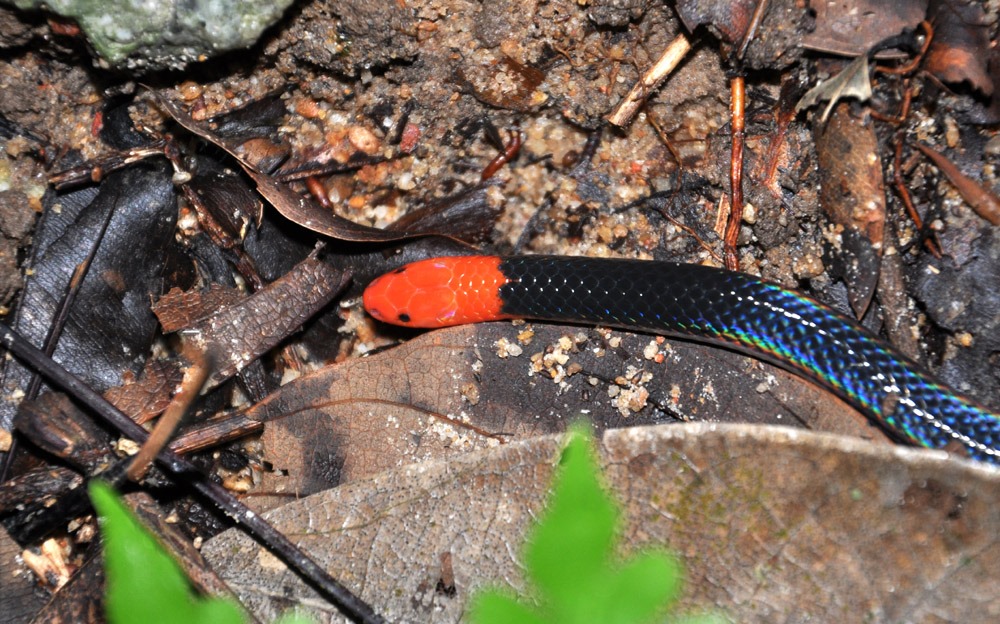
A new snake species has been discovered in West Garo Hills, Meghalaya, resolving long-standing taxonomic confusion in fossorial snakes. The finding highlights hidden biodiversity in Northeast India.
Meghalaya Burrowing Reed Snake (Calamaria garoensis):
| Dimension | Key Details |
|---|---|
| Taxonomy | Comprises species Calamaria garoensis under genus Calamaria and family Colubridae in kingdom Animalia. |
| Common Name | Provides for common name Meghalaya Burrowing Reed Snake. |
| Habitat | Comprises forested and moist soils in Oragitok region of West Garo Hills, Meghalaya. |
| Distribution | Provides for occurrence restricted to West Garo Hills indicating limited geographic range. |
| Morphology | Comprises smooth dorsal scales in 13 rows, short non-tapering tail, faint nuchal ring, and longitudinal body striping. |
| Diet | Provides for insectivorous and vermivorous feeding on small invertebrates. |
| Genetic Identity | Provides for genetic divergence of 6.3% and close relation to Calamaria mizoramensis. |
| Taxonomic Resolution | Provides for reclassification from earlier identification as Calamaria pavimentata indicating species complex. |
| Ecological Role | Comprises fossorial lifestyle contributing to soil aeration and regulation of invertebrate populations. |
| Indicator Role | Provides for reflection of hidden biodiversity in forest ecosystems. |
| Conservation Status | Provides for not yet assessed under IUCN Red List. |
| Conservation Concern | Provides for vulnerability due to restricted distribution and habitat specificity. |
| Significance | Comprises identification of Garo Hills as micro-endemic zone within Indo-Burma biodiversity hotspot and importance of integrative taxonomy. |