|
Juvenile Hawksbill Turtle Rehabilitated on Tamil Nadu Coast
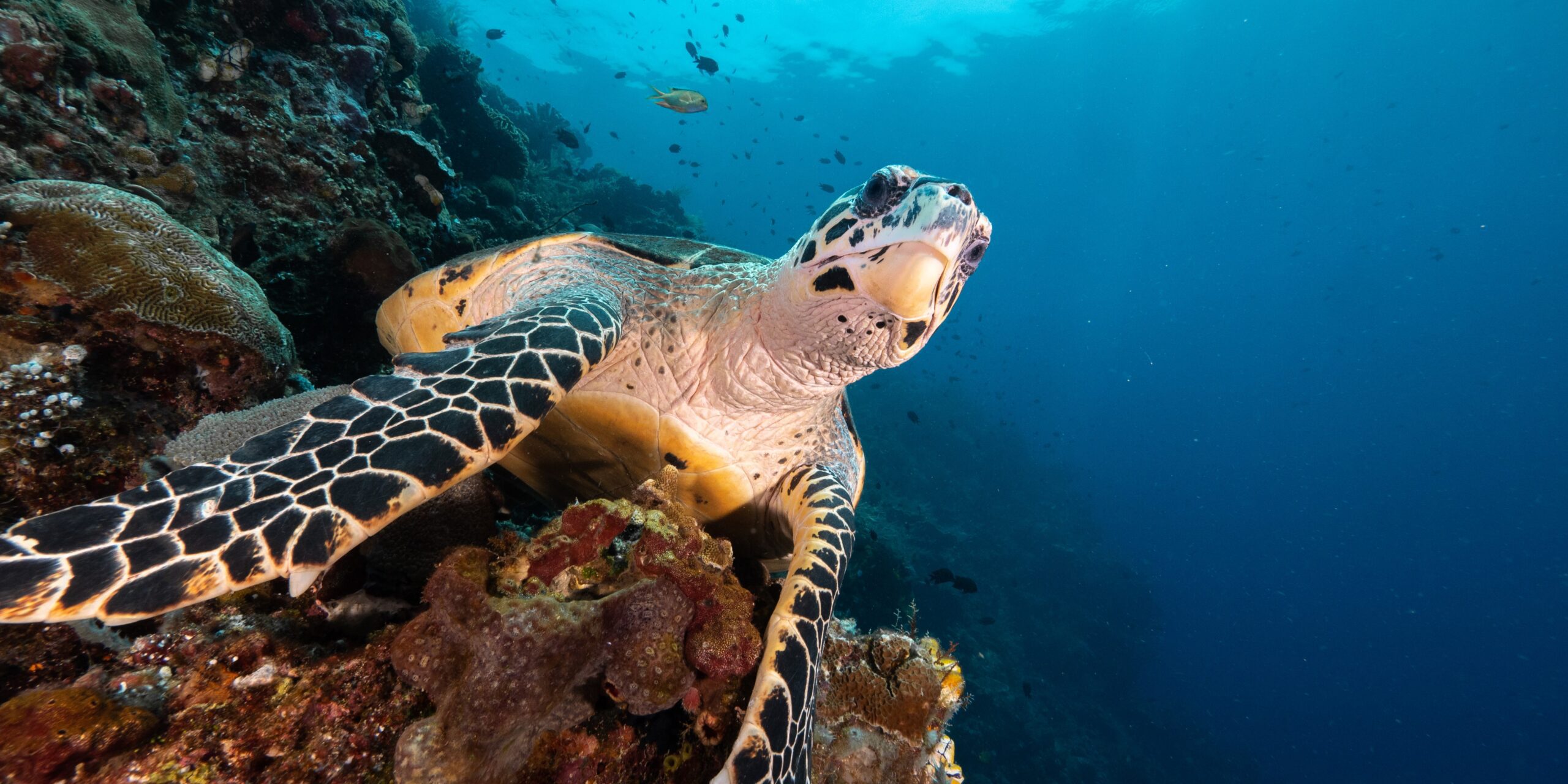
A juvenile hawksbill turtle stranded on the Tamil Nadu coast has been rehabilitated and released in the Gulf of Mannar. The event highlights conservation efforts for a critically endangered marine species.
Hawksbill Turtle (Eretmochelys imbricata):
| Dimension | Key Details |
|---|---|
| Taxonomy | Species Eretmochelys imbricata under genus Eretmochelys and family Cheloniidae in kingdom Animalia. |
| Common Name | Common name Hawksbill Turtle. |
| Habitat | Tropical coral reefs, seagrass beds, and shallow coastal waters. |
| Distribution | Occurrence in tropical and subtropical Atlantic, Pacific, and Indian Oceans and in India in Andaman and Nicobar Islands, Lakshadweep, and Gulf of Mannar. |
| Morphology | Narrow hawk-like beak, medium-sized body, and overlapping serrated scutes forming tortoiseshell pattern. |
| Size | Adult weight of 45 to 70 kg and shell length of 60 to 90 cm. |
| Diet | Primarily spongivorous feeding including sponges, algae, seagrass, and small invertebrates. |
| IUCN Status | Classification as Critically Endangered. |
| CITES Status | Inclusion in Appendix I. |
| Legal Protection | Protection under Schedule I of Wildlife Protection Act 1972. |
| Threats | Entanglement in fishing gear, illegal tortoiseshell trade, coral reef degradation, and climate change impacts. |