|
Jharkhand’s Mandar Percussion Instrument Receives GI Tag
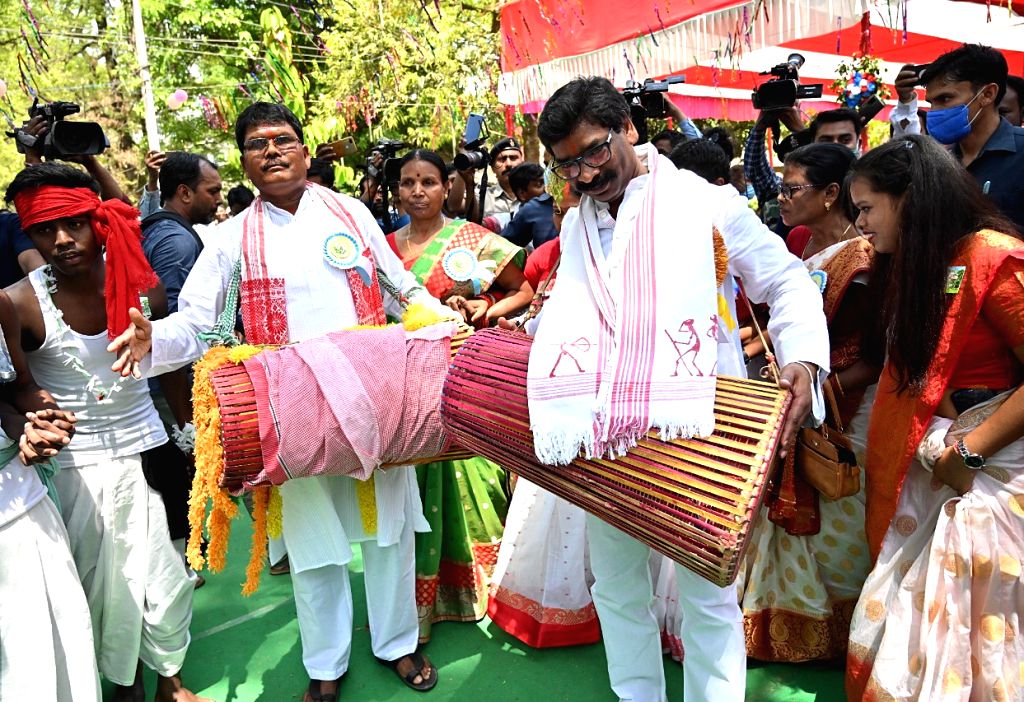
Jharkhand’s traditional musical instrument, the Mandar, receives official recognition with a Geographical Indication tag. The news highlights the Mandar as a traditional double-headed percussion instrument rooted in Jharkhand’s folk culture and tribal life.
Mandar Percussion Instrument:
| Dimension | Key Details |
|---|---|
| Structure | Mandar comprises a distinctive cylindrical shape made from red clay, which slightly bulges in the middle, and is hollow with openings covered by leather on both sides. |
| Openings | The right opening is smaller, and the left opening is larger. |
| Securing Mechanism | The leather coverings are secured using braided cords. |
| Special Coating | A special coating, known as Kiran, is applied to the smaller opening, giving Mandar its resonant and unique sound. |
| Playing Style | When played, the musician often moves rhythmically, carrying the instrument using a rope slung over the shoulder. |
| Use Cases | Mandar serves as the primary instrument played during festivals, crop celebrations, religious rituals, and cultural events. |
| Community Linkages | Mandar is deeply integrated into the lives of both tribal and non-tribal communities. |
| Cultural Performances | Mandar has been used for centuries in various dance and song performances. |