|
MACS Agharkar Research Institute (DST) Finds Five New Allographa Species in Western Ghats
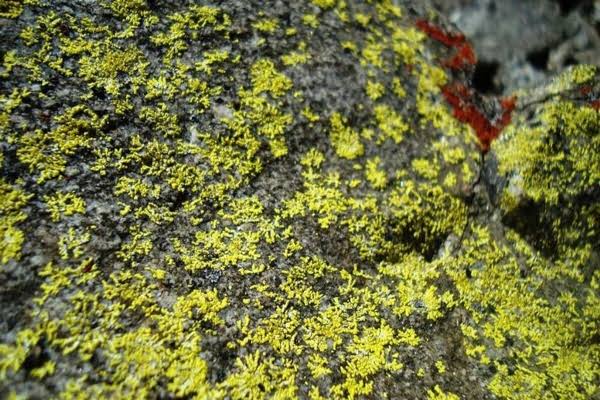
Researchers from the MACS Agharkar Research Institute, Pune (DST) report the discovery of 5 new lichen-forming fungi species of the genus Allographa in the Western Ghats. The study combines traditional taxonomy with molecular phylogenetics and is described as the first comprehensive molecular phylogenetic investigation of Allographa in the Western Ghats.
Allographa (Genus) and Western Ghats Discovery:
| Dimension | Key Details |
|---|---|
| Reporting institution | The discovery is reported by researchers from the MACS Agharkar Research Institute, Pune (DST). |
| Location of discovery | Five new Allographa species are discovered in the Western Ghats. |
| Genus description | Allographa comprises script lichens, or lichen-forming fungi, where a fungus teams up with algae or cyanobacteria to create a lichen. |
| Family | Allographa is governed by classification under the family Graphidaceae. |
| Key traits | Allographa comprises species with elongated fruiting bodies, and the genus has more than 200 species globally. |
| Ecological role | Allographa species are sensitive to pollution and habitat changes, and they authorise use as indicators of forest health and environmental quality. |
| Research approach | The study combines traditional taxonomy with molecular phylogenetics. |
| Molecular phylogenetics (definition) | Molecular phylogenetics comprises the study of evolutionary relationships among biological entities using genetic data like DNA, RNA, and protein sequences. |
| Study claim in region | The work has been described as the first comprehensive molecular phylogenetic investigation of Allographa in the Western Ghats. |
| Phylogenetic insights | The study provides for the finding that morphologically similar species are not always closely related evolutionarily, and molecular data clarifies species boundaries. |
| Methods used | The study uses morphological and chemical analyses, and multi-locus DNA sequencing using 3 genetic markers: mtSSU, nrLSU, and RPB2. |
| New species identified | The study identifies 5 new species: Allographa keralensis, Allographa nayakae, Allographa paraconsanguinea, Allographa persistinspersa, and Allographa semicarbonisata. |
| New molecular data for known species | The study generates new molecular data for known species: A. calcea, A. macella, A. aquilonia, A. rimulosa, and A. effusosoredica. |