|
Invasive species also act as larval host plants for butterflies in Assam forests
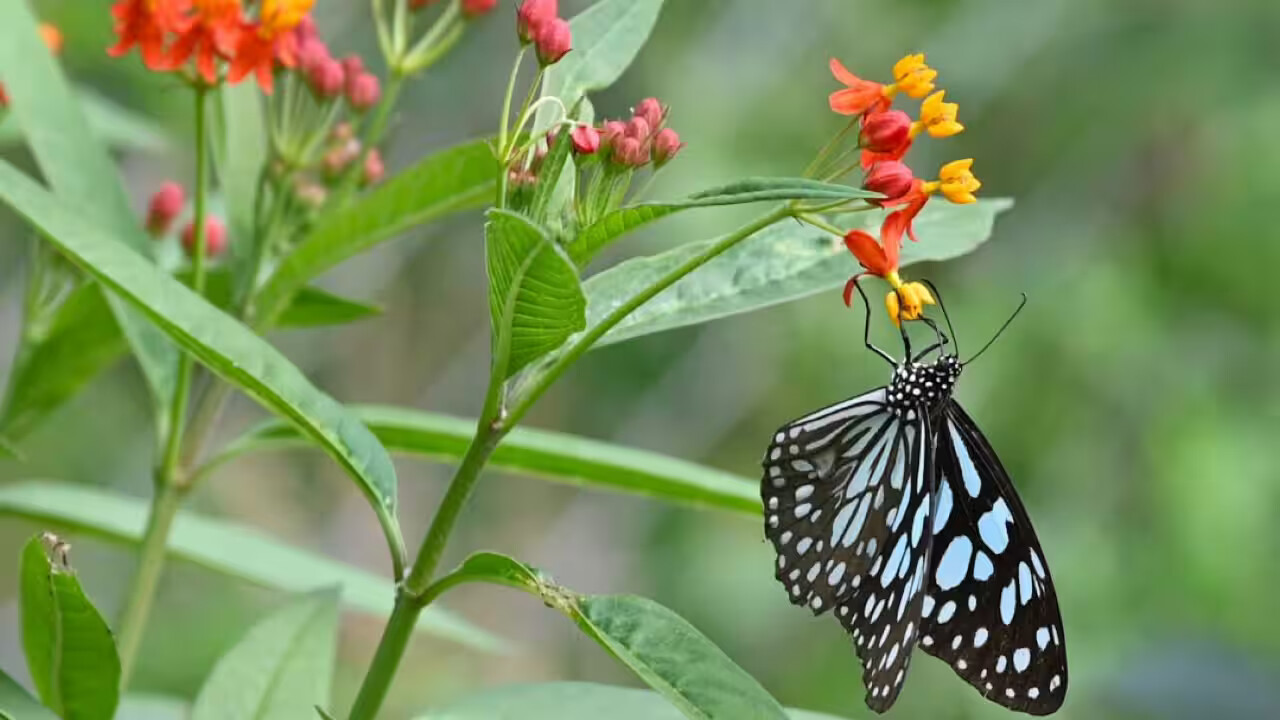
A study in Raimona National Park, Assam, led by Bodoland University research scholars, reports that some invasive alien plant species provide major nectar sources and larval host plants for butterflies. The study documents butterfly and plant diversity in the park and recommends controlled, managed retention of certain invasive plant patches in forest management.
Invasive Alien Plant Species as Nectar and Larval Host Resources in Raimona National Park:
| Dimension | Key Details |
|---|---|
| Study location | The study is located in Raimona National Park, Bodoland Territorial Region, Assam, with an area of 422 sq. km. |
| Institution and researchers | The study is led by Bodoland University research scholars Bishal Basumatary and Mr. Choudhury. |
| Core finding | Certain invasive alien plant species serve as major nectar sources and larval host plants for diverse butterfly populations. |
| Biodiversity documented | The study records 220 butterfly species, 56 species of larval host plants, and 41 species of nectar plants within the national park. |
| Seasonal nectar availability | Invasive species produce abundant nectar during lean periods when native wildflowers are scarce, sustaining butterfly survival year-round. |
| Dual ecological function | Several invasive plants act as larval host plants, providing food for developing caterpillars in addition to nectar provision. |
| Key invasive species and seasonal peaks | Invasive species with documented support include: Lantana camara (April–October, supports more than 30 butterfly species); Chromolaena odorata or Siam weed (December–February, supports 24 species); Ziziphus mauritiana or Indian Jujube (lean seasons, supports multiple species). |
| Mechanisms and features | Lantana camara provides multicolored flower clusters that change shade as they age and provides continuous nectar in dense, rounded floret clusters; Chromolaena odorata provides dense floret clusters that provide accessible nectar during winter months when native flowers are scarce; Ziziphus mauritiana functions as a supplementary nectar provider across protected forest landscapes. |
| Additional host plants | Additional species documented as host plants comprise Ricinus communis, Senna alata, Portulaca oleracea, Mikania micrantha, Ageratum conyzoides, and Tridax procumbens. |
| Conservation implication | Aggressive, unmanaged removal of invasive species can lead to sudden nectar shortages for native pollinators. |
| Recommended management approach | Researchers recommend controlled patch reservation, with forest managers maintaining small, carefully managed patches of species such as Lantana camara and Chromolaena odorata to bridge floral gaps without letting them overrun natural habitats. |
| Forest management planning | This report represents one of the first from India urging forest departments to factor in positive pollinator contributions of invasive species during habitat restoration planning. |