|
Indonesia Peatland Fires Surge in 2026 as El Nino Deepens Drought Conditions
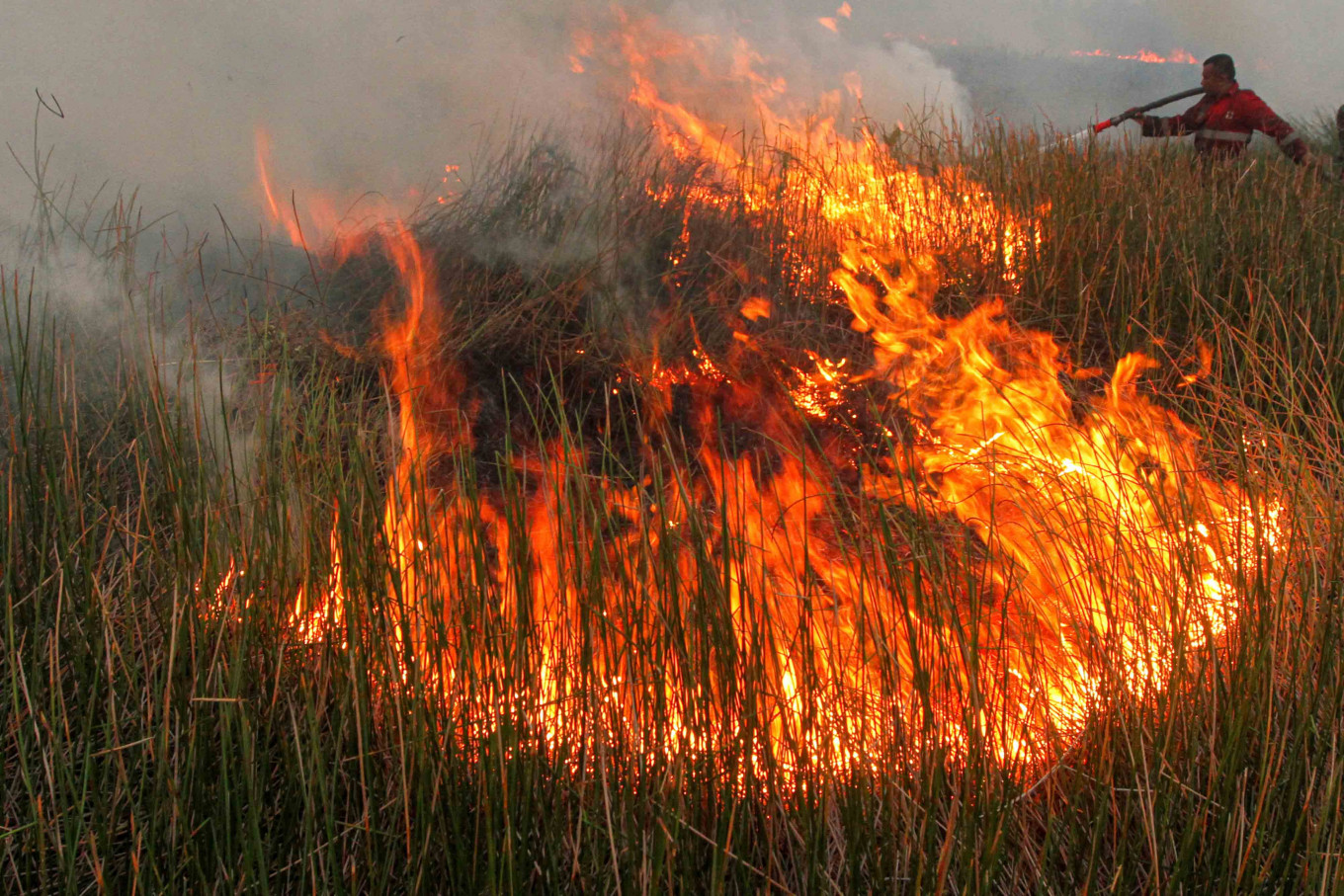
Indonesia’s peat fires surge early in the 2026 fire season as a strengthening El Nino and severe drought dry out wetlands, enabling underground burning for months.
Indonesia Peatland Fires:
| Dimension | Key Details |
|---|---|
| Peat fires | Peat fires comprise slow, flameless, underground fires that occur in carbon-rich, waterlogged organic soils known as peatlands. |
| Peatlands | Peatlands comprise wetland ecosystems where waterlogged, oxygen-poor conditions prevent dead plant material from fully decomposing, leading to net accumulation of organic matter called peat. |
| Combustion process | Peat fires are governed by smouldering combustion, enabling underground burning that can continue for weeks, months, or even years. |
| Smouldering combustion | Smouldering combustion comprises a slow, low-temperature, flameless form of burning that takes place directly on the surface of a solid, porous fuel. |
| Key feature vs typical wildfires | Peat fires burn underground, unlike typical wildfires that burn across surface vegetation. |
| Carbon storage | Peatlands cover about 3% of the Earth’s land surface and store roughly 30% of global soil carbon. |
| Carbon comparison | Peatlands store twice as much carbon as all the world’s forests combined. |
| Reason for occurrence | Under normal conditions, peat deposits are too wet for fire to move underground, but drought allows flames to enter peat and continue flaming below the surface. |
| Climate impact | Drought can transform peatlands from natural carbon stores into major sources of greenhouse gases. |
| Peat depth (Kalimantan) | In Kalimantan, peat deposits can exceed 20 metres in depth. |
| Indonesia: tropical peatland share | Indonesia contains about 36% of the world’s tropical peatlands. |
| Major regions in Indonesia | Indonesia’s major peatland regions comprise Kalimantan, Sumatra, and Papua. |
| Regional spread of air pollution | Air pollution indices have soared to “unhealthy” extremes across Indonesia, Brunei, Malaysia, Singapore, and the Philippines. |
| Air pollution index | Air pollution indices reach almost 75 times the World Health Organisation’s recommended level in some cases. |
| Health impacts | Health impacts comprise irritation in eyes, chests, and throats; respiratory problems; and increased hospital admissions. |
| Pollutants | According to NASA Science data, peat fires generate three times more PM2.5 than typical tropical forest fires, five times more sulfur dioxide, and massive concentrations of carbon monoxide. |