|
Indiaphonte bijoyi: New genus and species of crustacean discovered in Lakshadweep
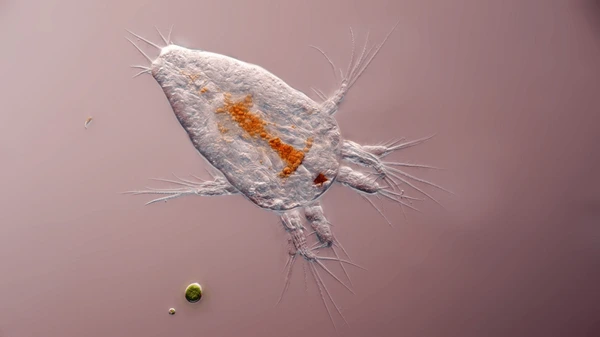
A microscopic crustacean discovered in Lakshadweep is formally recognised as a new genus and new species.
It is named Indiaphonte bijoyi, discovered from the Kavaratti lagoon, and is in the news due to its formal taxonomic recognition.
Indiaphonte bijoyi (New Genus & New Species: Crustacean)
| Dimension | Key Details |
|---|---|
| Scientific name | Indiaphonte bijoyi |
| Taxonomic status | Formally recognised as a new genus and a new species |
| Genus nomenclature | The genus name Indiaphonte honours India |
| Species nomenclature | The species name bijoyi honours S. Bijoy Nandan, Dean, Faculty of Marine Sciences, Cochin University of Science and Technology (Cusat) |
| Discovery location | Discovered from the Kavaratti lagoon, Lakshadweep |
| Habitat | Lives in sediments of aquatic environments, including lagoon ecosystems |
| Distribution | Kavaratti lagoon, Lakshadweep islands; south-eastern Arabian Sea off India’s south-west coast ( known for high meiofaunal diversity) |
| Size and visibility | Microscopic crustacean, observable only under a microscope |
| Meiofauna classification | Part of meiofauna (invertebrate animals <1 mm) |
| Morphological characteristics | Body partly cylindrical and slightly flattened; broader in the middle and narrows towards the back; males and females look almost the same (rare in this group); identified by distinct features in swimming legs, tail part and antennae |
| Ecological importance | Contributes to marine and freshwater ecosystem health |
| Omega-3 fatty acids | Produces and converts omega-3 fatty acids including Eicosapentaenoic Acid (EPA) and Docosahexaenoic Acid (DHA) that support fish and shellfish growth |
| Bio-indicator relevance | Acts as a bio-indicator due to sensitivity to pollution, oil spills, heavy metals and climate change |
| Aquaculture and fisheries | Used as live feed for fish larvae |