|
India’s Cement Sector emissions reduction targets to 2047
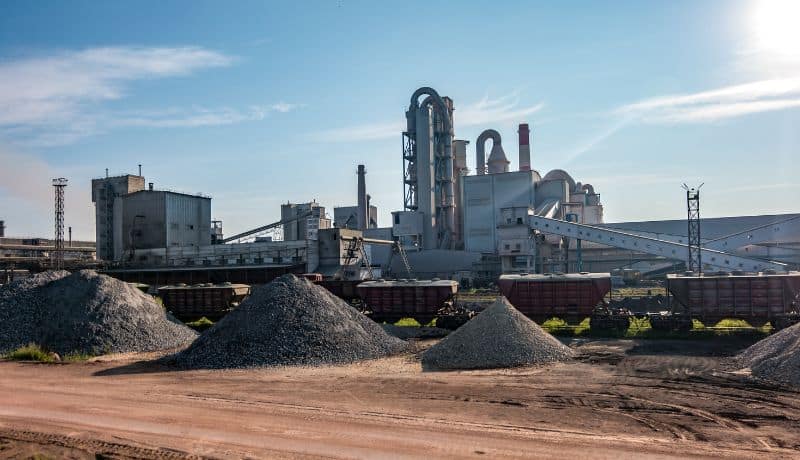
India’s cement sector emissions reduction pathway is in focus in the context of India’s milestones of becoming a developed country by 2047 and achieving net-zero emissions by 2070. The news highlights cement’s global emissions share, India’s cement industry scale, and specified emissions-intensity targets for 2030 and 2047.
India’s Cement Sector Targets:
| Dimension | Key Details |
|---|---|
| Global emissions share (construction) | The construction sector accounts for an estimated 35-40% of global GHG emissions, considering the broader built environment and its supply chains. |
| Global emissions share (cement) | Cement alone contributes approximately 7-11% of global CO₂ emissions. |
| India’s global position and installed capacity | India comprises the 2nd-largest cement producer globally, with an installed capacity of roughly 668 to 700 million tonnes per annum (MTPA). |
| Production volume | Production volume reaches about 490 million metric tonnes in FY26, comprising an 8.6% year-on-year growth. |
| Demand drivers | Cement demand comprises housing (about 65% of demand), commercial real estate, and large-scale public infrastructure projects like PM Gati Shakti. |
| Per capita consumption | Per capita cement consumption comprises roughly 280 to 290 kg per year. |
| Core industry and IIP weight | Cement comprises one of India’s eight core industries, carrying a weight of 5.37% in the Index of Industrial Production (IIP). |
| Regional distribution | Installed capacity share comprises South India at approximately 32%. |
| Key limestone-rich states | Key limestone-rich states comprise Rajasthan, Andhra Pradesh, Tamil Nadu, and Chhattisgarh. |
| Major cement companies | Major cement companies comprise UltraTech Cement (market share around 22%-28%), Adani Cement (Ambuja Cements and ACC), and Shree Cement. |
| Manufacturing temperature and fuels | Cement manufacturing comprises heating material in kilns to approximately 1,450°C, and the heat supply traditionally comprises coal, petroleum coke, and natural gas. |
| Process emissions | Calcination comprises decomposition of limestone (calcium carbonate) into lime (calcium oxide) and carbon dioxide, releasing CO₂ independently of the fuel used. |
| Wider environmental impacts | Cement’s wider environmental impacts comprise land degradation, air pollution (nitrogen oxides, sulphur dioxide, and particulate matter), transportation emissions, loss of carbon sinks, and resource depletion. |
| Current emissions intensity | India’s cement industry comprises emissions of approximately 0.62 tonnes of CO₂ per tonne of cement. |
| Emissions-intensity targets | A decarbonisation roadmap provides for emissions-intensity targets of 0.56 tonnes of CO₂ per tonne of cement by 2030 and 0.51 tonnes by 2047. |
| Projected production volume (2070) | Cement production is projected to increase to 1,546 million tonnes by 2070. |
| RDF and thermal substitution recommendation | Refuse-derived fuel (RDF) comprises fuel produced by processing combustible fractions of municipal solid waste, and NITI Aayog’s roadmap recommends achieving a 20% thermal substitution rate using RDF by 2030, potentially reducing cumulative emissions by approximately 80 million tonnes of CO₂-equivalent. |
| Clinker-to-cement ratio | India’s clinker-to-cement ratio comprises around 67.5%, and the global average comprises 77%. |
| OPC clinker content | Ordinary Portland Cement (OPC) comprises more than 95% clinker. |
| Clinker substitution emissions factor | Replacing 1 tonne of clinker can avoid approximately 0.83 tonnes of CO₂ emissions, as per IEA. |
| CCUS necessity | Carbon capture, utilisation and storage (CCUS) may be necessary because cement cannot be fully decarbonised through fuel substitution alone and calcination generates process emissions. |
| Traditional/indigenous construction methods | Examples of traditional materials and indigenous construction methods comprise compressed earth blocks and rammed earth, lime-surkhi mortar, natural binders (cactus-derived mucilage, lime and mud, and industrial by-products such as marble powder), Kath Kuni architecture (alternating timber and dry-stone masonry supported by a raised stone plinth), and elevated timber and bamboo houses in flood-prone and earthquake-prone regions, particularly parts of northeastern India. |