|
India Rejects Pakistan-China Boundary Joint Commission
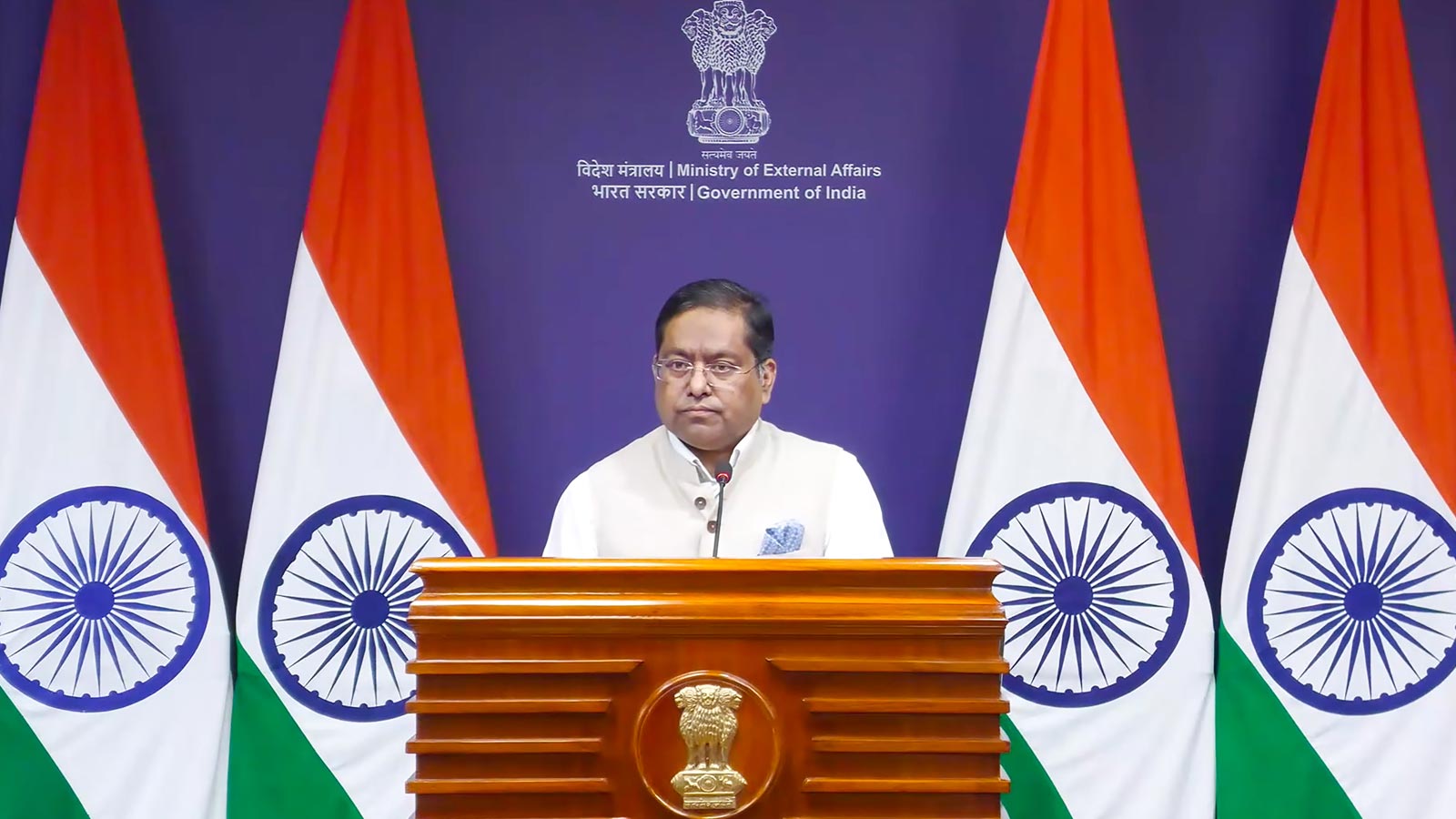
India rejects the Pakistan-China Boundary Joint Commission (BJC), whose inaugural meeting has recently concluded in Pakistan, as legally invalid. India states that Pakistan has no locus standi to enter into arrangements concerning Indian territory under its illegal and forcible occupation, and reiterates its position on Jammu & Kashmir and Ladakh.
Pakistan-China Boundary Joint Commission:
| Dimension | Key Details |
|---|---|
| Legal basis | The BJC is envisaged under the 2013 China-Pakistan Agreement on the Boundary Management System. |
| Agreement provision | Article 45 of the 2013 China-Pakistan Agreement on the Boundary Management System provides for the establishment of the joint commission. |
| Mandate | The joint commission oversees the implementation of border management arrangements. |
| India’s position on UTs | India states that the entire Union Territories of Jammu & Kashmir and Ladakh are integral and inalienable parts of India. |
| India’s position on 1963 agreement | India does not recognise the 1963 China-Pakistan Boundary Agreement. |
| India’s position on boundary | India states that there is no boundary between Pakistan and China. |