|
1967 Outer Space Treaty Bars National Sovereignty Claims Over the Moon
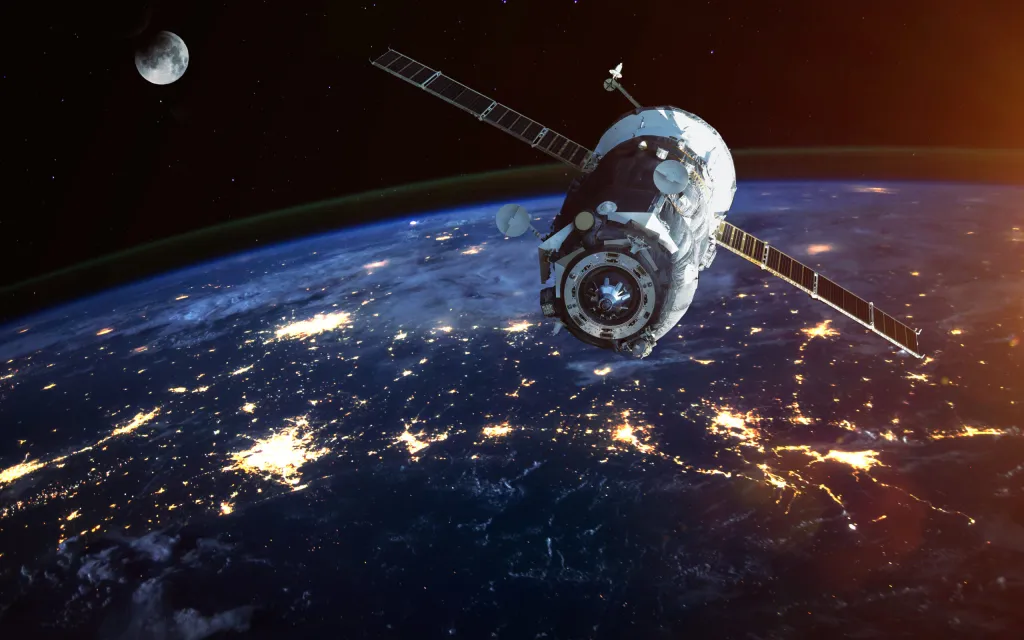
US President Donald Trump posts “The Moon Is Ours” on Truth Social, while the 1967 Outer Space Treaty rules out national ownership of lunar territory. The treaty remains the governing international agreement on how nations act in outer space, including the Moon and other celestial bodies.
Outer Space Treaty:
| Dimension | Key Details |
|---|---|
| Formal name | Formally known as the “Treaty on Principles Governing the Activities of States in the Exploration and Use of Outer Space, including the Moon and Other Celestial Bodies.” |
| Nature | It is an international agreement that governs how nations act in space. |
| Adoption | The treaty has been adopted by the United Nations in 1967. |
| Overall purpose | The treaty provides for keeping space peaceful. |
| First signatories | Its first signatories comprise the United States, the United Kingdom, and the Soviet Union. |
| Parties and signatories | 115 countries are parties to the treaty, and another 22 countries are signatories. |
| Parties mentioned | Parties include all major spacefaring nations, including India and China. |
| Key principles (as per U.N. Office of Outer Space Affairs) | The treaty provides for these principles: exploration and use of outer space are carried out for the benefit and in the interests of all countries and are the province of all mankind; outer space is free for exploration and use by all states; outer space is not subject to national appropriation by claim of sovereignty, by means of use or occupation, or by any other means; states shall not place nuclear weapons or other weapons of mass destruction in orbit or on celestial bodies or station them in outer space in any other manner; the Moon and other celestial bodies are used exclusively for peaceful purposes and prohibits their use for testing weapons of any kind, conducting military maneuvers, or establishing military bases, installations, and fortifications; astronauts are regarded as the envoys of mankind; states are responsible for national space activities whether carried out by governmental or non-governmental entities; states are liable for damage caused by their space objects; states avoid harmful contamination of space and celestial bodies. |
| Verification and information sharing | States Parties agree to inform the UN Secretary-General, as well as the public and the international scientific community, to the greatest extent feasible and practicable, of the nature, conduct, locations, and results of activities covered in this treaty. |
| Reciprocal access | The treaty provides that all stations, installations, equipment, and space vehicles on the Moon and other celestial bodies are open to representatives of other States Parties on a reciprocal basis. |